Summary

  1. Number of people claiming asylum down 12% compared to last yearpublished at 09:38 BST
    Breaking

    Home Office figures reveal that 93,525 people claimed asylum in the UK during the year between April 2025 and March 2026, down by 12% on the year before.

    But, this is still more than double the level seen just before the pandemic.

  2. Net migration decrease driven by fewer people arriving from outside EU, ONS sayspublished at 09:37 BST

    The Office for National Statistics (ONS) says net migration continues to fall and is at levels last seen in early 2021, when the new immigration system was introduced and Covid travel restrictions were in place.

    Sarah Crofts, deputy director of the ONS, adds: "The recent decrease is driven by fewer people arriving from outside the EU, particularly for work."

    Crofts adds that while the number of people leaving the UK - emigration - had been increasing, "there are early signs it may now be starting to fall, though it is too soon to say whether this will continue".

  3. Net migration down substantially from 2023 peakpublished at 09:36 BST
    Breaking

    Robert Cuffe
    Head of statistics

    Migration added 171,000 people to the UK's population last year, just over half the level seen in 2024.

    That’s down substantially from the peak of nearly a million people early in 2023 and the lowest figure - outside of the COVID pandemic - since 2012.

  4. UK net migration drops to 171,000published at 09:32 BST
    Breaking

    The UK's net migration dropped to 171,000 people in the year to December 2025, the lowest since 2012 - excepting the pandemic.

  5. Migration figures about to be releasedpublished at 09:28 BST

    In the next few minutes, the latest UK migration figures will be released.

    What's happening? The Office for National Statistics (ONS) and Home Office are about to release the latest sets of data on migration.

    What's the difference? ONS will share net migration figures for the year to December 2025. The Home Office is publishing a report on immigration data in the 12 months to March 2026.

    Things to know: We've taken a closer look at the previous figures - which showed a sharp fall in net migration and a drop in asylum claims (see more in the graph below). And we've got a quick guide to the key terms you need to know.

    Bear with us: It may take us a few minutes to comb through and interpret the latest data, but we'll bring you the key figures shortly.

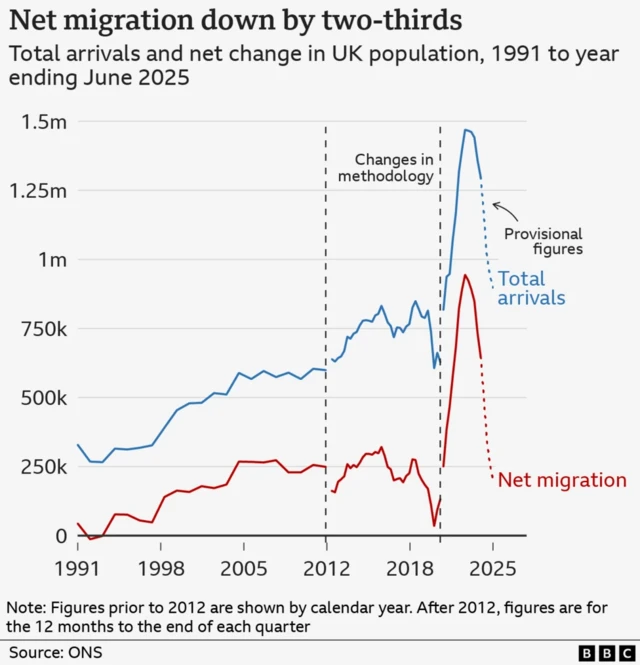
    A graph showing net migration is two-thirds lower in the year up to June 2025 than it was the previous year. A blue line shows the total arrivals to the UK and a red line shows net migration from 1991 to the year ending June 2025.
    Image caption,

    Net migration to the UK fell by two-thirds in the year ending June 2025

  6. Two separate reports, two different time periods: What will they show us?published at 09:10 BST

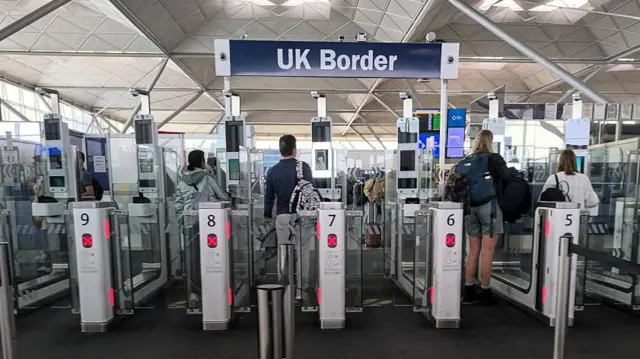
    UK Border and passport control sign seen at the arrivals hall and visa area with the automated biometric passport control.Image source, Getty Images

    The figures we're getting this morning are a look back at migration figures from previous months, published with a time lag.

    The two reports cover different time periods, here's a reminder:

    The ONS report will cover the net migration figures in the 12 months toDecember 2025 - so the last calendar year. It publishes a new dataset twice a year (every six months).

    The ONS figures are provisional, which means they are subject to change and will be revised when the final numbers become available after a further 12 months.

    The Home Office report is published quarterly - so every three months - and relates to a 12-month period. Today's report on the latest immigration statistics will cover the 12 months toMarch 2026.

  7. The key terms explainedpublished at 08:49 BST

    As we wait for the latest migration figures to be released, we've unpacked some of the key terms you'll hear this morning:

    Net migration: This measures the number of people arriving in the UK compared to how many people are leaving.

    Immigration: A term used to describe the movement of people to a new country, who have the intention of living there permanently.

    Migrant: Someone who moves to another country for at least a year, so that country becomes their usual place of residence.

    Asylum seeker: Someone who wants to be in the UK because they say they cannot live safely in their own country due to persecution or violence.

    Asylum hotel: This refers to a commercial hotel used by the UK government to house individuals seeking asylum while their claim is being considered.

    Legal and illegal immigrants: Legal immigrants are those who entered the country with permission, whereas illegal immigrants arrived without it.

  8. Many not aware net migration has already fallen sharply, poll suggestspublished at 08:39 BST

    Rob England
    BBC Verify senior data journalist

    As the Office for National Statistics prepares to publish its latest immigration figures for the UK, polling suggests many people are not aware that net migration has already fallen sharply.

    Net migration - the difference between the number of people moving to the UK and the number leaving - fell from more than 900,000 in 2023 to 204,000 in the year to June 2025.

    Experts at the University of Oxford’s Migration Observatory, external expect the next figures to show a further fall.

    But a survey commissioned by the think tank British Future, external found only 16% of people believed net migration had fallen in 2025 compared with the previous year, while 49% thought it had increased.

    The survey - of 3,003 adults in the UK, conducted online in March - also suggests public concern is being shaped more by asylum and small boat crossings than by work and study visas, which account for most immigration to the UK.

    On average, respondents thought asylum seekers accounted for about a third of immigration to the UK, while official figures put the number at about 11%.

  9. Labour's proposals for immigration reform - at a glancepublished at 08:28 BST

    Home Secretary Shabana Mahmood wears a red blazer and carries a red folder as she walks towards Downing Street for a meetingImage source, PA Media

    Home Secretary Shabana Mahmood said in February a "very large number of people" arriving in the UK in an "unprecedented way" in recent years does "demand an answer" from the government

    The Labour government's proposed changes would extend the standard wait to qualify for permanent residence from five years to 10 years, although there would be criteria which could lengthen or shorten it.

    The changes would not apply to people who have already obtained settlement.

    Settlement, also known as indefinite leave to remain, gives a person the right to live, work and study in the UK for as long as they like and apply for benefits if they are eligible.

    Under the measures care workers and refugees would have to wait longer.

    Mahmood also intends to apply the rules to migrants who are already in the UK rather than just those who arrive in the future.

    The government has based many of its reforms on policies pursued by Labour's sister party the Social Democrats in Denmark, which the Home Office believes has led to a substantial reduction in migration.

    But the plans have proven unpopular with Labour MPs. Over 100 MPs previously sent a letter to the home secretary opposing the changes.

  10. A sharp fall in net migration and drop in asylum claims: What figures showed last timepublished at 08:09 BST

    Ahead of this morning's publication of the latest migration statistics, here's a look at the previous figures:

    In February, the Home Office figures showed the number of people claiming asylum in the UK fell by 4% in the year to December 2025, as the number of people arriving by small boat rose by 13% to 41,262.

    Some 100,625 people claimed asylum and 41% of these arrived by small boats, the figures showed. The number of small boat arrivals remained lower than the peak of 45,774 in 2022.

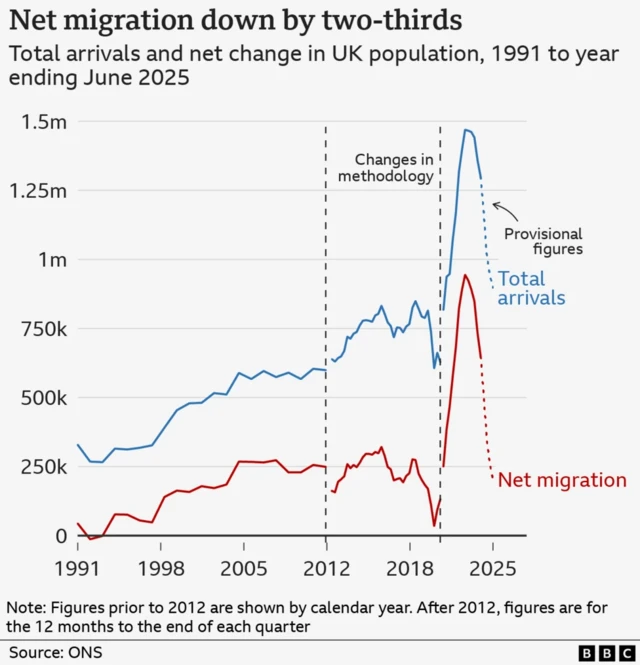
    The previous figures from the Office for National Statistics, released in November,showed a sharp fall in UK net migration in the year ending June 2025.

    The difference between the number of people arriving in the country and those leaving was 204,000, down from 649,000. The fall was mainly driven by fewer arrivals for work and study reasons, the Office for National Statistics (ONS) said.

    • For context, net migration peaked at 944,000 in the 12 months to March 2023
    A graph showing net migration is two-thirds lower in the year up to June 2025 than it was the previous year. A blue line shows the total arrivals to the UK and a red line shows net migration from 1991 to the year ending June 2025..
    Image caption,

    Net migration to the UK fell by two-thirds in the year ending June 2025

  11. New migration and asylum figures to be releasedpublished at 08:05 BST

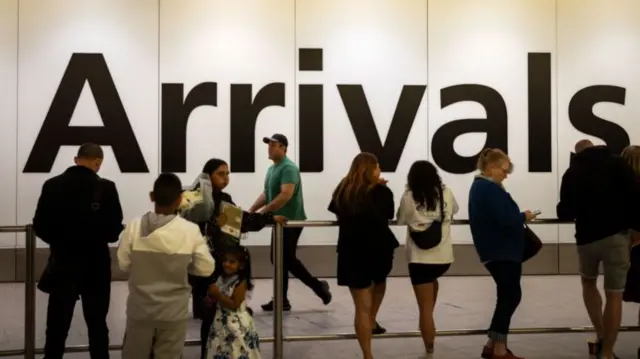
    People wait to greet friends and relatives in front of a huge sign reading "Arrivals" at Heathrow Airport.Image source, Getty Images

    This morning, two sets of UK migration figures will be released.

    We'll get the latest net migration figuresfrom the Office for National Statistics (ONS). Net migration is the difference between the number of people arriving in the country and those leaving.

    The ONS publishes this report once every six months and today's data covers the 12 months to December 2025.

    The Home Office will also publish new immigration statistics, including the number of people granted visas, citizenship and asylum. This report is published quarterly, and this morning's upcoming release will cover the 12 months to March 2026.

    Both sets of data will be released at 09:30 BST.

    We're poised to bring you the latest developments, analysis and a breakdown of the numbers once we get them.