Summary

  • Keir Starmer will take questions later at PMQs - the first since the former Foreign Office boss gave evidence about the Lord Mandelson vetting row

  • Olly Robbins, who was sacked last week, told MPs that No 10 had put "constant pressure" on his department over Mandelson -watch key moments from the session

  • He also said Downing Street had taken a "dismissive attitude" to vetting - the government has denied the claims, saying it was reasonable to ask for updates on Mandelson's appointment

  • The head of the FDA trade union, which represents civil servants, says Robbins's sacking has sent a "chill through the civil service" - and accuses Starmer of "losing the ability to work" with the service

  • Labour minister Pat McFadden tells the BBC Starmer "acted fairly in these circumstances"

  • A possible challenge to Starmer's leadership is being discussed around Westminster again - but there's no obvious successor, writes our correspondent

  1. Interesting elements to ministers' comments this weekpublished at 11:36 BST

    Henry Zeffman
    Chief political correspondent

    Are cabinet ministers abandoning Keir Starmer over the latest chapter of the Peter Mandelson saga?

    No, that feels overblown.

    There are interesting elements to how different ministers have answered questions this week, though.

    On Tuesday morning the Energy Secretary, Ed Miliband - who banished Mandelson from frontline Labour politics when he became Labour leader 16 years ago - was remarkably forthright about the concerns he had had about Mandelson’s appointment as ambassador.

    He even suggested that the then-Foreign Secretary, David Lammy, had held similar concerns.

    Later on Tuesday, after Olly Robbins had spent two-and-a-half hours in front of the Foreign Affairs Committee, the Foreign Secretary Yvette Cooper said that Robbins’s claim that No 10 had sought to make Starmer’s then-director of communications an ambassador without telling Lammy was “extremely concerning”.

    And then in various interviews this morning Pat McFadden, the work and pensions secretary who is typically seen as a firm ally of the prime minister, repeatedly resisted saying that Starmer’s decision to sack Robbins was fair.

    He did eventually say that he believed Robbins had been treated fairly, but appeared to argue this on the narrow basis that if a prime minister has lost confidence in the head of the Foreign Office, then the fair thing to do is to sack him.

    One influential Labour figure interpreted these interviews as a sign that “serious cabinet ministers are not prepared to defend [Starmer] or sully themselves”.
  2. Starmer heads to Commons for PMQspublished at 11:29 BST
    Breaking

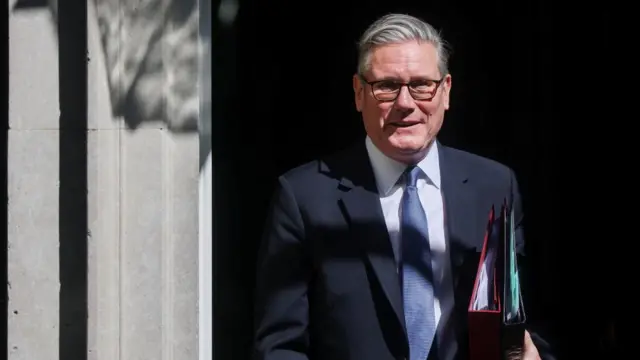
    starmerImage source, Reuters

    Prime Minister Keir Starmer has just left No 10, as he begins the short journey to the House of Commons for this week's Prime Minister's Questions.

    You'll be watch liveat the top of this page at 12:00 BST.

  3. What the government, Robbins, and the opposition have said about Mandelson's appointmentpublished at 10:57 BST

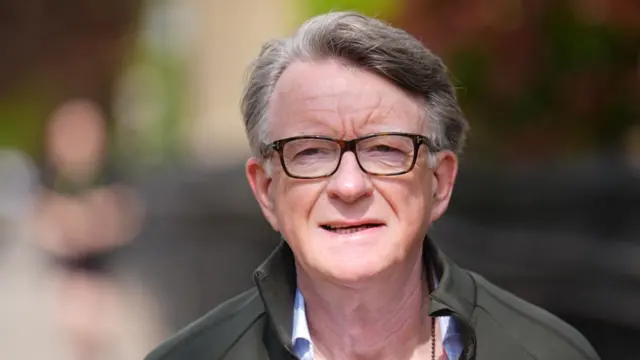
    Peter Mandelson pictured walking his dog on TuesdayImage source, PA Media

    Last week, it emerged that Lord Mandelson was appointed as the UK's ambassador to the US despite failing the security vetting process.

    Olly Robbins was effectively sacked from his role as the top civil servant at the Foreign Office over it - a move that has faced criticism from those close to the civil service.

    What the government has said

    • Work and Pensions Secretary Pat McFadden says Robbins "made the judgement" to not tell the prime minister about the vetting decision, and that Starmer "acted fairly" by sacking him
    • This echoes the argument made by many of the prime minister's allies in recent days. One former comms director at No 10 argues that Robbins "unilaterally decided to disregard red flags", and the prime minister himself has previously called the withholding of information a "deliberate decision"

    What Robbins, and civil servants, have said

    • Robbins says he faced "constant pressure" to get Mandelson in post, saying Downing Street took a "dismissive attitude" to the vetting process which he says was still conducted "rigorously"
    • Simon Gass, a former senior civil servant, says Robbins was "treated shamefully" and "believed he was following the correct procedure". A former head of the civil service, Lord Sedwill, has called for Robbins to be reinstated

    What the opposition have said

    • Politicians from opposition parties have repeatedly criticised the government - and the prime minister specifically - over the appointment. Many have called for Starmer to resign or for a vote of no confidence in his leadership to take place
    • An hours-long emergency debate was held on the topic yesterday, with those across the political spectrum heavily criticising the prime minister - read more on what was said in that debate here
  4. Analysis

    Leadership challenge questions raised again - but no clear answerspublished at 10:23 BST

    Nick Eardley
    Political correspondent

    The story around Westminster today is a familiar one.

    Keir Starmer is struggling to get away from rows about the appointment of Lord Mandelson. Labour MPs are frustrated. Some ponder whether the prime minister can continue.

    But there isn’t a groundswell of pressure, no obvious alternative. And there are still some Labour MPs who are quietly loyal - and want nothing less than the distraction of more leadership chat.

    So far, a familiar tale. So what now?

    Before the latest Mandelson row blew up last week, it felt like pressure on the prime minister was calming a bit. Talk of a potential leadership challenge in May - after elections in Scotland, Wales and Northern Ireland - had calmed.

    But a May challenge is being discussed again. The prime minister’s future is on the minds of some of his MPs - and it may well be on the minds of more if the elections are as bad as some predict.

    But then, there are the caveats we’ve got used to.

    There’s no easy and obvious mechanism to remove a Labour leader. There’s no obvious successor. Some are nervous about a leadership focus while the world remains unstable.

    Let’s see what happens later at PMQs, in the next few days and indeed in May. But the conversations just now feel quite familiar; frustrated Labour MPs, who don’t really know what to do next.

  5. What is the relationship between the civil service and the government?published at 09:51 BST

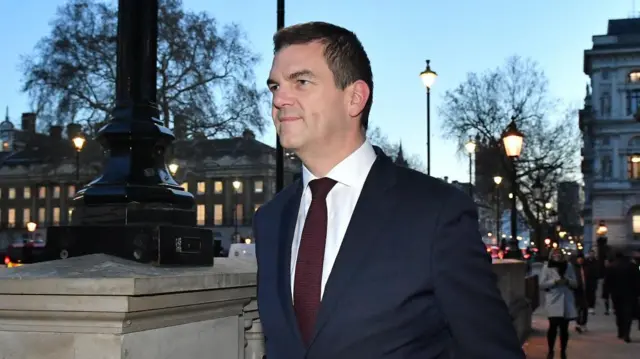
    Olly Robbins walks on a busy high street wearing a dark suit and dark red tieImage source, PA Media

    The fallout from the sacking of Olly Robbins last week has led to harsh criticism from a number of people close to the civil service.

    This includes a call from one former head for Robbins to be reinstated, and accusations from a union boss that Keir Starmer is "losing the ability to work with the civil service".

    But what exactly is the relationship between the civil service and the government?

    Robbins was the permanent secretary at the Foreign Office - the most senior civil servant in that government department.

    Civil servants' jobs are to serve the current government, by helping to develop and implement its policies and agenda. They operate within government departments and bodies, but aren't political appointees - and are meant to politically impartial.

    Civil servants are technically managed by the prime minister, with politically-appointed ministers heading up departments.

    They tend to stay in their jobs regardless of which political party is currently in power. Many work under governments of different parties and leaders, and can move between different departments too.

    Robbins, for example, has worked in previous Conservative governments. He has also held jobs in the Home Office, the Cabinet Office and has served as the government's chief Brexit negotiator.

  6. Robbins was 'treated shamefully' - former senior civil servantpublished at 09:22 BST

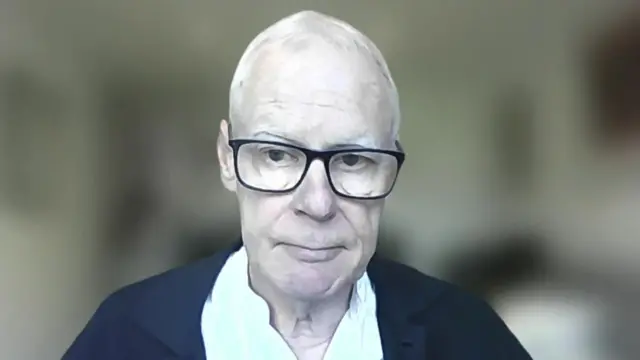
    Simon Gass

    Olly Robbins has been "treated shamefully", according to a former senior civil servant.

    Simon Gass, a former political director at the Foreign Office, tells BBC Radio 4's Today programme: "There is a public servant who is extraordinarily capable... and who absolutely believed that he was following the correct procedure."

    He describes Robbins's dismissal from the Foreign Office as "unjust, but also I think it is a big mistake".

    Gass adds: "The government appears to be asking us to believe that if they had been told that vetting had been difficult but a workaround had been found... they still might have stopped [Mandelson's] appointment to Washington.

    "I don't think that that is credible."

  7. Ambassador job for Starmer aide would not have been 'appropriate', minister sayspublished at 09:10 BST

    Pat McFadden says it would not have been appropriate for Lord Matthew Doyle - a former head of communications in No 10 - to have been given a diplomatic position.

    It comes after Olly Robbins said during his evidence to MPs yesterday that there had been enquiries from Downing Street about a diplomatic role for Doyle, a Starmer aide - read more about that here.

    The ex-communications chief was made a Labour peer after leaving Downing Street in March 2025, but was suspended from the parliamentary party this February over his links with a convicted sex offender - which he has apologised for.

    Work and Pensions Secretary McFadden tells the Today programme he agrees that such an appointment would not have been appropriate, saying of Doyle "I don't think he would have had the qualifications to do that".

    Asked whether it was Starmer probing about a prospective job, McFadden says: "I can't tell you the details of this because I only heard about them yesterday through Olly Robbins's evidence, but I do agree with the foreign secretary when she says this would not have been appropriate."

    He adds: "Matthew Doyle himself has said that he knew nothing about this."

  8. Starmer 'acted fairly' by sacking Robbins - ministerpublished at 09:00 BST

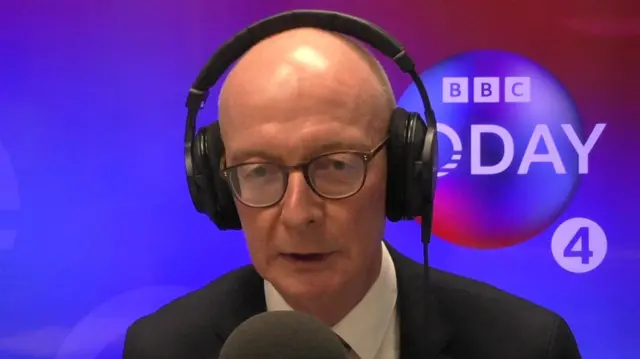
    Pat McFadden speaking into microphone with headphones on in Today studio

    More now from Work and Pensions Secretary Pat McFadden.

    Asked on BBC Radio 4's Today programme about the sacking of Olly Robbins, he says that Starmer has "acted fairly in these circumstances".

    He says this is because the prime minister should have been given information related to Mandelson's vetting.

    The minister says the "rationale" behind Mandelson's initial appointment as US ambassador was that the UK was "dealing with a highly political US administration of a different character from previous administrations" - where "trade would be at the heart of the relationship".

    McFadden says Mandelson "wasn't plucked from obscurity or disgrace" but rather appointed because he was a "political operator and someone with trade experience".

    He adds that Starmer "isn't someone who knew Peter Mandelson well", which is "all the more reason" to share details of the vetting process with the prime minister. "This wasn't some deep relationship."

  9. 'Robbins unilaterally decided to disregard the red flags', says former No 10 comms directorpublished at 08:45 BST

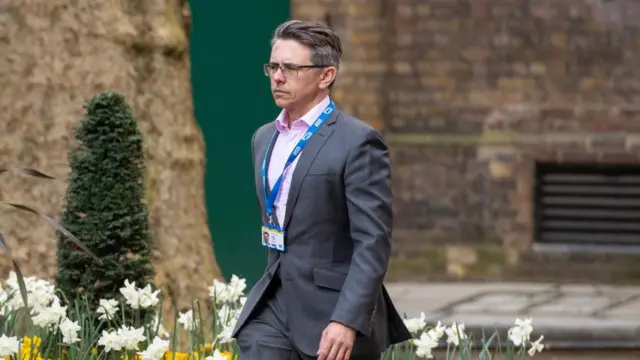
    James Lyons walking into Downing StreetImage source, PA Media

    Olly Robbins, the former top civil servant at the Foreign Office, "unilaterally decided to disregard red flags" around Mandelson's appointment as US ambassador "and didn't tell a soul about it", according to a former communications director at No 10.

    James Lyons - who served in the role under Keir Starmer for seven months last year - tells BBC Radio 4's Today programme that during yesterday's hearing Robbins was "violently agreeing with the prime minister" and proving that claims that Starmer lied to parliament about the vetting are "completely untrue".

    • As a reminder, here's what Robbins said during almost two-and-a-half hours of evidence to MPs on the Foreign Affairs committee on Tuesday

    Nonetheless, Lyons says that the prime minister finds himself in a "very serious" situation over Mandelson: "The Prince of Darkness is haunting the prime minister and this administration."

    He adds: "It's certainly true that the government have struggled to get ahead of the Peter Mandelson scandal."

    Mandelson was sacked in September last year after new details emerged about the extent of his friendship with the late convicted child sex offender Jeffrey Epstein. He has since said he regretted ever having known Epstein. See the timeline below for more on what we know about their friendship.

    This Flourish post cannot be displayed in your browser. Please enable Javascript or try a different browser.

  10. Former head of civil service calls for sacked Foreign Office boss to be reinstatedpublished at 08:21 BST

    Henry Zeffman
    Chief political correspondent

    Olly Robbins should be reinstated as permanent secretary of the Foreign Office, a former head of the civil service says.

    Lord Sedwill, who served as the cabinet secretary from 2018 to 2020 and is also a former national security adviser, said that the prime minister should “retract his accusations” against Robbins.

    In a letter to The Times newspaper, Sedwill wrote:

    “In his evidence to the foreign affairs committee, Sir Olly Robbins displayed the calm integrity and intelligence which have characterised his distinguished career of public service.

    “The prime minister appointed Peter Mandelson against official advice, announced that appointment without security vetting having been completed and claims that he would have changed his mind had he been told that the vetting process had raised the concerns about Mandelson’s previous conduct of which he was already well aware.

    “As Robbins explained yesterday, the question for him was not whether to tell the prime minister what he already knew, but whether those issues could be mitigated enough to allow Mandelson access to the secret intelligence necessary to do his job. He made the professional judgment that they could. Unwisely as it turned out, he shouldered his responsibilities rather than shunting them.

    “The prime minister should retract his accusations against Olly Robbins and reinstate him to the job the country needs him to do of getting the diplomatic service into shape for the second quarter of the 21st century.”

  11. Robbins 'made the judgement' not to tell PM about Mandelson security vetting, says ministerpublished at 08:02 BST

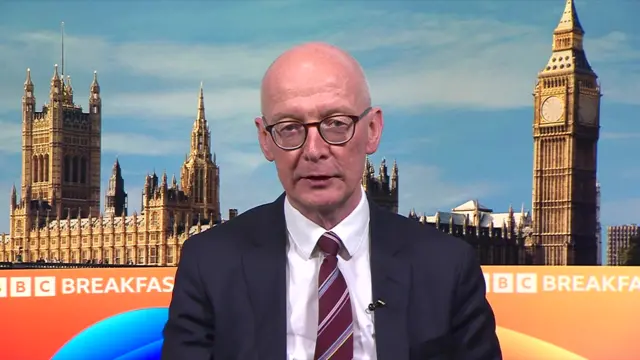
    Pat McFadden sits in front of the BBC Breakfast backdrop, which shows the Palace of Westminster. He is wearing a dark coloured suit and a striped red tie.

    Olly Robbins "made the judgement" that he did not have to tell Keir Starmer about Lord Mandelson not clearing security vetting, says the work and pensions secretary.

    Pat McFadden tells BBC Breakfast that while the call made by Robbins was likely "in good faith", it ultimately led to the prime minister losing confidence in him.

    McFadden also told Breakfast that while he was the minister in charge of the Cabinet Office at the time Robbins said the department signalled there was no need to vet Mandelson, he had "no involvement in any such signal being sent".

  12. Watch: Robbins saga sends 'chill' through civil service, union boss sayspublished at 07:51 BST

    Media caption,

    Watch: PM accused of 'sending a real chill throughout the civil service'

    The way Prime Minister Keir Starmer sacked Olly Robbins sends a "real chill throughout the civil service," says the boss of the the FDA trade union.

    Dave Penman is the general secretary of the FDA trade union - which represents civil servants across the UK.

    He told the BBC's Newsnight: "I think the prime minister is losing the ability to work with the civil service."

    "Who in the civil service would now think they would be immune from when it is politically expedient to be dismissed?" Penman asked.

    "That's not a place any government wants to be because it doesn't deliver for the people of the country," Penman added.

  13. Analysis

    Starmer struggling to escape Mandelson rowpublished at 07:37 BST

    Chris Mason
    Political editor

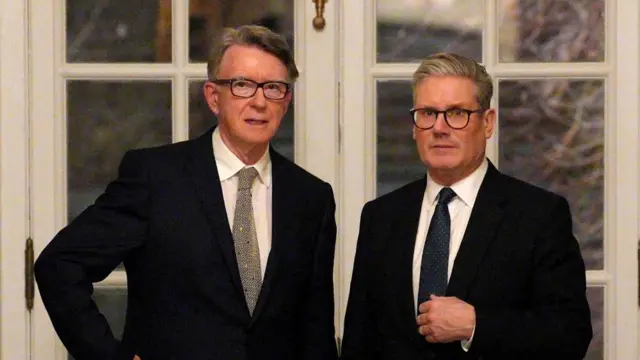
    Keir Starmer and Peter Mandelson pictured in February 2025Image source, PA Media

    This is the seventh day in a row that the self-inflicted damage of the Lord Mandelson saga has rained down on Keir Starmer, and this element of it over the last week is but a chapter in the wider story.

    The minutiae of the prime minister's most politically consequential decision in office are now being forensically dissected and, frequently, in public.

    At the select committee, in the Commons and in the press.

    The building blocks of a judgement call Starmer now acknowledges he got catastrophically wrong are being scrutinised daily.

    So much for the grid of announcements and campaign events Labour folk in Scotland, Wales and in the areas of England with council elections would love to be focused on. Instead, there is incessant conversation about Lord Mandelson.

    And Olly Robbins - who was dumped on by Downing Street from a prime ministerial height over the last few days - responded with a modestly expressed assault on its judgement, sense of fairness and proportion.

    Granted, they have been gunning for his judgement too, in a circular firing squad about credibility.

    With Prime Minister's Questions at lunchtime and the prospect in the coming weeks of the next deluge of documents relating to Lord Mandelson's appointment being published, this is a foul-up Starmer is struggling to escape.

    You can read more analysis from our political editor here.

  14. Analysis

    Pressure on Starmer as he prepares for PMQs while Mandelson row continuespublished at 07:21 BST

    Henry Zeffman
    Chief political correspondent

    Some weeks it’s hard to predict what Kemi Badenoch will ask about at Prime Minister’s Questions (PMQs). This is not one of those weeks.

    She will presumably seize on the elements of Olly Robbins’s evidence yesterday where he described the pressure from No 10 to approve and expedite Lord Mandelson’s appointment.

    No 10 denies that they put pressure on the Foreign Office. There is also an important nuance here which is that Robbins’s argument is that he withstood the pressure, and that his decision to approve Mandelson’s security clearance was unrelated to the pressure he felt.

    His accusation matters nevertheless, because at the core of why Keir Starmer professes to be so angry now is that he says he would have cancelled the appointment of Mandelson had he known about the vetting concerns.

    Robbins, on the other hand, describes a No 10 so determined to press ahead with the appointment that it was even mooted at one point that there be no vetting at all.

    Those two accounts are hard to reconcile.

    This morning, Starmer’s team is drawing some comfort from the fact that Emily Thornberry, the Labour MP who chaired yesterday’s hearing, has backed Starmer’s decision to sack Robbins, saying he should have told No 10 more details of the vetting process.

    Dan Carden, another Labour MP on the committee, takes a different view. He’s said Robbins was “put in an impossible position” and has “had the goalposts moved”, adding: “Why he was sacked... still needs answering”.

    It will be a PMQs where it’s not just what Badenoch asks that matters, but also the mood among Labour MPs sitting behind Starmer while he answers.

  15. Watch: What did Olly Robbins say yesterday?published at 07:08 BST

    Olly Robbins spent almost two-and-a-half hours giving evidence to MPs on the Foreign Affairs committee on Tuesday.

    Here is a reminder of the key things that he said:

    • Robbins told MPs yesterday that when he began the top job in the Foreign Office in January 2025, there was "already a very very strong expectation" from No 10 that Mandelson "needed to be in post" as quickly as possible
    • He spoke of a "dismissive" attitude in Number 10 to Mandelson's vetting, but insisted that his department followed the process "rigorously"
    • He told MPs that he was briefed that the body that conducts vetting considered Mandelson a "borderline case" and were "leaning towards" recommending that clearance be denied
    • Asked about the impact on the government if Mandelson's clearance had been denied, Robbins said: "I think it would have been very difficult indeed"

    Media caption,

    Watch key moments from sacked Foreign Office chief's testimony

  16. Robbins's questioning was an 'extraordinary' session, says committee memberpublished at 07:01 BST

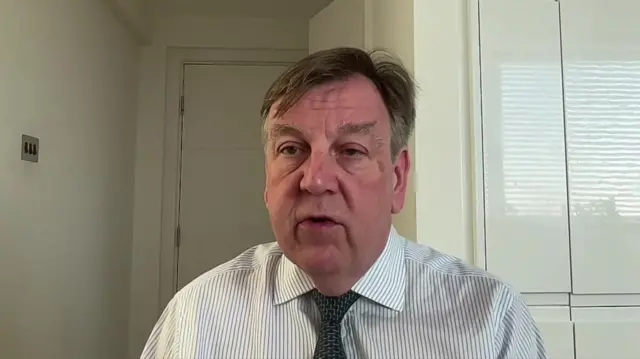
    Sir John Whittingdale sits in a room with white walls and a white door. He is wearing a striped shirt and a dark coloured tie.

    A member of the Foreign Affairs Select Committee says he understands why Olly Robbins may feel "angry and upset" by his dismissal.

    John Whittingdale tells BBC Breakfast that Tuesday's meeting of the committee was an "extraordinary session", later adding that Lord Mandelson should never have been appointed as the UK ambassador to Washington "in the first place".

    Asked whether he agrees that Robbins should have been sacked, Whittingdale says that he does not, and goes on to say: "I understand why he feels angry and upset by that, and that was apparent when he was giving evidence to us yesterday."

    Whittingdale adds: "We still don't know why it was that the prime minister was so determined to appoint somebody to this incredibly important position who was so obviously the wrong person to be in it."

  17. How the Mandelson row got to this pointpublished at 06:45 BST

    Questions over who knew what and when about the appointment of Lord Mandelson as US ambassador continue to be asked, seven months after his sacking from the top job in Washington.

    Here's a reminder of how this row has played out:

    This Flourish post cannot be displayed in your browser. Please enable Javascript or try a different browser.

  18. Starmer to face fresh questions from MPs after Robbins's evidencepublished at 06:40 BST

    Keir Starmer will face fresh questions from MPs later today, after Olly Robbins's evidence to MPs over Lord Mandelson's vetting for the US ambassador job.

    Wednesday's Prime Minister's Questions session comes after Robbins - former top civil servant in the Foreign Office - accused Downing Street of taking a "dismissive attitude" to vetting during Mandelson's appointmentto the Washington post.

    He also said that there was "constant pressure" to get Mandelson into the job.

    Robbins was sacked last week after it emerged that the peer had been sent on the diplomatic mission despite officials raising security concerns, without telling Starmer.

    The PM will be in the Commons from 12:00 BST, but stick with us as we bring you all of the latest updates and analysis.

    Keir Starmer pictured at the British Museum on TuesdayImage source, PA Media
    Image caption,

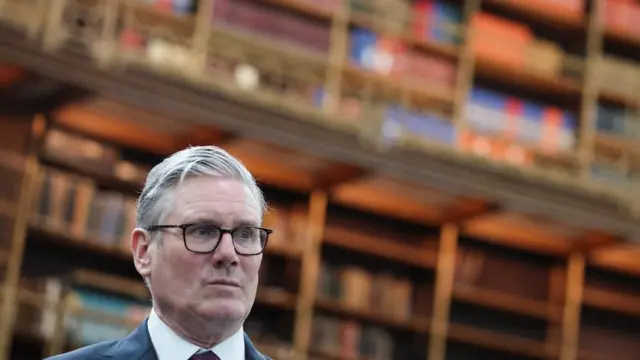
    Starmer will face questions from MPs at 12:00 BST