Summary

  1. Ceasefire in Lebanon comes into force as Iran truce enters final weekpublished at 01:34 BST 17 April
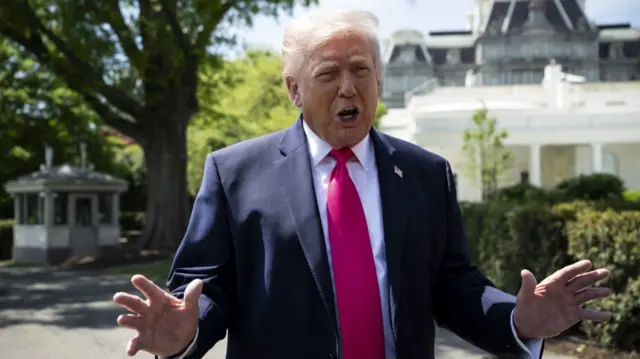
    Donald Trump mid-speech as he addresses the media outside the White House wearing a dark blue suit, white shirt and red tieImage source, EPA
    Image caption,

    The ceasefire was brokered by the US

    A ceasefire between Israel and Lebanon has just come into effect, now bringing a lull to the conflict that has left a dire humanitarian toll.

    US, Israeli and Lebanese officials welcomed the truce's announcement saying it is an opportunity to provide for a firmer agreement moving forward.

    Here's the latest:

    • Trump announced the 10-day truce today, following the first direct talks since 1993 between Israel and Lebanon in the US on Tuesday
    • The agreement was later welcomed by Lebanon, and pitted as an "opportunity" by Israel
    • It forms a separate agreement to the US-Iran truce and comes after Israel continued attacking Lebanon with Netanyahu arguing the country was not included in the wider Middle East ceasefire
    • Despite the agreement, Lebanese officials and Hezbollah urged residents in affected areas not to return to their homes immediately
    • However, Israel has said it will not be removing troops from southern Lebanon while Hezbollah has stressed the deal would be contingent on "a comprehensive halt to attacks across all Lebanese territory"
    • Trump has urged Hezbollah to abide by the ceasefire

    We're closing our live coverage on this page, but you can continue to stay updated here.
  2. Trump calls out Hezbollah, urging peacepublished at 00:51 BST 17 April

    US President Donald Trump is urging Hezbollah, the Iran-backed militant group in southern Lebanon, to abide by the ceasefire with Israel that has gone into effect.

    "I hope Hezbollah acts nicely and well during this important period of time," the president writes on Truth Social.

    "It will be an GREAT moment for them if they do. No more killing. Must finally have PEACE!"

    The ceasefire is technically between Israel and Lebanon, where Hezbollah is based.

    An Israeli official told the the BBC's US partner CBS News that Israel will only respond militarily during the ceasefire to "imminent threats from Hezbollah".

    Israeli Prime Minister Benjamin Netanyahu said Thursday that a more lasting peace deal will require that the Iran-backed group is disarmed.

  3. Displaced people in Lebanon celebrate the ceasefirepublished at 00:34 BST 17 April

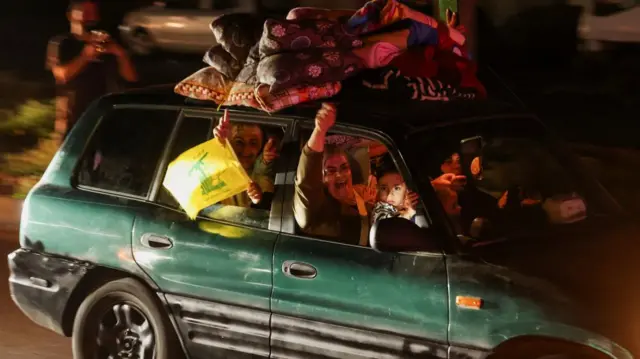
    The 10-day ceasefire between Israel and Hezbollah gone into effect, and Lebanese people are rejoicing with relief.

    Some are celebrating in the streets while others are joining a caravan of vehicles to return to their homes in parts of southern Lebanon that Israel has bombarded for over a month.

    people riding in a car and cheering out the windows, with belongings piled on roof the carImage source, Reuters
    Image caption,

    Displaced people in Sidon, Lebanon react as they return to their homes after the 10-day ceasefire between Lebanon and Israel went into effect

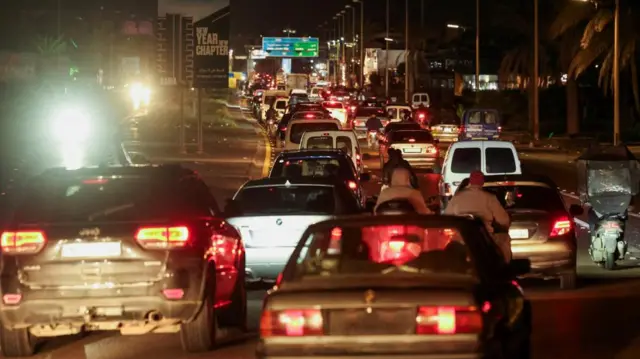
    line of cars on the freeway at nightImage source, Reuters
    Image caption,

    Vehicles crowd a road at night as displaced people return to their homes in Lebanon after a 10-day ceasefire between Lebanon and Israel went into effect

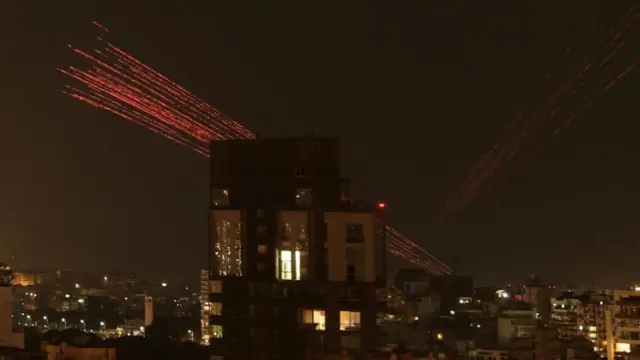
    a city skyline at night with red firework-like streaks in the skyImage source, Reuters
    Image caption,

    Streaks of tracer fire illuminate the sky in celebration of a 10-day ceasefire between Lebanon and Israel, as seen from Beirut

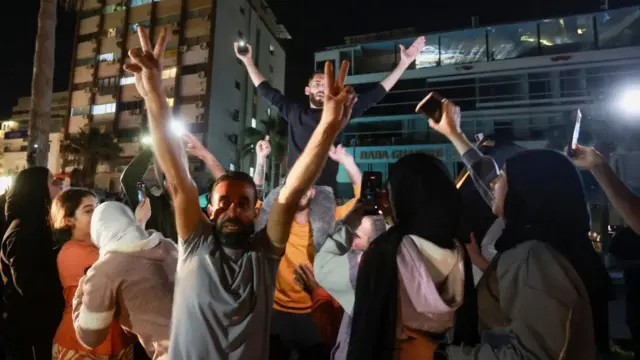
    a crowd of people celebrating, with their arms up, in the streetImage source, Reuters
    Image caption,

    A crowd celebrates in Sidon, Lebanon as displaced people return to their homes after the ceasefire went into effect

  4. Lebanon an 'integral' part of a long-term US-Iran ceasefire - Iranian parliament speakerpublished at 23:43 BST 16 April

    Lebanon forms an "integral part" of a comprehensive ceasefire with the US, a speaker for the Iranian parliament has said.

    In a statement on Telegram, Mohammad Baqer Qalibaf sets out that Lebanon will play "an important role in moving forward for lasting peace in the region".

    His comments follow a meeting with a Pakistani military officer.

    "The issue of establishing a comprehensive ceasefire in all conflict areas is one of the clauses of the initial ceasefire agreement between Iran and the United States, mediated by Pakistan," the statement says.

  5. Analysis

    Ceasefire between Israel and Hezbollah is very fragilepublished at 23:04 BST 16 April

    Frank Gardner
    Security correspondent

    Reactions to this latest ceasefire may be one of relief tempered with a fairly hefty dose of scepticism.

    Remember that the conflict is not between Israel and Lebanon - it's between Israel and Hezbollah.

    Hezbollah, of course, is completely embedded in Lebanon, both politically and militarily - and the fact that there initially hadn't been any announcement or immediate reaction from Hezbollah is a little bit ominous.

    The group has since signalled it is likely to abide by the ceasefire - but adds that a deal will need to include a "comprehensive halt" to all attacks in Lebanon.

    The Israelis will take very little provocation from Hezbollah before they are tempted to break that ceasefire.

    This is a very fragile ceasefire, even more fragile, I would say, than the one between Iran and the US, and of course the two are not disconnected.

    Israel and the US are trying to say that this is a separate issue but for there to be peace in the Middle East, there has got to be peace in the Gulf, in Iran and in Lebanon - and we are a very, very long way off resolving the conflict between Hezbollah and Israel, which has got very deep roots and extends right back into events that take place in the West Bank and Gaza.

    This is breathing space at best.

  6. Images show Beirut skyline shortly after ceasefire comes into forcepublished at 22:33 BST 16 April

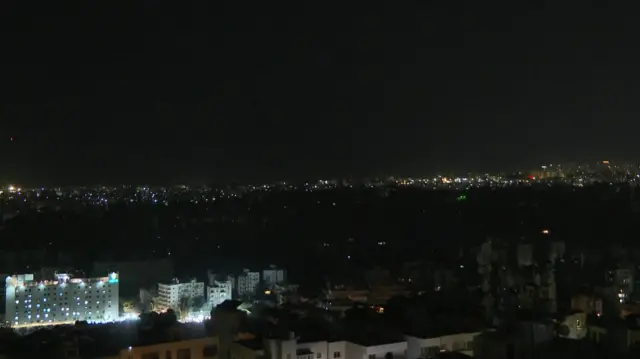
    These pictures - taken a few moments ago - show the Beirut skyline just after 00:00 local time (22:00 BST), when the ceasefire agreement began.

    The deal is in set to last for an initial period of 10 days, but the US says it could be extended.

    The Beirut skyline at night, taken from a livestream of the city.Image source, AP
  7. Israel says it hit 380 Hezbollah targets in the 24 hours before ceasefirepublished at 22:19 BST 16 April

    Just as the ceasefire came into force - at 17:00 EST (22:00 BST) - the Israel Defense Foces (IDF) issued a statement detailing the Hezbollah targets it had struck the previous 24 hours.

    It says it hit more than 380 Hezbollah targets in southern Lebanon in that period, including rocket launchers, headquarters and Hezbollah members themselves.

    It says these strikes were to "support the operations of ground forces operating in southern Lebanon" which Netanyahu says will remain in country to enforce a 10km (6.2 mile)-deep "security zone" even after the ceasefire.

  8. Israel-Lebanon ceasefire beginspublished at 22:00 BST 16 April
    Breaking

    A 10-day ceasefire agreement between Israel and Lebanon, announced earlier by US President Donald Trump, has just come into force.

    Lebanese President Joseph Aoun welcomed the agreement, while Israeli Prime Minister Benjamin Netanyahu called it a "historic" opportunity for peace.

    Iran-backed Hezbollah, which says it will abide by the deal - with conditions - has continued to exchange strikes with Israeli forces in the lead-up to the ceasefire.

    We'll be keeping across the situation and will bring you any key updates.

  9. What we know about the Israel-Lebanon ceasefirepublished at 21:51 BST 16 April

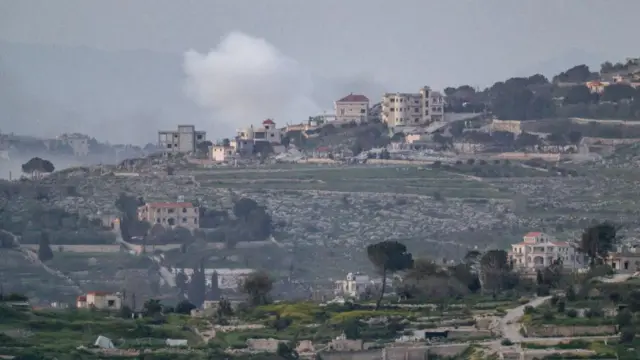
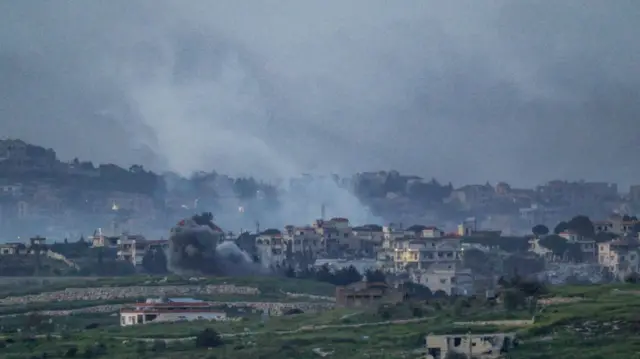
    Smoke rises in Lebanon following an explosioImage source, Reuters

    The Israel-Lebanon ceasefire agreement, announced by US President Trump, is set to come into force in fewer than 10 minutes, at 17:00 EST (that's 22:00 BST and 00:00 in Israel and Lebanon).

    What we know:

    • The ceasefire is set to last for 10 days initially, but the US says it could be extended
    • Israeli Prime Minister Benjamin Netanyahu says it will create an opportunity for a "historic peace agreement" with Lebanon
    • Hezbollah has agreed to abide by the ceasefire, while demanding it must include "a comprehensive halt to attacks across all Lebanese territory" and "no freedom of movement for Israeli forces"
    • Netanyahu says Israeli troops will remain in a 10km-deep (6.2 mile) "security zone" in southern Lebanon - which goes against Hezbollah's demand for them to withdraw
    • The US State Department says under the terms of the deal, the Lebanese government must "take meaningful steps" to prevent Hezbollah attacking Israel
    • It adds that Lebanon’s security forces have "exclusive responsibility" for Lebanon’s sovereignty and national defence

    We don't know what the next steps will be. Trump says he has invited the leaders of Israel and Lebanon to the White House, but nothing is confirmed yet.

  10. Lebanon ceasefire was always part of initial US-Iran deal, Iran sayspublished at 21:45 BST 16 April

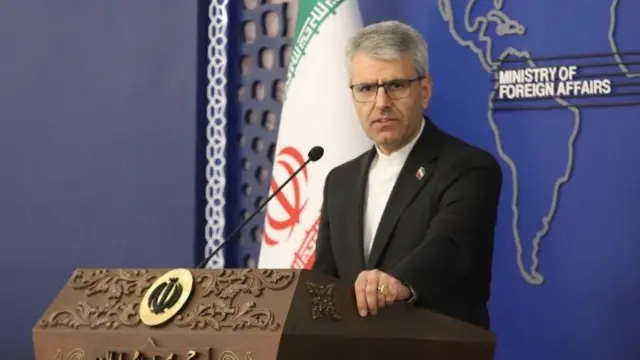
    Ismail Baqai, Iranian foreign ministry spokesperson giving a news conferenceImage source, Iran Foreign Ministry

    A ceasefire covering Lebanon was part of the initial Iran-US deal brokered by Pakistan, says Ismail Baqai, Iranian foreign ministry spokesperson.

    He says that Iran emphasised "from the outset" the need for a "simultaneous ceasefire throughout the region, including Lebanon".

    Baqai expressed his "solidarity" with the people and government of Lebanon and emphasised the necessity of the "complete withdrawal" of Israeli forces from southern Lebanon - something the Israeli PM says he will not do.

    He also calls for the release of all prisoners, the return of displaced residents to their homes, and thanked Pakistan for their efforts in securing the current Israel-Lebanon ceasefire deal.

  11. 'War is bad, peace is good' - Israelis react to ceasefire agreementpublished at 21:41 BST 16 April

    Following the announcement that an ceasefire agreement between Lebanon and Israel will come into force later this evening, Reuters news agency has been gathering the reaction from those inside Israel.

    "I think that war is bad and ceasefire and peace is good... hopefully both parties will be wise enough to have and hold the ceasefire as declared," a 66-year-old lawyer tells the news agency in Tel Aviv.

    At Tel Aviv university, one student says they are "very much pro ceasefire" but says they do not believe a "terror organisation like Hezbollah will actually obey the rules... we have seen many times before".

    While in Haifa, a coastal city north of Tel Aviv, one woman says this ceasefire is the decision "of the US government, of Mr President Trump" adding that she believes it is a "big mistake, since it's impossible to do a ceasefire with the terrorist organisations".

  12. 'We're willing to return, even if our houses are destroyed'published at 21:34 BST 16 April

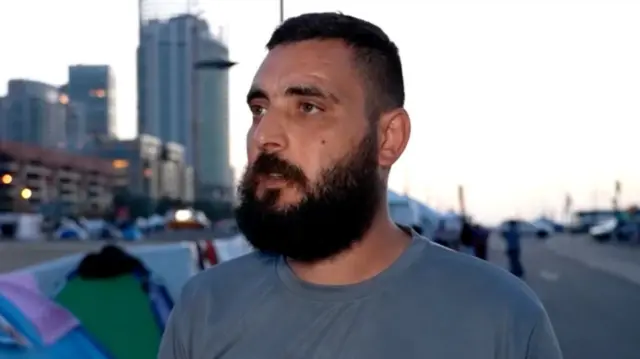
    Displaced Lebanese resident speaks to camera for an interview as he stands near a group of tentsImage source, Reuters
    Image caption,

    "Either our land is fully returned, or we don’t want it," says Ibrahim

    Residents of Lebanon who have been displaced from their homes have been reacting to the latest news of a ceasefire with Israel, and what it could mean for their possible return home.

    Ibrahim Suwaydi, who was displaced from Beirut's southern suburbs, says he believes a ceasefire is not enough.

    "My home in Dahiyeh [Beirut’s southern suburbs] has been destroyed. Who will compensate me," he tells Reuters news agency.

    "Either our land is fully returned, or we don’t want it [the ceasefire]... Either they leave completely, or we're done. We will stay on the road."

    Mohamed Yassie says his country has "accomplished a great deal" if Israel withdraws from southern Lebanon.

    "We're willing to return, even if our houses are destroyed, to return to our villages."

  13. Do not return to your homes in southern Lebanon, urges Hezbollahpublished at 21:21 BST 16 April

    Hezbollah has issued a statement urging those that have been displaced in the war with Israel to to not return to their homes just yet.

    It echoes a similar message issued by the Lebanese Army, who urged residents to "exercise restraint" following the announcement of a ceasefire agreement between Israel and Lebanon.

    In the statement, Iran-backed Hezbollah says southern Lebanon, the Bekaa Valley region and the southern suburbs of Beirut should be avoided "until the situation becomes fully clear".

    "We understand how much you long to return to your villages and homes, and we appreciate the patience and steadfastness," the statement reads.

    "However, out of concern for your safety and your precious lives, we urge you to be patient and endure."

  14. Israel and Hezbollah continue to exchange strikes as ceasefire approachespublished at 21:19 BST 16 April

    Israel and Hezbollah are continuing to launch strikes across the Lebanese border as less than an hour remains before the ceasefire agreement comes into force.

    The Israel Defense Forces (IDF) says search and rescue teams are operating at sites in northern Israel where reports of of strikes have been received.

    It adds that, in response, it is striking the sites from which it says Hezbollah launched these attacks into northern Israel.

    Hezbollah says it has launched rockets against several Israeli targets in the last hour, including in the northern-Israel cities of Karmiel and Nahariyya, and the Rosh HaNikra border crossing.

  15. Iranian commander praises Hezbollah - state mediapublished at 21:13 BST 16 April

    Ghoncheh Habibiazad
    Senior reporter, BBC Persian

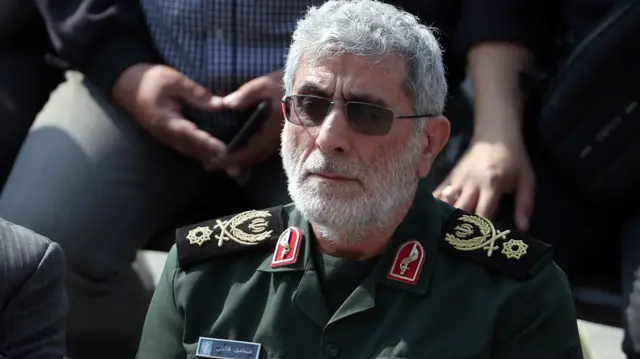
    Esmail Ghaani, commander of the Islamic Revolutionary Guard Corps (IRGC) Quds Force, writes in a message published by Iranian media that the “victor” in the ceasefire agreement is the “heroic Hezbollah”.

    Ghaani says "if a ceasefire is achieved, it will be the result of the steadfast resilience of Lebanon’s resistance (referring to Hezbollah) and the support of the Islamic Republic of Iran".

    He also says that “some seek to impose humiliation” on the people of Lebanon, without mentioning who he is referring to.

    Head of Iranian Quds forces General Esmail Qaani (C) attends the funeral ceremony of former Islamic Revolutionary Guard Corps (IRGC) Brigadier General Abbas Nilforoushan in Tehran, Iran, 15 October 2024.Image source, EPA
    Image caption,

    Ghaani, pictured here in 2024

  16. IDF says it is 'preparing for the possibility of fire from Lebanon'published at 21:02 BST 16 April

    In the last few moments, the Israeli military has said it is preparing for the possibility of fire from Lebanon "following the recent developments".

    Israel Defence Forces (IDF) says its focus is on northern Israel.

    "The IDF is conducting ongoing situational assessments. As of now, there is no change in Home Front Command guidelines," it adds.

  17. The latest analysis from BBC correspondentspublished at 21:01 BST 16 April

    Smoke rises in Lebanon following an Israeli strike, as seen from the Israeli side of the border with LebanonImage source, Reuters

    US President Donald Trump has announced that a temporary ceasefire had been agreed between Israel and Lebanon.

    Over the last few hours, our correspondents in the Middle East and Washington have been unpacking the details. Here's a rundown:

    • In Beirut: "While the ceasefire could pause the violence, it does not resolve the central political dilemma: the future of Hezbollah’s weapons," Hugo Bachega writes. "That remains the question likely to shape what happens once the pause ends"
    • In Jerusalem: "This seems to be another example of Netanyahu bowing to Trump’s demands to halt fighting in the region, even when the terms or the timing are not to Israel’s liking," says Lucy Williamson
    • Also in Jerusalem: Netanyahu says Israeli troops will remain in a 10km-deep (6.2 mile) "security zone" in southern Lebanon, against the demands of Hezbollah. Nick Beake tells us: "It reveals just one of the many complications that could lie ahead"
    • In Tehran: "One week into a fragile ceasefire, some of the sights and sounds of Tehran have returned - but five weeks of war have left many marks," Lyse Doucet observes
    • In Washington DC: Sarah Smith says a ceasefire in Lebanon "offers some good news for for Trump to celebrate and removes a major hurdle to the broader peace talks with Iran".

    Stay with us for further updates.

  18. Lebanese army urges 'restraint' in returning to southern Lebanonpublished at 20:30 BST 16 April

    The Lebanese army has urged residents to "exercise restraint" in returning to villages and towns in southern Lebanon following a ceasefire agreement that has been reached between Israel and Lebanon.

    The army says caution should remain until the agreement comes into force, which it is due to at 22:00 BST (00:00 in Lebanon), adding that even then residents should avoid areas that remain occupied by Israeli forces.

    It also warns of the dangerous of potential unexploded ordnance in the region.

  19. US State Department outlines details of Israel-Lebanon ceasefirepublished at 20:16 BST 16 April

    We've just seen an update from the US State Department, which outlines details of a ten-day ceasefire between Israel and Lebanon that will begin at 17:00 EST (22:00 BST) today.

    The US says both parties, having met for face-to-face talks in Washington this week, "affirm that the two countries are not at war and commit to engaging in good-faith direct negotiations, facilitated by the United States".

    Here are six other takeaways from it:

    • The ceasefire is described as "a gesture of goodwill by the Government of Israel"
    • It also "may be extended by mutual agreement" if negotiations show signs of progress
    • Despite the ceasefire, the US reiterates Israel's right "to take all necessary measures in self-defense, at any time, against planned, imminent, or ongoing attacks"
    • Once the ceasefire begins, the Lebanese government "will take meaningful steps to prevent Hezbollah and all other rogue non-state armed groups" in its country from attacking Israel
    • Those involved in the ceasefire recognise the "exclusive responsibility for Lebanon’s sovereignty and national defense"
    • Israel and Lebanon have asked that the US "further direct negotiations between the two countries with the objective of resolving all remaining issues"
  20. Trump upbeat at a chaotic White House gagglepublished at 20:02 BST 16 April

    Bernd Debusmann Jr
    reporting from the White House

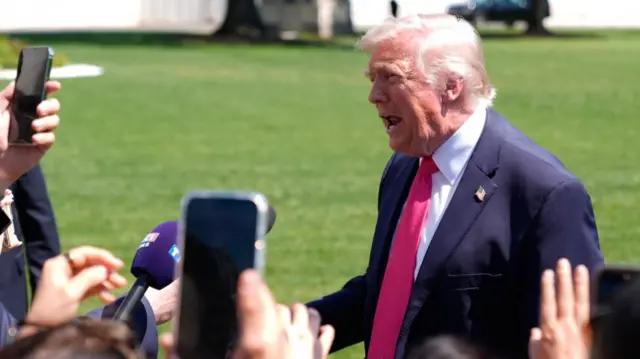
    President Donald Trump addressing the press on the south lawn of the White House. He's in a dark blue suit, white shirt and red tie, in front of him several mics and phones held up by reportersImage source, PA Media

    I've just returned to my desk from the South Lawn of the White House, where President Trump stopped and chatted with reporters during an extended - and extremely chaotic - Q+A session.

    There were several dozen reporters jostling for position outside, yelling over each other to try to get the president's attention, which he seemed to relish.

    Trump struck me as upbeat today, and bullish on the prospects that talks will lead to a lasting peace with Iran, saying that the US is close to a deal and suggested that the Iranians are more amenable to negotiations than they were at the outset of the war.

    He's also clearly feeling slightly triumphant after today's announcement of a ceasefire between Israel and Lebanon, saying that it's "very exciting" and that he believes Hezbollah will be a part of it.

    However, much can go wrong over the course of the next few weeks, and earlier today Defence Secretary Pete Hegseth made it clear that the US stands poised to resume offensive operations inside Iran if a deal is not reached.

    It is unclear whether Iran - which hopes that high oil prices will pressure the Trump administration to scale back demands it previously termed "maximimalist" - is as confident about the negotiations as Trump is.