Beatings, Bible and Latin: Life as a 17th Century grammar schoolboy

 The Cromwell Museum
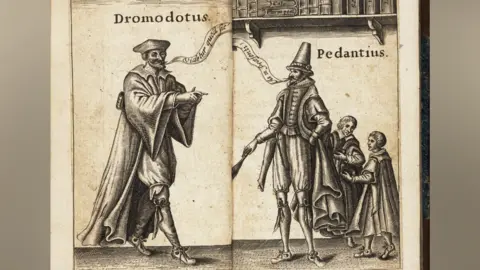
Beatings, Latin translations and Bible studies - a 17th Century grammar schoolboy received a very different style of education from today's students.
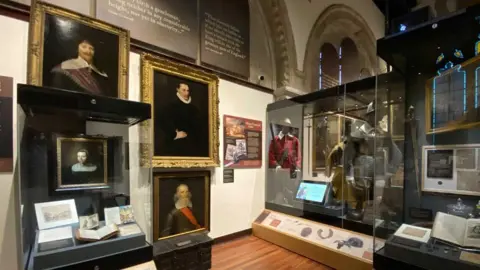
An exhibition at Huntingdon's former grammar school explores how teaching and learning have changed over the centuries in the Cambridgeshire town.
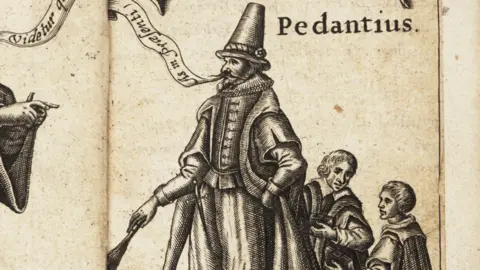
Curator Stuart Orme said: "Birching (beating with birch twigs) was quite common in the 17th Century and the birch was the symbol of the schoolmaster."
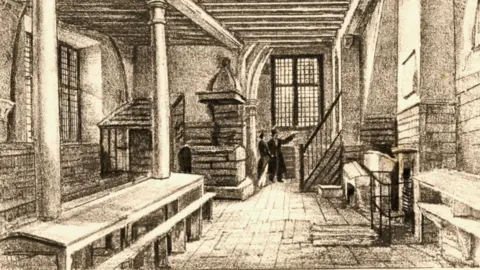
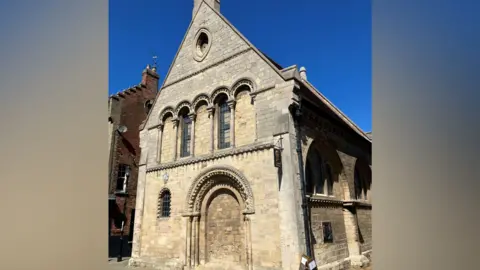
The tiny medieval building is now the Cromwell Museum. Its former pupils included the statesman Oliver Cromwell, diarist Samuel Pepys and wartime evacuees.
 The Cromwell Museum
Most 17th Century school teachers were priests at a time when it was seen as a part-time job, requiring only preaching on Sundays and performing wedding or funeral services, said Orme.
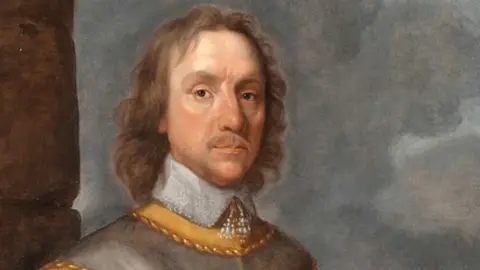
Cromwell (1599 to 1658) attended the school between 1610 and 1616, and the local priest Thomas Beard was the future Parliamentarian leader's teacher.
Beard found the duties too much, said Orme, and asked to be released in 1614, saying he was "tired with my painful occupation of teaching and would gladly now be set free" - but was not allowed to stand down.
 The Cromwell Museum
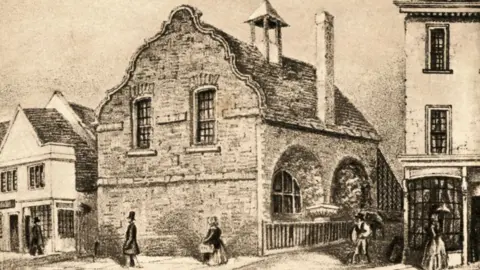
The school was set up in a former monastic building in 1565 as a school for the sons of the town's freemen.
This meant they were educated for free, although they were joined by fee-paying pupils like Pepys (1633 to 1703), whose cousin Edward Montagu was the local lord of the manor.
Orme said: "No more than 30 boys, aged 10 to 16, would be taught at the same time, from 07:00 to 17:00, with a two-hour lunch break - quite often six days a week.
"They'd learn a little bit of history, Bible study, a small amount of basic mathematics - but they'd usually learn that separately by private tutors at home."
 The Norris Museum
 The Cromwell Museum
Latin was a hugely important subject, as the language was used in universities, the legal profession and diplomacy.
"Boys would be given, for example, a text from Julius Caesar's account of his war in Gaul and be expected to translate it into English and back again, as closely as possible to the original text," explained the curator.
Brighter boys were also taught Hebrew and Greek - and they were all boys - although girls were increasingly getting some sort of home education.
Orme said: "We can only guess at the statistics, but we think that roughly a third of the population was literate and more people could read than write, as they were taught as separate skills."
 The Norris Museum
By the 1790s, 60% of Huntingdon's population was literate, which was "a significantly higher proportion than many places in the country", said Orme.
This was because the Walden School was set up in 1736 by a local man to educate more of the town's children. Eventually, the two schools were amalgamated.
The 7m x 10m (22ft x 32ft) grammar school building was used by evacuees during World War Two and as an exam classroom in the 1950s before it became the museum of Cromwell's life and times in 1962.
Cromwell's Classroom: The Early History of Huntingdon Grammar School runs until 27 September.
 The Cromwell Museum
Do you have a story suggestion for Cambridgeshire? Contact us below.
Follow Cambridgeshire news on BBC Sounds, Facebook, Instagram and X.
