Wings of courage: celebrating women entrepreneurs in Nepal
To mark International Women’s Day, BBC Media Action in Nepal has launched a social media campaign celebrating women entrepreneurs
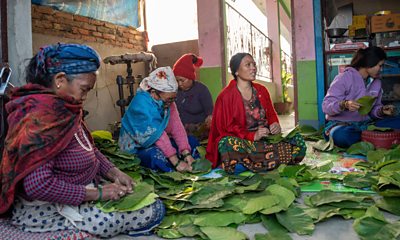

Throughout March, our Nepal team is releasing eight mini-documentaries, each capturing the journey, achievements and challenges of a remarkable woman entrepreneur in the country.
Our campaign features the stories of Bhawana Pulami, a leaf-plate maker; Sunita Bohara, a multi-enterprise farm owner in Nepal’s Sudurpaschim Province; Laxmi Bhattarai, a rattan cane and bamboo entrepreneur; Birma Kumari Thalal, a fibre crafter from Karnali Province; Deepa Gurung, a dairy lollipop producer; Sita Chharahang Rai, an allo cloth weaver; Asha Chaudhary, a boutique designer; and Yam Kumari Tumsa, a Dhaka fabric designer.
All of them are role models in their respective communities. Many women - and men - look to them for inspiration, business ideas, and guidance. Through largely climate-resilient enterprises, they have created employment not only for their families but also for others in their communities. Several have received awards and recognition from provincial and local governments, as well as from various organisations.
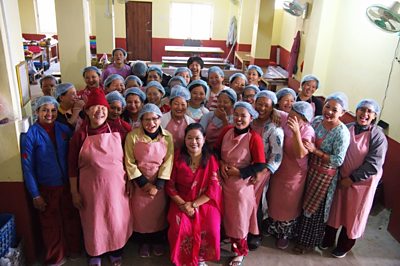
However, their journeys have been far from easy. Each woman faced prejudice, disapproval and setbacks from the outset of her entrepreneurial path. Along the way, they encountered the usual barriers associated with gender norms, societal expectations and cultural practices. Some, such as Birma Kumari Thalal, also faced additional challenges due to physical disability and caste-based discrimination.
Research conducted by BBC Media Action has shown perceptions of women’s economic roles in Nepal are gradually shifting in a positive direction. Nevertheless, women continue to bear the primary responsibility for household chores, childcare and caregiving, reflecting the deeply entrenched patriarchal systems that also shape their journeys.
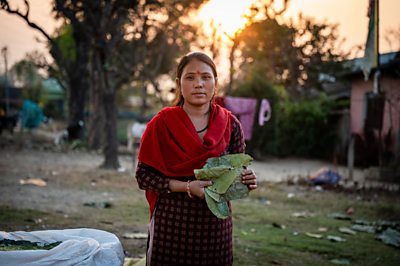
Leaking roof to leaf plates - Bhawana's story
Bhawana Pulami raised her children in a small hut with a leaking roof. Whenever it rained she covered them with plastic sheets as they slept.
She wanted to escape poverty – not for herself, but for her children – and build a proper house so they could sleep peacefully through the rain.
Bhawana began learning skills such as making soap, incense sticks and candles. However, she had no capital to launch a business, and no one was willing to support her financially. Her husband migrated to Saudi Arabia for work, leaving her to raise the children alone.
“At first, no one believed in me,” she recalls. “People would say, what new drama are you doing now? Even my own family turned their backs.”
That didn’t stop her determination to start a business. Ten years ago, using her own small savings, she bought a machine to make plates from leaves. In the beginning, she collected leaves from the forest herself, made the plates and sold them in the local market. Gradually, her products gained popularity.
Today, she employs five local women in her factory, located in Kailali district of Nepal’s Sudurpaschim province. Dozens of others earn an income by collecting leaves to supply her business. She also has built a sturdier house for her children, who are now receiving a good education and don’t have to worry about the leaking roof anymore.
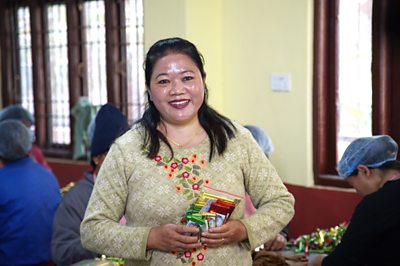
Equality through entrepreneurship - Deepa's story
Deepa Gurung always wanted to become an entrepreneur. For her, entrepreneurship was not only about earning money but about creating a society where women are treated equally. She believed that if women were financially independent, they were less likely to face domestic violence and discrimination.
“If women have to extend their hands before their husbands,” she says, “they may receive not just money but also abuse.”
When she proposed setting up a dairy lollipop production factory, her husband, who was working in Dubai at the time, strongly opposed the idea. He feared she would lose their hard-earned savings.
Deepa approached several banks for a loan, but each rejected her proposal. She then turned to local cooperatives for microcredit. She was also unfamiliar with business registration procedures, yet she navigated the process herself.
She launched her factory eight years ago in Ilam district of Nepal’s Koshi province, and it grew steadily until the Covid pandemic shut it down for nearly two years.
After the pandemic, she approached banks again with a strong business plan. Once more, she struggled to secure a loan, which made her reflect on the role gender bias played. “As I look back,” she says, “I realise I was not denied only because of my lack of experience, but also because investing in women was seen by them as risky.”
Eventually, she secured a loan and revived her factory post Covid. Today, she employs forty women. After the business became profitable, her husband left his overseas job and returned home to support her. “I am proud that I have created jobs for women,” she says. “Financial independence can make women equal to men.”
From failure to opportunity - Laxmi's story
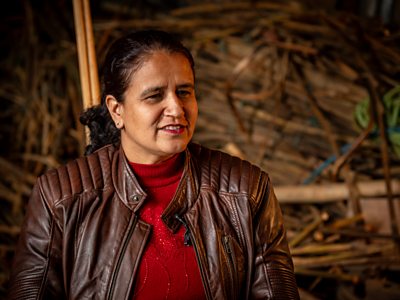
Laxmi Bhattarai left her job at a Kathmandu-based NGO, and moved to Karnali to start her own enterprise five years ago. It was not an impulsive decision as she had long wanted to become an entrepreneur.
Her first attempt, producing plates and bowls from tree leaves, failed. For two years, she suffered financial losses. “There were times I felt like burning my products,” she recalls. “They simply did not sell.”
Laxmi did not give up. After conducting market research, she identified furniture made from rattan cane and bamboo as a viable business opportunity. However, finding skilled craftspeople was tricky, as was securing a bank loan. “Getting a loan is difficult for anyone,” she says, “but more so for women. Property used as collateral is often not in a woman’s name. Women must consult their families, who may not always agree.”
As a single woman, she found it slightly easier to make independent decisions. Today, Laxmi runs a profitable enterprise and plans to expand beyond Karnali. She believes more supportive laws and policies are needed to promote women’s entrepreneurship.
Identity through enterprise - Sita's story
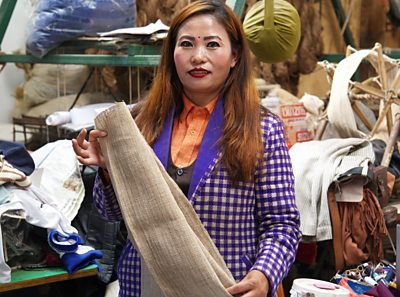
Sita Chharahang Rai worked as an insurance agent, as a teacher, and as a radio presenter after completing her school level studies.
After marriage, however, she didn't want to become simply another wife and daughter-in-law. She longed for economic freedom and an independent identity.
Although her husband and in laws expressed verbal support for her business idea, they were unwilling to provide financial backing. Her husband initially preferred to migrate overseas, as many men in their village did. She persuaded him to stay.
Together with her husband, Ashok Kulung, she decided to produce garments from allo, a fibre derived from Himalayan nettle. Although abundant locally, they lacked knowledge of processing and tailoring so they travelled to different cities in Nepal together to learn.
They eventually established a factory in Morang district of Nepal’s Koshi province. Securing capital was difficult, and she relied on microcredit from cooperatives.
Today, her products are sold in multiple cities across the country. She has built a home for her family, and her husband now works alongside her. “In business, sometimes you laugh and sometimes you cry,” she says. “But you must never give up.”
Rising above disability prejudice – Birma’s story
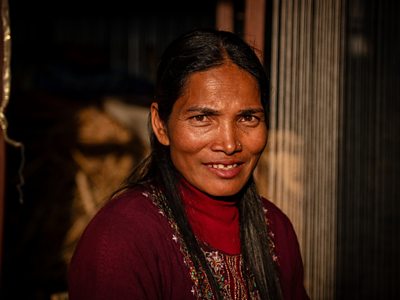
Birma Kumari Thalal lost one of her legs to infection at the age of four. Born into a poor Dalit family in Nepal’s Karnali province, she faced discrimination based on gender, caste and disability. Becoming economically independent was challenging. Yet through determination, she overcame multiple barriers.
Inspired by other female entrepreneurs, Birma began producing environmentally-friendly items such as mats, bags, baskets and stools made from elephant grass, corn husk and banana fibre. Her products are now in demand among restaurants and hotels.
“I do not see myself as a disabled woman,” she says. “I see myself as an entrepreneur. But society often reminds me of my disability.”
She hopes to expand her enterprise into a training centre for other women with disabilities. However, without collateral, she has been unable to access larger loans.
Sewing seeds of independence - Asha's story
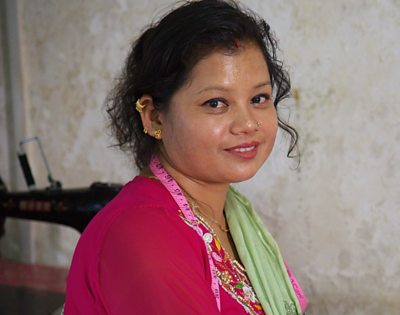
Asha Chaudhary dreamed of becoming a fashion designer from childhood. Growing up in a rural town made that ambition difficult.
Ten years ago, she applied for boutique skills training organised by her municipality. Initially, the quota was full, but she waited and eventually received training in fashion design and tailoring.
Her husband and in-laws expected her to focus solely on household responsibilities. Undeterred, she began designing clothes for friends and relatives from her own room. Gradually, demand increased and she opened a boutique.
Banks were initially reluctant to provide loans, especially as her family would not offer property as collateral. Like many women, she relied on cooperatives for microcredit.
Her boutique has since evolved into a training centre. More than ten young women trained by her have opened their own shops. “What gives me the greatest satisfaction,” she says, “is helping other women become independent.”
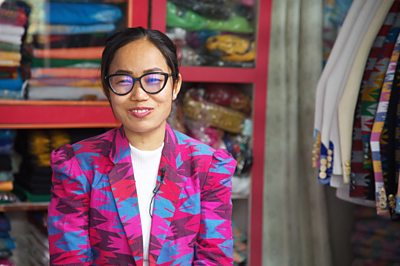
Weaving tradition into business - Yam's story
Yam Kumari Tumsa showed entrepreneurial instincts from childhood, selling chocolates to her school friends. As many of her peers migrated abroad for work, she chose a different path.
She began producing Dhaka cloth, which holds cultural significance in the indigenous Limbu community of eastern Nepal, where she is from. She purchased a handloom and started weaving fabric, later designing coats, trousers and traditional caps.
The market was competitive, and earning trust took time. “My designs were different,” she explains. “People had not seen them before.”
She promoted her products through social media, gradually receiving orders from within Nepal and from the Nepali diaspora abroad. Today, her enterprise provides employment for around one hundred women. Around 30 of them work in her factory, while others weave from home.
“Financial freedom gives dignity,” she says. “Respect matters more than money.”
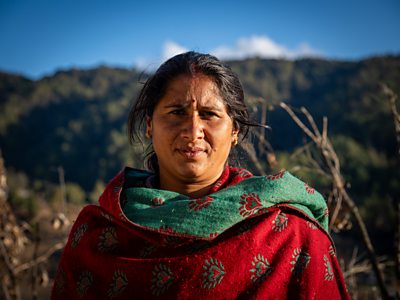
Farming for success - Sunita's story
Sunita Bohara runs a multi-enterprise farm producing vegetables, poultry, fish and pigs. Working alongside her husband, she has built a sustainable agricultural enterprise. “It has not been very difficult because my husband supports me,” she says.
In the early days, Sunita struggled to access quality seeds and reliable markets. Pest control and disease management were also persistent challenges. Through experience and networking, she strengthened her farming practices and supply chains.
She believes low interest loans and access to information are essential for women entrepreneurs. “Challenges are everywhere,” she says. “But with family support, finance and knowledge, we can succeed.”
This campaign is part of the Green Resilient Agricultural-Centred Private Sector Economic Development (GRAPE) II project. GRAPE 2 is jointly financed by the European Union (EU) and the German Federal Ministry for Economic Cooperation and Development (BMZ). As part of this project, BBC Media Action has been implementing the Empowering Women’s Economic Roles via Media Engagement initiative from September 2025 to February 2026.
Read more about our work in Nepal
Search by Tag:
- Tagged with NepalNepal
- Tagged with Women and girlsWomen and girls
