As press freedom declines, glimmers of light
Amid declining donor support and shrinking civic space, media outlets are getting creative in trying to pay the bills

As another World Press Freedom Day approaches, press freedom has reached a new all-time low.
Reporters Without Borders released its annual press freedom index this week indicating over half of the world’s countries now fall into the “difficult” or “very serious” categories for press freedom, the lowest average score for the 180 countries surveyed in the last 25 years.
Broken advertising models, scarce resources, emerging news deserts, security risks and the threats posed by misinformation, technology and AI, combined with geopolitical pressures and the rise of autocracy, are all taking a heavy toll.
This week, we also saw the abrupt cancelling of the world's largest digital rights conference, RightsCon, in Zambia and the subsequent cancellation and rescheduling of most of Unesco's World Press Freedom events, prompting an outcry from thousands of delegates - many of whom were already in transit.
Respectful discussion, debate and innovation to ensure a future for trustworthy public interest media has never been more important. These cancellations are a foreboding sign for the future of a free press.
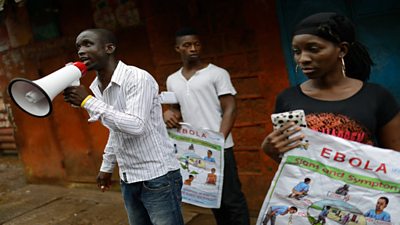
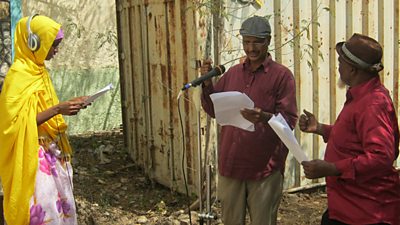
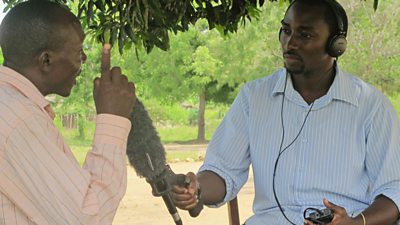
Yet amid all of this, local journalists and media outlets in some of the most difficult parts of the world are carrying on, amid censorship, repression, tight budgets and personal threats to their safety.
They are glimmers of light that we must hold onto in otherwise dark times.
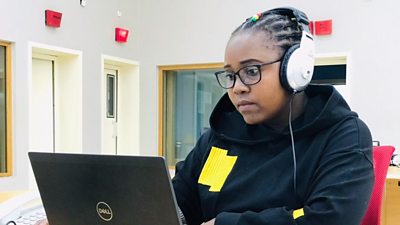
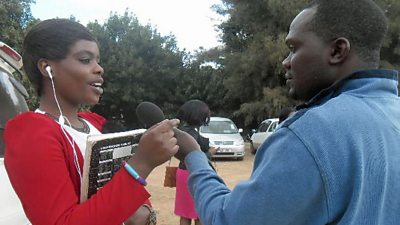
Last autumn I spent time with Lusaka’s Millennium Radio, which remains on air against all odds. Zambia, which ranks 77th in the index this year, has a lively - if heavily resource-constrained - media scene.
Its executive director Patricia Chibiliti told me why it was so important they stay on air.
“We are focused on the issues that affect the ordinary people in their day-to-day lives,” she said of their programming, which covers development issues including health care, water and sanitation access, building small businesses and more, and holds regular call-in shows to connect callers with experts.
“If I’m going to go to the clinic, will there be a doctor available? Do I have a right of referral if I am not satisfied? And we do that – we encourage people to do these things. All our programming is around developmental issues."
“That’s the whole ethos of our station: the people must be heard. And since we are going into an election year being heard becomes supremely important.”
Fifteen years after its founding, Millennium Radio serves a potential audience of about six million Zambians on air and more through their Facebook page. But staying on air for small stations like Millennium is increasingly challenging, amid power cuts that require investments in solar power or feeding generators with expensive diesel fuel; a complicated regulatory and taxation environment; and an advertising model that doesn’t cover costs.
Millennium is one of BBC Media Action’s 40-odd media partners in Zambia, and one of more than 500 we work with across 30 countries – all of whom are facing similar challenges. Our support includes mentoring, training, funding for specific programmes and to stay on air, and working with local media councils to help create freer media environments.
But the foreign aid for media support that once helped sustain stations like Millennium has been cut deeply over the last 18 months. And our researchers investigated how, in light of that, local media outlets are still surviving across Zambia and Zimbabwe.
Creative, innovative solutions
They found radio stations are indeed struggling to make ends meet. But that struggle is accompanied by creative and innovative solutions - including property investments for rental income; cafes, marquees and gardens for private hire; local fundraising events; equipment and tower rentals. Some have even accumulated livestock to help bolster their income.
This kind of ingenuity is being repeated in communities around the world where local media are financially struggling yet deeply valued by their audience. Our researchers found examples of crowd-funding and membership models – but also radio stations that accept donations of livestock and grain for resale toward operating costs; taxi drivers that offer presenters and reporters free rides; barter arrangements with local businesses such as trading ad space for internet access, and solar energy for reduced rent; and direct pitches to development organisations to fund packages including radio programmes, jingles, interviews or drama.
This kind of informal exchange and innovation is the result of local media who are fully embedded in their communities, fighting for people’s rights and holding power to account, and sharing news and information that people need most.
Survival is critical
Their survival is critical. Truly independent media are essential to freer, fairer societies. And in crisis, these may be the best and only sources of information in language people understand – to help them survive and make decisions for their families. BBC Media Action’s work around the world includes collaboration with relief agencies who know this role is essential, and with Met Offices who know local media outlets are crucial in delivering warnings and sharing ways to adapt to a changing climate.
Despite these innovative efforts, media outlets in many parts of the world have closed in the wake of drastic cuts from USAID, the UK’s FCDO and other institutional donors; others are operating on a skeleton staff, susceptible to co-opting and malign forces. Our research found one community radio station, whose budget is around US$70,000 a year, relied on international donors for about 60% of its funding. The rest is patched together – reflecting its value to the community, its determination to carry on, and how vulnerable it remains to further shocks.
This precarious situation illustrates the value of holistic support. Short-term, project-based donor grants that leave media houses vulnerable to boom-and-bust funding cycles can no longer be the answer. Donors need to look at longer-term funding frameworks and invest in assets that deliver returns for the future.
Rewarding courage and creativity
Policy support can look like tax relief, fee waivers and simplifying compliance requirements – acknowledging the realities of the funding environment and the need for local, trustworthy sources of information. Support through media networks can foster higher standards and agreements on pressing issues including content provenance and the responsible use of AI.
Around the world, the space for trustworthy, public interest media is closing fast. Those that remain are demonstrating courage and innovative thinking in every aspect of their work. The future of democracy and of our ability to protect basic human rights relies on continued support for their efforts.


Read more about our work in Zambia
Learn about our projects in
Search by Tag:
- Tagged with ZambiaZambia
- Tagged with Media developmentMedia development
- Tagged with AfricaAfrica
- Tagged with World Press Freedom DayWorld Press Freedom Day
