UN General Assembly 2026
We’re in New York for the 81st UN General Assembly – find out more!
Amid disinformation, diminishing free speech, and a polluted information ecosystems, trusted, independent, public service journalism is indispensable. Local media in fragile and low-income contexts are often the first line of defence against falsehoods – and they need support to continue serving their communities.
We are back in New York to share our work and learning on proving the origin of content in a world of disinformation; our experiences working in climate communication to ensure people have early warnings in extreme weather and information that helps them adapt and cope to climate change; our work for greater gender equality and our commitment to supporting local independent media around the world - because everyone, everywhere has the right to information they can trust when they need it most.
From the UN SDG Media Zone to the Clinton Global Initiative Annual Meeting, watch this space to find out where we are, and how to connect!
Where we'll be
Monday 21 September, 2– 3 pm EDT
BBC Studios and online
Building trust in the age of AI: Lessons from Ukraine
Join BBC Media Action, BBC Research & Development, and Suspilne, Ukraine's public service broadcaster, for a discussion on building trust in the age of AI.
Through a unique collaboration between media, technology and public service institutions, we’ll discuss new approaches to support trusted journalism and strengthen audience relationships, while exploring how AI can be used responsibly in the public interest.
This hybrid event will bring together leaders from media, technology and international development.
Moderator: Jim Brady, senior media consultant and executive and BBC Media Action trustee
Speakers:
- Laura Ellis, Head of Technology Forecasting, BBC
- Viktoria Murovana, Head of Content, Suspilne Ukraine
- Muge Ozkaptan, Senior Product and AI Lead, BBC Media Action
- Judy Parnall, Head of Standards & Industry, BBC
Interested? Please contact eventsmediaaction@bbc.co.uk
---
Tuesday 22 September | 11.30-11:50 am EDT
UNSDG Media Zone
Early Warnings, Early Action: How Media Carries Risk Information to the Last Mile
As disasters intensify under a developing Super El Niño, early warning systems save lives only if warnings reach people in time and are understood. This session brings together media representatives and disaster risk reduction experts to explore how early warning information is reflected in journalists' own work — what gets amplified, what gets lost, and the role media plays in the "last mile" of risk communication. Panellists will share practical experience translating technical alerts into public understanding and discuss how newsrooms and the UN system can strengthen collaboration to advance the Early Warnings for All initiative, ensuring no one is left unwarned.
Moderator: Simon Bishop, CEO, BBC Media Action
Speakers:
- Khadija Maalej, North Africa senior project manager, BBC Media Action
- Sujit Mohanty, Chief of Intergovernmental, Interagency cooperation and Partnerships Branch, United Nations Office for Disaster Risk Reduction
Watch the session on UN WebTV (leads to third-party site).

Tuesday 22 September | 3.30-3.50 pm EDT
UNSDG Media Zone
The leadership gap: can the SDGs be achieved without women in power?
Featuring insights from UN Women leadership alongside female government representatives and youth leaders, this panel examines the pivotal role women play in advancing the SDGs. Grounded in key findings from the 2026 Gender Snapshot Report, speakers will share real-world country case studies and highlight concrete pathways to accelerate gender-responsive development.
Moderator: Khadija Maalej, North Africa senior project manager, BBC Media Action
Speakers:
- Ms. Lesego Chombo, Minister of Youth and Gender Affairs of Botswana
- Ms. Bjørg Sandkjær, Assistant Secretary-General for Policy Coordination, United Nations Department of Economic and Social Affairs
- Ms. Sarah Hendriks, Director of Policy, Programme and Intergovernmental Division, UN Women
Watch the session on UN WebTV (leads to third-party site)

Tuesday 22 September | 10.30am -2.30pm EDT
Clinton Global Initiative Annual Meeting
Who Shapes the Story? Media, Technology and Gender Equality
Media can both reflect the world and help reshape it. Storytelling can influence the narratives that shape public attitudes, behaviour, and social change. And change depends not only on the stories that are told, but on who is empowered to tell them. As emerging technologies increasingly disrupt how media and information are created, distributed, and amplified, important questions are arising about gender equity, representation, and power. This discussion will explore how media, storytelling, and technology are influencing gender norms and public narratives, examine what works to shift attitudes and behaviours, and how that can be adapted to new platforms and formats. It will also explore the impact of online abuse on women's public and political participation, and how to build a more inclusive digital and communications landscape where women’s voices shape the conversations and decisions that affect their lives.
Table discussion facilitator: Grace Davies, Head of Global Partnerships, BBC Media Action
(by invitation only)
---
Meet our team in New York
To contact our team, reach out to communications@uk.bbcmediaaction.org
Or email them directly - firstname.lastname at bbc.co.uk


Our impact areas
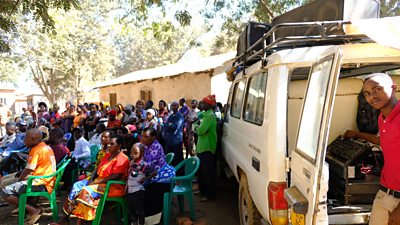
Building stronger democracies
We strengthen democracy by supporting public interest media content and platforms that enable vulnerable people to participate in democratic processes as active and informed citizens who are better able to understand and address the biggest challenges they and the world are facing.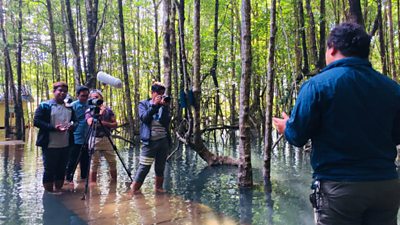
A safer, more habitable planet
We contribute to a safer and more habitable planet by providing an information lifeline in humanitarian emergencies, by supporting information flows that help people adapt to climate change, live sustainable lifestyles and protect nature, and by supporting balanced discussion of conflict and division.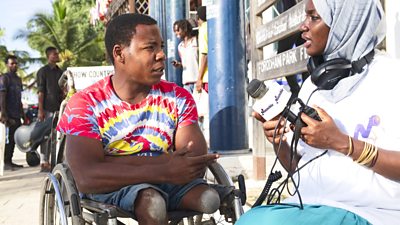
More inclusive societies
By ensuring everyone has access to trustworthy information and fair representation, our work supports the UN SDG commitment to “leave no one behind”. We meaningfully include people who are often marginalised or excluded in society; addressing gender norms and barriers, the rights of people with disabilities and of LGBTQI+ communities, improving access to health, education and work opportunities.
Search by Tag:
- Tagged with EventsEvents
