| 28 October 2014 |

| |
| BBC Homepage | | |
| |||
| Contact Us | | |
Visual ArtsYou are in: Leeds > Entertainment > Visual Arts > Moving statues 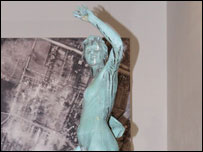 Moving statuesThe statue of Circe has been relocated from Park Square to Leeds Art Gallery, for much-needed conservation work after being badly vandalised and weather-damaged over the years. She has been out in the cold for years but the bronze statue of the Greek goddess, Circe has left her Park Square perch for much-needed repair work. The much-loved but badly-weathered and damaged sculpture has relocated to Leeds Art Gallery - the original venue for which she was originally commissioned. The painstaking process of restoring her will start - in full public view within the art gallery itself so visitors can witness the work of the conservators. She will then take up permanent residence in either the gallery or the new city museum opening later this year. 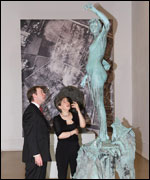 Circe gets admiring glances Moving Circe from her Park Square plinth was a delicate operation which involved hoisting her carefully by crane before transporting her across the city centre. It is a belated return home for the Alfred Drury masterpiece, which was commissioned specially for the Leeds Art Gallery in 1894. Based on the Circe of Homer's Odyssey, the beguiling goddess lured Odysseus' men and turned them into swine with a cup of poison. She was unceremoniously shifted to an modern brick plinth in Park Square in the 1950s when Victorian sculpture fell out of fashion. Since then she has suffered discolouration and damage from the element s- as well as falling victim to theft and vandalism which have led to the loss of her wand, cup, drapery and wreath. The Henry Moore Foundation is funding Circe's restoration, which will be co-ordinated by the Henry Moore Institute, who in collaboration with Leeds Art Gallery, maintain and develop the city's sculpture collection. Meanwhile, her place in Park Square is being taken by the eye-catching but less-valuable figure of Mercury, not an original but one of several late 19th century bronze casts of the original Renaissance statue by Giambologna. Mercury proved popular when on display in the courtyard at Temple Newsam House in the 1960s and 70s, but has been in storage and not been seen since then. Circe's creator Alfred Drury, who was based in London, also crafted high-profile sculptures for display at such prominent places as Buckingham Palace and the Old Bailey. However, it is acknowledged by the National Archive that Drury made his name with the creation of Circe, for which he was awarded the Paris Universal Exhibition gold medal in 1900. He has other works on display in Leeds, including the Joseph Priestley bronze and the so-called Drury Dames, the eight semi-draped female torch bearers in City Square. last updated: 05/03/2008 at 18:09 SEE ALSOYou are in: Leeds > Entertainment > Visual Arts > Moving statues   External Listings
The BBC is not responsible for the content of external websites |
| | About the BBC | Help | Terms of Use | Privacy & Cookies Policy |