Johnny Depp "shines through the murky gloom of 17th-century England" in The Libertine. Most people hadn't heard of the debauched English poet John Wilmot until seeing this unflinching and cheerfully unorthodox biopic by debut director Laurence Dunmore. Unfortunately most people still haven't heard of him as the film garnered very mixed reviews and few people ventured out to see it.
Poetic Licence
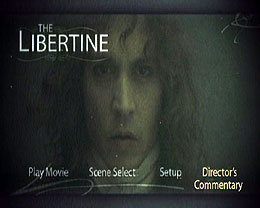
Only a commentary by Dunmore accompanies the film on DVD. He calls this "a passion project for everyone involved," which is a probably a polite way of saying that it took years trying to get it funded. Even so Dunmore doesn't delve into the torturous process of trying to get the green light in a forever struggling British film industry. Perhaps that's because he didn't write the script and have to shop it around - his break coming as a result of a background in TV commercials. In any case he says little on pre-production aside from casting Depp, Samantha Morton and Rosamund Pike. Naturally, he adds that they were all first choices.
Taking Liberties
One of the standout features of the film is its gloomy and gritty look, but again Dunmore doesn't say too much about this except that it reflects Wilmot's view of London at the time. He mentions in passing that he used a hand-held camera and that he operated it "most of the time", but that's as much insight as we get into the nuts and bolts of production. He chooses instead to focus his commentary on whatever is going on inside the characters' heads as they play out a scene - in effect, reporting the subtext. That's fine for viewers who were baffled by the film the first time around otherwise it's just superfluous and, frankly, rather dull.
EXTRA FEATURES