| 13 November 2014 |

| |
| BBC Homepage | | |
| |||
| Contact Us | | |
Religion & EthicsYou are in: Edinburgh, Fife and East Scotland > People & Places > Religion & Ethics > Rebuilding a Cathedral: an easy five-step guide 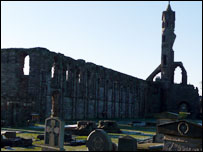 Rebuilding a Cathedral: an easy five-step guideDavid Kerr on the case for restoring St Andrews Cathedral to its former glory. So you fancy rebuilding a cathedral? Or do you? OK, let's deal with that one first. Why restore a ruin? The ruin, in this particular case, being those fragmentary remains which still cast a long shadow over the cathedral city of St Andrews in Fife. Founded in 1160 by Bishop Arnold. Consecrated in 1318 in the presence of King Robert the Bruce. The largest church ever built in Scotland. The apex of national life. A magnet for pilgrims from across the continent. Fatally wounded in 1559 in the wake of an inflammatory sermon preached by John Knox, an alumnus of the city's university. And since then? Well, over 400 years of decay and gentle decline. So should the story of St Andrews Cathedral end there? Cue step one of an easy guide to restoration. Step One: the case for rebuilding 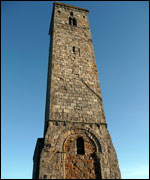 "St Andrews Cathedral is my favourite building-in-waiting," says Richard Demarco. The renowned Edinburgh artist has long harboured dreams of resurrecting the cathedral. "I really do believe it's a disgrace to think it's in a state of ruins. I don't think any other country in the world would accept that." Such is his passion that he launched a campaign ten years ago to promote his vision for restoring it to its original purpose – a Catholic cathedral. Ambitious as it sounds, such a project wouldn't be the first restoration of a historically significant Scottish church in recent times. The 19th century saw the rebuilding of Dunblane Cathedral whilst the 20th century saw both Paisley and Iona Abbeys restored.
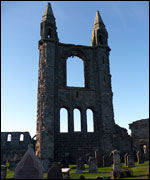 Joe Logan is a well known Glasgow architect and developer. He's also no stranger to the process of returning historic churches to their former glory. Over a decade ago he launched an architectural competition which proved to be the catalyst in restoring St Mungo's Church in the city's Townhead area back to its original 19th century, neo-gothic, splendour. Step Three: get the plan approved “An interesting idea.” That's how the First Minister describes the notion of rebuilding St Andrews Cathedral. It's a ruin he knows very well indeed. After all, Alex Salmond spent four years as a history student at the city's university in the 1970s. Now, three decades on, it would ultimately be up to his government to give the go-ahead to any restoration. “The Cathedral played a hugely important role in Scotland's spiritual and temporal life,” says Mr Salmond. “I'm not aware of any plans to rebuild it, although it's certainly an interesting idea.” Step Four: build a cathedral Over a hot chocolate and an empire biscuit in the BBC canteen, Peter Drummond sketches out what must surely be one of the first drafts for a rebuilt St Andrews Cathedral since its 16th-century demise. Peter worked for many years as an architect with Historic Scotland. He's now out on his own and is happily rebuilding ruined tower houses and castles all across the country. Step Five: the rededication 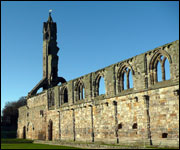 So there you go. You now have your cathedral. What’s more, a glorious national shrine now awaits those souls setting out on the, newly approved, pilgrim way from Iona to St Andrews. The BBC is not responsible for the content of external websites last updated: 01/06/2009 at 15:29 You are in: Edinburgh, Fife and East Scotland > People & Places > Religion & Ethics > Rebuilding a Cathedral: an easy five-step guide |
| | About the BBC | Help | Terms of Use | Privacy & Cookies Policy |