 | 24 September 2014 |

| |
| BBC Homepage | | |
| |||
| Contact Us | | |
Local HistoryYou are in: Dorset > History > Local History > Dorchester's old court 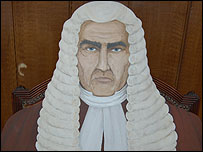 The court saw gruesome punishments Dorchester's old courtKevin O'Donovan It's the building with the most gruesome history in Dorchester and was once a place of death and violence. As it opens its doors to visitors, the Old Crown Court and Cells are a vivid record of a time when justice was rough and times were hard. It's a glimpse back into a time when justice was harsh - to a time when you could be sentenced to death for crimes such as felling a young tree or stealing food worth the equivalent of a few pounds. Help playing audio/video The Old Crown Court and Cells is most famous for the part it played in the trial of the Tolpuddle Martyrs - six farm labourers who were 'accused' of swearing a secret oath, as part of a friendly society, to protect their decreasing wages in 1834. Found guilty, they were sent to Australia as their punishment, but the national outrage that followed paved the way for the Trade Union movement and their actions are still remembered today with an annual festival. The men received a pardon in 1835. Dorchester - a centre of justiceThe court was built in 1796 during the reign of King George III but a court had stood on the site previously. In 1685, Judge Jeffreys - also known as the Hanging Judge - sentenced 200 people to death, and a further 800 people were sold into slavery in Barbados. They were supporters of the Duke of Monmouth who had unsuccessfully attempted a rebellion after the death of his father, King Charles II. The throne had gone to the Duke's uncle, the Catholic King James II, rather than the illegitimate Duke. Judge Jeffrey's verdict came to be known as the 'bloody assize' - an assize were courts originally initiated by King Henry II (1154-1189), where he would send judges all over the country to preside over local cases. Help playing audio/video Rough justiceJustice was particularly tough - there were public hangings with the body left on display all day. The last person to be sentenced to hang in the court was in 1941 - David Jennings was a soldier based in Dorchester and was found guilty of murder, and the building was last used as a court in 1955. The building is now the offices of West Dorset District Council. Guided tours of the court and cells are available during the summer. Contact West Dorset District Council's Tourism team on 01305 252 241 or visit the website.The BBC is not responsible for the content of external websites last updated: 01/08/2008 at 14:46 You are in: Dorset > History > Local History > Dorchester's old court 
| ||||||||||||||||||||
| | About the BBC | Help | Terms of Use | Privacy & Cookies Policy |

