| Kingcombe Meadows Nature Reserve | - The Kingcombe Meadows Reserve is made up of 117 hectares of unimproved grassland with ancient hedgerows, areas of scrub and mature trees. There are ancient green lanes, several small streams and ponds. It is rich in grasses, herbs, lichens, butterflies and fungi.
- Its one of 35 sites managed by Dorset Wildlife Trust and one of five wildlife education centres.
- Dorset Wildlife Trust has 600 active volunteers - to find out more, visit the DWT website.
- Getting there:
The reserve is located near Toller Porcorum north east of Bridport.
Map Ref: SY 555992
Nearest Railway Station: Maiden Newton (4 miles)
Local bus service: Maiden Newton (4 miles)
|
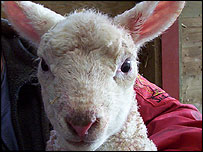
Lambing and calving are now nearly finished - much to the relief of the wardens, as it can be a busy and problematic time. Above is a picture is of one of the first lambs born at Kingcombe Meadows this year. 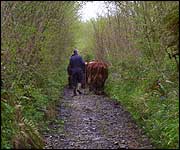 | | Moving the cows |
We took the last of the cows and calves out to the fields, today, so now there are none left in the barn. That means the end of feeding, mucking out and bedding-up until around Christmas time. The cows are enjoying their first bite at the new grass in one of the fields on the north of the reserve. To get them there, we walked then through Lower Kingcombe village and up Mary Well Lane - a very old, wet lane, with many different wild flowers in the banks and underfoot. The weather has not been too brilliant, so far, but the wild flowers (for which Kingcombe is so unique) are bursting out everywhere - cow parsley, milkmaids, golden saxifrage, marsh marigold and many others. I also heard the first cuckoo on 15th April while out with Paul (reserve manager) at South Poorton Reserve, checking the cattle and fences there. 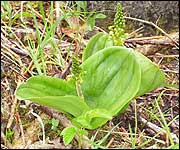 | | Twayblade |
Where scrub has been cleared from a section of the the old railway line cutting on Powerstock Common, a huge number of Common Twayblades has sprung up. Twayblade is one of the several types of orchid which grow on the reserve - they have green flowers. There are normally Twayblades in that area at this time of year, but not visible in such numbers. We are not sure if they were there all the time but hidden in the undergrowth, or whether the exposure to light has made dormant seeds germinate. 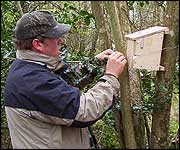 | | Putting up a dormouse box |
Also on Powerstock Common, Neil (the warden) has put up a number of new dormouse boxes. I gave him a hand with some - it is quite difficult to remember exactly where you put them. The boxes, (hopefully containing dormice), will be monitored by specialists who have to be licensed through English Nature to carry out this work. Follow the year at Kingcombe Meadows with Keith's online diary which will be updated every month. |