Specialist factual commissioning: History
Our latest commissioning brief and contacts for history
Our team
History is more than just the exploration of the past, it informs how we view the present and how we act in the future. The programming we commission covers a huge range of historical periods – from the ancient world to the very recent past – but all our commissioning decisions are centred on whether an idea has the capacity to contribute to the historical record, reshape current debate and inform UK life.
In a world where competition for viewers is fierce, we are looking for programmes that break the latest discoveries, offer exclusive access, explore big themes in modern society and are loaded with relevance and resonance for our audience.
Big, broad appeal ideas which can attract co-production finance remain an important priority. We can help facilitate these conversations. And there are ample opportunities to commission programmes with strong regional portrayal. For these pitches to be successful across the nations they must resonate both locally and UK-wide.
Please keep in mind the styles and approaches below when pitching ideas.

Our commissioning needs
1. Creative innovation

Creative and technical innovations have the capacity to completely refresh historical subjects. As advances such as AI evolve, how can we incorporate them into our programme-making to bring the biggest moments in history to a new audience?
We are exploring the foundation of the British monarchy with Kings and Queens: The Story Of The Monarchy (w/t). This is big history, grounded in the insights and expertise of some of Britain’s best historians, and brought to life with the latest drama-documentary and visual effects techniques. What other subjects could be given a new life with this approach?
The key to these ideas is creative innovation built on dedication to the original source material. Four-part series Titanic Sinks Tonight plotted the sinking in real time, piecing together the events minute by minute with absolute authenticity using the verbatim accounts of survivors spoken by actors. Reconstructions filmed on a virtual production stage then enabled accurate dramatisation of the events at scale.
We’ve evolved that approach with The Diary of Anne Frank (w/t), dramatising the words of Anne and fellow fugitives in World War Two Amsterdam. The best ideas often pair iconic subject matter with a depth of storytelling detail, tight character driven narratives and a personal eyewitness perspective.
We’ve had huge success using first-person eyewitness accounts and drama-documentary to attract new audiences and bring closed worlds to life. What other programme-making approaches could we employ in this type of history?
2. Contemporary history

Our contemporary history is driven by insider testimony from the corridors of power, or on the street, combined with rare and previously unseen archive. Successful titles tend to explore individual personalities or forensically unpack discrete events. Subjects and narrative treatments are also geared towards drawing in audiences on iPlayer.
One example, Brexit: A Very British Revolution gave an inside account of the machinations behind the scenes at the very top during the Brexit referendum. This is era-defining recent history that will shape the UK for years to come. We are looking for more contemporary history which tackles major UK events or institutions in a definitive way.
We are also looking for international stories with a strong UK perspective. Hostage explored the risks and necessity of journalism in the world’s war zones through the extraordinary story of British photojournalist John Cantlie. Meanwhile, Escaping Idi Amin explores the subjects of identity and belonging through harrowing accounts of the expulsion of 80,000 Ugandan Asians in 1972. International stories can be extremely successful, but they must have global scale and resonance.
What unites all these testimony-driven series is a level of access that gives viewers a feeling of being ‘inside the room’ as these events unfolded.
What other precincts or important moments from the last five decades could we tackle? This could be grass-roots history, testimony from the frontlines, or perspectives from the top tables of power.
Contemporary history can be commissioned as high impact singles or series of anything from two to five episodes, depending on the subject matter.
3. Multiplatform approaches
Across the BBC there is an ambition to grow our presence on YouTube and develop ideas for multiple platforms, from digital to iPlayer, linear TV and BBC Sounds.
In science, Clickbait Clinic with Stacey Dooley is an iPlayer and linear TV proposition with a separate YouTube offer. What ideas could work in this multiplatform way for history?
Often these ideas will be produced at a lower cost, but they provide an opportunity to experiment with form and work with new presenters. When pitching ideas to us please do consider the potential podcast or digital angle.
4. Attention-grabbing singles

Ambitious single films can have a huge impact on both iPlayer and linear, but it’s vital that they aren’t lost in the crowd. The execution must be best-in-class and grab media headlines so they can create word-of-mouth buzz to draw in audiences. Titles have to hit the schedules by generating noise and stand out on the iPlayer homepage.
Examples that achieved this include Secrets of the Bayeux Tapestry: Inside the Museum, which got exclusive access behind the scenes to the exhibition of the decade.
The feature-documentary Damilola: The Untold Story sheds fresh light on this tragic death with the help of actor John Boyega, his sister Grace Boyega, and Damilola’s brother Tunde Taylor.
The feature-documentary Linford had exclusive access to the British sprinter Linford Christie to unpack his life story.
Other singles to attain this quality and profile include the Bafta and Emmy-winning documentary Simon Schama: The Road to Auschwitz, and over 11 million viewers have seen Elizabeth: The Unseen Queen to date, showing the appeal of uncovering previously unseen royal home movie footage.
5. Landmark

We are actively looking for the next evolution in landmark programming. Empire with David Olusoga examined the history of the British Empire over the last 500 years in a timely and fresh way, with ambition and scale. We want more ideas that promise this sort of definitive approach to a subject.
Landmark series are often presenter-led, but we also want to explore new ideas that challenge this form or modernise the genre. How can we innovate in the way we cover landmark style series, while tackling history that the whole nation can embrace?
6. New talent
We are looking to commission single films that break out the next generation of expert presenting talent. These will need two vital ingredients: standout talent working professionally in the field and an attention-grabbing idea that will bring in a big audience. To be successful, we need both. These commissions might reveal new journalism, tackle urgent subjects that only the BBC would cover, or mark key anniversaries.
7. Returnable history

Premium returnable history formats remain a cornerstone of our success, from Who Do You Think You Are?, Digging for Britain and A House Through Time to Lucy Worsley Investigates. We’re always interested in the next returnable history hit which can turn into a brand. These ideas must appeal to a broad audience and have a real clarity of proposition to attract viewers on iPlayer.
Lucy Worsley’s Victorian Murder Club is a great recent example of the sort of potentially returnable history we are commissioning: a perfect story engine with a huge range of potential cases to move on to.
Unscripted on iPlayer
Read about how we commission unscripted content in an iPlayer first-world, along with advice and further resources to maximise the impact of your programme on the platform.

Commissioning for iPlayer: find out more
Strategy and advice for maximising impact on the platform

History commissioners

Jack Bootle
Head of Commissioning, Specialist Factual
Simon Young
Head of History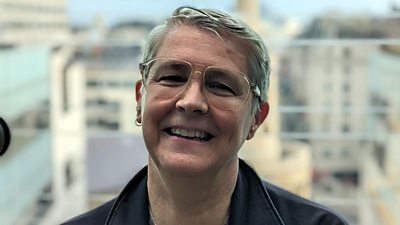
Emma Hindley
Commissioning Editor
David Harron
Commissioning Editor, Scotland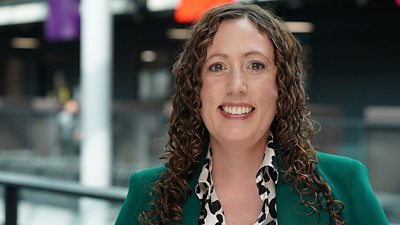
Sian Harris
Commissioning Editor, Wales


How to send us your ideas
Go to PiCoS
Our ideas submission system for established companiesAccessing PiCoS
Eligibility criteria, how to guides and contactsHow we commission
Our processes, commitments and prioritiesNot an indie?
Grow your skills and career in television
Further advice and support
Named business leads
Business advice per genre for companies with ideas in playIndies outside London
Advice and commissioning leads for each nation and regionSmall or new indies
Our tailored support packages and adviceDiverse-led indies
Our investment, commitments and contacts
Production resources
Diversity on and off-screen
Requirements, funds and contactsSustainable productions
Requirements, resources and contactsProduction and delivery website
End to end programme delivery and contacts
Explore the site
Briefs and contacts
Commissioners and ideasSupporting indies
How we commission and workSkills and training
Industry training and skills development
Search by Tag:
- Tagged with FactualFactual
