

Why dropping me is not bias
- 3 Mar 08, 08:15 AM
I had rather more sympathy than usual with the politician, whom I know to be a highly intelligent chap with very well-developed powers of analysis, as he aimlessly wandered around failing to make his point in a radio interview at the weekend.
I was still feeling a bit annoyed with myself for my performance on Radio Four’s Feedback programme.
Not that the interview was anything other than courteous and gentle, but on listening back to myself, I felt I was too busy agreeing with listeners who felt we should do more on European politics and not enough explaining how much we do in fact do.
But the complaints the programme had taken up were interesting. One strand was about the lack of coverage of the Lisbon treaty in Parliament which I have written about before.
But Charles Bell had a more specific complaint. I like specific complaints: unlike general accusations of bias, you can do a bit of soul searching or simple research and answer them.
His argument was that the BBC didn’t lie, but revealed pro-EU bias by editorial decisions that suppress certain European stories. He singled out the recent revelations about a secret report on MEPs’ abuses of their expenses.
I’m going to give you chapter and verse on this because I think, in general, while we at the BBC are good at engaging in quasi-philosophical arguments about coverage, I think we sometimes shy away from discussing the nuts and bolts of decision-making. 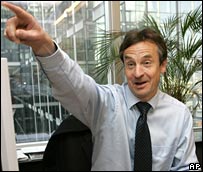
This can give the impression of a monolithic institution where all heads nod at the same time, rather than the seething arguments and sometimes chaotic process that exist in the real world. Mr Bell says he did not hear the story mentioned on Radio Four.
My colleague Dominic Hughes broadcast a news report on the 7am bulletin on Radio Four and the story was also in a number of newspapers. Today interviewed the MEP behind the revelations, Chris Davies. A portion of this interview was then used on the 8am bulletin.
It was immediately obvious that this was a story that the editors liked.
Someone once described a news story along the lines of something surprising, but not too surprising. This story fitted that cynical definition.
Fat cats
It chimed with the perception of the MEPs as fat cats, and was a good follow-on to the recent running story about MP Derek Conway’s office expenses.
I was phoned by the editors of both the TV news at Six and Ten and we agreed that this was likely to be a better story than Gordon Brown’s visit to the commission in Brussels, which was happening later that day.
News 24 did a live interview with Chris Davies and leader of the Labour MEPs, Gary Titley, and I recorded them for my planned piece. 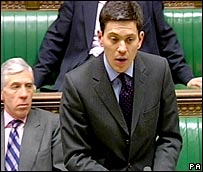
Just as I was leaving the office for Gordon Brown’s news conference, an important story broke: the foreign secretary’s statement on “extraordinary rendition”.
This would push us down the bulletin’s running order but the editors assured me they still wanted to run with the MEPs’ expenses.
A few hours later, I was justabout to put my coat on and go down to the Parliament in Brussels to do some pieces to cameras, when the news broke of the verdict in the Suffolk murders.
I realised immediately the game was up. Both the Six and the Ten would want to run extensive reports and background pieces. MEPs’ expenses would be squeezed out.
The editors took a little while longer changing their running orders, but I knew the ‘phone-call was coming. The Radio Four Six o’clock bulletin took the same decision, although they kept a piece I had done on Brown’s visit.
Editorial choices
Editors have limited time in their bulletins and have to make difficult choices. Personally, I am at least as interested in MEPs’ expenses as the murders, especially when the question “why did he do it?” can’t be answered.
But I know I’m weird. If I had been in the hot seat and editing TV bulletins I would have easily overcome my own dislike of crime stories and would have made exactly the same decision.
That’s not quite the end of the tale. Rather to my surprise the Today Programme liked the story so much that they did it again on Saturday, even though nothing had really changed.
So, no pro-European bias, rather the reverse: initial enthusiasm for a story that backed up a stereotype which fell victim to something that happened: otherwise known as a much stronger news story.
The BBC is not responsible for the content of external internet sites
Description
Archive
« March 2008 »
| Sun | Mon | Tue | Wed | Thu | Fri | Sat |
|---|---|---|---|---|---|---|
| 1 | ||||||
| 2 | 3 | 4 | 5 | 6 | 7 | 8 |
| 9 | 10 | 11 | 12 | 13 | 14 | 15 |
| 16 | 17 | 18 | 19 | 20 | 21 | 22 |
| 23 | 24 | 25 | 26 | 27 | 28 | 29 |
| 30 | 31 |
Being Discussed Now

Latest from BBC News blogs
Nick Robinson: |  |
Douglas Fraser: |  |
Brian Taylor: |  |
 |
Richard Black: |  |
Jonathan Amos: |  |
- News Editors
- Sport Editors
- Journalism Labs
- BBC Internet Blog
- Radio 4 Blog
- Peston's Picks
- Nick Robinson's Newslog
- Stephanomics
- Mark Easton's UK
- Mark Mardell's America
- Nick Bryant's Australia
- Andrew Harding on Africa
- Gavin Hewitt's Europe
- Soutik Biswas' India
- dot.Rory
- Science: Jonathan Amos
- Richard Black on environment
- Today: Tom Feilden
- Fergus Walsh's medical files
- Newsnight: Paul Mason
- Newsnight: Mark Urban
- Torin Douglas
- Will Gompertz's arts
- Phil Coomes on photojournalism
- Magazine Monitor
- Mark D'Arcy in Westminster
- NI: Mark Devenport
- Scotland: Brian Taylor
- Scotland: Douglas Fraser
- Wales: Betsan Powys
- Martin Rosenbaum on FOI
- 5 Live Breakfast
- Newsnight
- PM programme (iPM)
- World Tonight: Robin Lustig
