


The Scottish gamble
- 30 Apr 07, 08:58 AM
Scotland is not voting on independence next Thursday. But with the SNP leading in the polls, it is interesting to ask what economic cases can be built for or against an independent Scotland.
Indeed, lots of economists are taking to the newspapers and airwaves to offer a view.
Here's mine.
It starts with the basic premise that Scotland has two things that England does not.
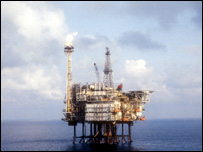 The first is a disproportionate level of UK funded public spending. The second is oil, the revenues of which are taken by the UK government.
If Scotland were independent, it could expect to lose the UK funded public spending; but it could expect to gain the oil money. In the short term, that's the fiscal choice Scotland would be making if it decided to leave the UK and go it alone.
As it happens, the choice is a fairly balanced one at the moment. The oil money Westminster takes, more or less pays for the "extra" public spending Scotland enjoys.
I'll give you the exact figures on which I base this claim as I know these things are much argued about and are very fraught.
The oil money in the fiscal year just ending would be worth £8.6 billion to Scotland, assuming that the Nationalists are right in asserting the country would keep 95% of the total UK £9.1 billion oil revenues.
The public spending "bonus" that Scotland was budgeted to enjoy in the 2005/06 year (the latest available) was worth about £1,500 per person. That was the difference between per capita government spending in Scotland and in England. Multiply that up by Scotland's 5.1 million people (and multiply it up by about 6.2% to bring it forward to 2006/07). In total, the public spending bonus on my calculation then comes out at £8.1 billion.
So - loosely speaking - Scotland gives the UK £8.6 billion of oil money, and the UK gives Scotland £8.1 billion of extra public spending.
Now, given the uncertainties of this debate, that's about all the data you need to make a short term assessment of Scotland's "viability" as an independent nation. If Scotland had been independent last year, and had stuck to the same spending policies, it would have had a government whose fiscal position was not that different to that of the UK.
 A lot of debate has been stirred by this however. You can read about the competing claims in my postscript below. The Scottish Executive claims about Scotland's deficit make it sound unviable; the SNP claims make it sound as though Scotland is in surplus. The truth I think lies in between. On my calculation for last year, I think Scotland would have had a deficit of £3.5 billion, which would have been manageable.
But as I say, the detail you can read below.
However, does all this statistical banter matter?
Probably not much. The short term is not the best horizon over which one should assess Scotland's viability.
The choice to take money out of the North Sea rather than out of the Westminister Parliament would have long term implications.
And one negative implication in particular, is that an independent Scotland would be very dependent on oil.
Oil would be vital to sustaining the current level of Scottish public spending, accounting for a fifth of government revenue, and about the same proportion of national income.
And yet, at some stage, the oil will run out or diminish. Or the price will fall. And then what?
The argument that the oil money can be put into an endowment fund for Scotland's future doesn't add up because the oil money will have already been used to pay nurses and teachers.
But there is an upside to independence. Scotland could make some different decisions to those it’s allowed to make right now.
 It could cut defence spending very heavily, because as a small country, it can free ride on the defence of its neighbours. It can cut corporate taxes and attract international companies which would bring extra revenue in. The UK can't do the same, for fear of provoking retaliation from other big countries.
So it's not impossible to envisage a Scotland that would re-invent itself into a high growth dynamic economy.
The decision to go independent then, involves a gamble: that Scotland could re-develop itself better as a separate economy than as part of the UK; and that it could do so before the huge oil economy faded out of its current significance.
It's a gamble because we don't know what will happen to oil, and nor do we know how successful Scotland will be at reinvigorating its economy.
It could go right, as it has for Ireland in recent years. Or it could go wrong, as it did for Ireland in the first few decades of its history.
However, there is one other implication of independence. And this is perhaps the most important, and the least predictable.
Would it move the political centre of gravity in Scotland?
For London-based journalists, it is striking just how far left of England, Scotland's politics lies.
How would independence affect that?
Some Scots think that if only Scotland could free itself of the tyranny of English capitalism it would become more socialist. After all, Scotland's devolved government is restrained by Westminster in its spending, and through the disciplines of the Labour Party in the radicalism of its policies.
But there is a counter-argument. That independence and fiscal autonomy would make Scotland not more socialist, but more like England. When government spending is paid for directly by taxation on Scotland's own middle class, that group may be less inclined to vote for it.
Or to put it brutally, when the oil money ran out, if Scotland had not reinvented its economy, it would have to learn pretty fast how to do so. There would be no security blanket, and the desire for a tax-financed public sector to shore up the economy may diminish.
I'm not sure which way this debate goes, but it is interesting that a number of market-oriented economists - such as John Kay - are beginning to see the merits of independence as a possible "kick up the bum" factor to a Scotland that can be accused of low aspiration compared to its economic potential.
Now, economists are in demand in this election. But they can't give definitive answers to the important questions about Scotland's future. They might be able to pontificate about the short term fiscal consequences, but that's not where the real argument should be.
It's the growth capacity of the nation that matters for its economy. And there's far too much uncertainty surrounding that, for any detailed statistical banter to be very illuminating.
For the Scots the decision to remain or not remain part of the UK, has to involve some leap of faith.
The BBC is not responsible for the content of external internet sites
I'm Evan Davis, the former BBC economics editor.
I've now moved on to a new job, presenting Radio 4's Today programme. Evanomics will continue to exist in some form, as yet undecided.
Evan's categories
- (Latest entries, and comments)
- Notes on Real Life
| Are we stupid? (63) Central banks get together (32) Flat market (55) |
Small Change
 | Taboo of nationalisation (11) Chancing it (10) Shrinking economy (3) |
Vital Statistics
 | Setting prices (17) Unsustainable deficit (68) The first quarter... (20) |
Stars and strife
 | Dollar thrill (13) Prompts v causes (9) Dow vs ABX (11) |
Evan's Reading List
 | Irrationality (72) |
Archive
« January 2008
| Sun | Mon | Tue | Wed | Thu | Fri | Sat |
|---|---|---|---|---|---|---|
| 1 | 2 | 3 | 4 | 5 | ||
| 6 | 7 | 8 | 9 | 10 | 11 | 12 |
| 13 | 14 | 15 | 16 | 17 | 18 | 19 |
| 20 | 21 | 22 | 23 | 24 | 25 | 26 |
| 27 | 28 | 29 | 30 | 31 |
Evan's TV/Radio reports
- Banks' share trading probed
Broadcast: 19 Mar 2008 - Evan Davis on the economy
Broadcast: 18 Mar 2008 - Banks unite on credit crisis
Broadcast: 11 Mar 2008 - Housing slump hits flat prices
Broadcast: 29 Feb 2008 - Bank predicts soaring inflation
Broadcast: 13 Feb 2008
- The above links are to some of Evan's recent TV & Radio reports.
You will need Windows Media or Real Player to watch/listen (help).
Feeds

- News Editors
- Sport Editors
- Journalism Labs
- BBC Internet Blog
- Radio 4 Blog
- Peston's Picks
- Nick Robinson's Newslog
- Stephanomics
- Mark Easton's UK
- Mark Mardell's America
- Nick Bryant's Australia
- Andrew Harding on Africa
- Gavin Hewitt's Europe
- Soutik Biswas' India
- dot.Rory
- Science: Jonathan Amos
- Richard Black on environment
- Today: Tom Feilden
- Fergus Walsh's medical files
- Newsnight: Paul Mason
- Newsnight: Mark Urban
- Torin Douglas
- Will Gompertz's arts
- Phil Coomes on photojournalism
- Magazine Monitor
- Mark D'Arcy in Westminster
- NI: Mark Devenport
- Scotland: Brian Taylor
- Scotland: Douglas Fraser
- Wales: Betsan Powys
- Martin Rosenbaum on FOI
- 5 Live Breakfast
- Newsnight
- PM programme (iPM)
- World Tonight: Robin Lustig
