Archives for October 2011

The Radio 4 schedule changes on Monday 7 November

Blog comments are currently unavailable. Find out more.

Post categories:

Paul MurphyPaul Murphy12:30, Monday, 31 October 2011

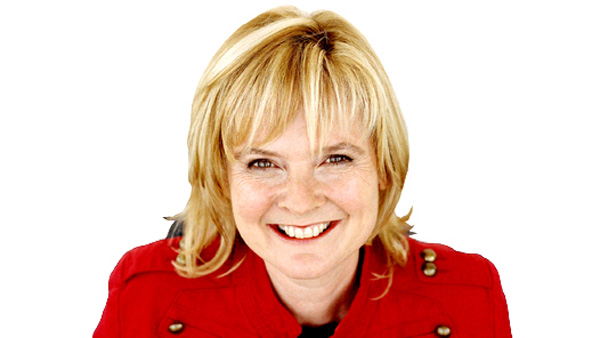
Martha Kearney

Martha Kearney, presenter of The World at One

Next Monday 7 November the much talked about schedule changes take place.

The big change is that The World at One will have an extra 15 minutes. As a result the weekday afternoon schedule has been changed and some programmes have also moved day. For example, The Film Programme is now on Thursday afternoons rather than Friday.

Radio 4's scheduling guru Tony Pilgrim is going to blog at the end of the week about the changes and also answer any of your questions about the new schedule. So do leave you questions at the end of this post.

Gwyn has blogged previously about the changes and in particular her desire to extend the World at One. You can read Gwyn's posts here and here.

In the meantime I've compiled a list of the Monday to Friday afternoons so you can see the programmes that have moved and the changes that have been made.

Monday:

  • 1.00pm World at One
  • 1.45pm 15 minute weekly series (previously 3.45pm)
  • 2.00pm The Archers
  • 2.15pm Afternoon Play
  • 3.00pm Quiz (previously 1.30pm)
  • 3.30pm Food Programme repeat (previously 4pm)
  • 4.00pm Popular arts (previously 11.30am Tuesdays)
  • 4.30pm Beyond Belief/The Infinite Monkey Cage

Tuesday:

  • 11.30am Music documentary (previously 1.30pm)
  • 12.04pm Call You and Yours
  • 1.00pm World at One
  • 1.45pm 15 minute weekly series (previously 3.45pm)
  • 2.00pm The Archers
  • 2.15pm Afternoon Play
  • 3.00pm Making History/Home Planet
  • 3.30pm Off The Page (previously 1.30pm Thursday) or Costing the Earth (previously 9pm Wednesday)

Wednesday:

  • 1.00pm World at One
  • 1.45pm 15 minute weekly series (previously 3.45pm)
  • 2.00pm The Archers
  • 2.15pm Afternoon Play
  • 3.00pm Money Box Live
  • 3.30pm Science/Health repeat (previously 4.30pm)
  • 4.00pm Thinking Allowed
  • 4.30pm Media Show (previously 1.30pm)

Thursday:

  • 1.00pm World at One
  • 1.45pm 15 minute weekly series (previously 3.45pm)
  • 2.00pm The Archers
  • 2.15pm Afternoon Play
  • 3.00pm Open Country/Ramblings
  • 3.30pm Book club/Open book (previously 4.00pm)
  • 4.00pm The Film Programme (previously 4.30pm Friday)
  • 4.30pm Material World (previously 4.30pm)

Friday:

  • 1.00pm World at One
  • 1.45pm 15 minute weekly series (previously 3.45pm)
  • 2.00pm The Archers
  • 2.15pm Afternoon Play
  • 3.00pm Gardeners' Question Time
  • 3.45pm Short story (the other short story slot is now Sunday at 7.45pm)
  • 4.00pm Last Word
  • 4.30pm Feedback/More or Less (previously 1.30pm)

Other things to note: The Monday afternoon repeat of Archive on 4 has been dropped.

Paul Murphy is the editor of the Radio 4 blog

Five podcasts for the weekend

Blog comments are currently unavailable. Find out more.

Post categories: , 

Paul MurphyPaul Murphy10:00, Saturday, 29 October 2011

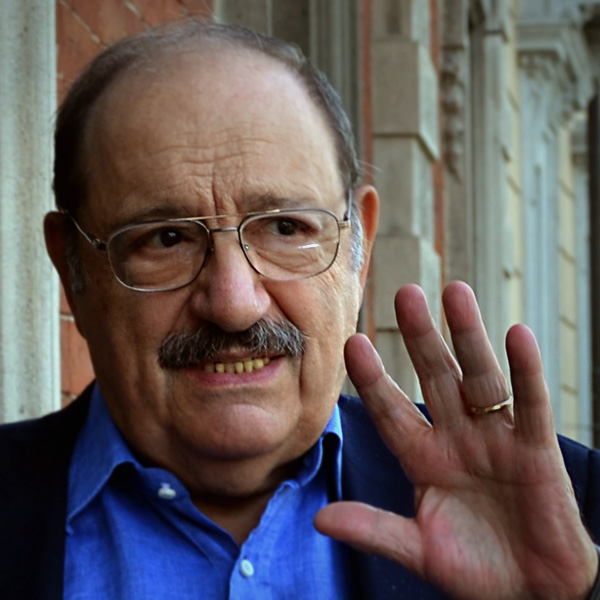
Umberto Eco

"Five podcasts!" Umberto Eco in a Front Row special. Picture by Jerome Weatherald

The preamble

I've picked out a selection of the currently available Radio 4 podcasts. You can listen online or download to keep, or put onto your phone or MP3 player. There are many more available on the Radio 4 podcast page.

Some podcasts are available for only seven days (eg Comedy of the Week; Friday Night Comedy) but others do have a huge archive you can download at any time (eg Desert Island Discs; In Our Time). If you haven't used podcasts from the BBC before there's some podcast help here. All quotes unless stated otherwise are from the Radio 4 website programme info.

The selection

1.Don't Start with Frank Skinner and Katherine Parkinson

"What do long term partners really argue about? Sharp new comedy from Frank Skinner. A masterclass in the great art of arguing."

More info

Podcast

2.Life Scientific: Jocelyn Bell-Burnell

"In 1974, her supervisor and head of department won the Nobel prize for Physics for a discovery which was essentially hers. Some people call it the No-Bell, Nobel prize because they feel so strongly that Jocelyn Bell-Burnell should have shared in the award."

More info


Podcast

3.Desert Island Discs: Mark Gatiss

"When Desert Island Discs excels, there's really nothing quite like it," said the Guardian. "The biggest laugh of the programme came as he introduced the fifth track. 'I was genuinely torn between the Liebestod from Tristan and Isolde,' he explained, 'or Su Pollard's Come to Me (I Am Woman).' Pollard won."

More info and the podcast

4.The Film Programme: A celebration of 1971 American Cinema

"Francine Stock and guests travel back four decades to what might be the most extraordinary year in American cinema - 1971. The year that saw the release of such films as Klute, The Last Picture Show, The French Connection and Carnal Knowledge."

NB: There's an archive of 56 episodes including the recent interview with Woody Allen.

More info

Podcast

5.Front Row: The daily podcast

Front Row is now available as a daily podcast as well as a weekly "best of". "Kirsty Lang meets Italian intellectual and novelist Umberto Eco, now nearly 80, at his home in Milan. The writer looks back at the surprise success of his first novel The Name of the Rose, published when he was 48, which has sold 50 million copies."

More info

Podcast

Paul Murphy is the editor of the Radio 4 blog

In Our Time newsletter: The Siege of Tenochtitlan

Blog comments are currently unavailable. Find out more.

Post categories: , 

Melvyn BraggMelvyn Bragg16:55, Friday, 28 October 2011

Editor's note: This week Melvyn Bragg and his guests discussed the siege of Tenochtitlane. As always the programme is available to listen to online or to download and keep - PM

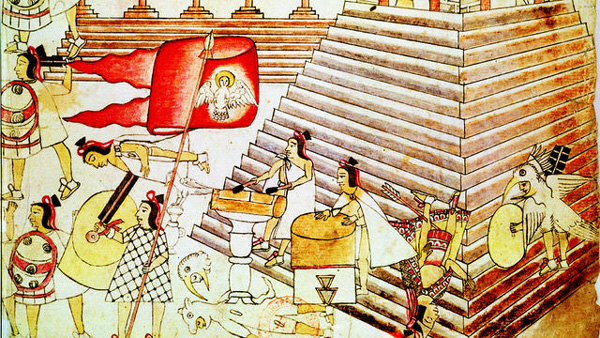
The Siege of Tenochtitlan

There was rather a forceful discussion afterwards, mainly between Alan Knight and Elizabeth Graham.

The gist of it seemed to be (I had to pop in and out of the studio while it was going on) that Elizabeth thought that the reason for the huge losses in battle of the Aztecs was that they insisted on not killing, but trying to take captives by mere maiming. This was not only to increase their status, but also because they were in the game of seeking hostages for tributes. She compared it with Iraq where there was no attempt to capture territory, but the attempt was to capture the elite or the resources.

On the other hand, Cortes was also trying to capture the resources and the elite... As I said, I was in and out of the studio.

At one stage Alan Knight spoke forcefully about the impact of firepower in warfare, and pointed out that Kitchener at Khartoum had a killing ratio even more extreme than that in Tenochtitlan.

I'm dictating this while lying on a bed in a hotel in the middle of Glasgow, preparing to go and give the Alexander Stone Lecture. I had to come here by plane, which reminded me how much I hate internal flights on planes. I wanted to set off from Euston and toddle up the west coast to Glasgow in about five and a half hours, and once north of Wigan (a splendid sight from the railway line) look out on God's own countryside, and with plenty to read and the odd sandwich, not a bad way at all to spend the day.

Instead of which it's hustle, security, queuing, waiting, queuing, hustle - okay, privileged to do this sort of thing and, okay, we need security. But, but...

After the programme I went down to the Directors Cut studios to put the commentary on for the last of the three programmes we're making for BBC Two. They've taken a heck of a lot of making. I think they're coming out in January. At the moment we have the clumsy title of Class and Culture 1911-2011. I think the three directors and myself are going to hold hands in a circle, somewhere quiet and dark, and hope that we are granted a better title. It's been fascinating to try to interconnect the two, but far, far more difficult than I thought it would be at the start. The most difficult thing of all is that there's hardly anything absolutely definite you can say. It is full of contradictions and fuzziness and qualifications. But once we got used to that, it was a tantalising project.

Then off to the airport (as said) and here to Glasgow.

Haven't seen the ducks in St James's Park for a long time. The few open air outings I've had in London have been walking around Hampstead Heath. Manage to get an hour or so in many mornings. The last few mornings have been glorious October autumn. The trees on the Heath still in full leaf (back in Cumbria the trees are swept bare of leaves because of the high winds and now their branches scratch the louring skies) and an air of frolic about that little urban Eden.

Yesterday morning two young women steamed past, dressed to sweat. here are other ladies who walk with many dogs and have conversations which you have to circumnavigate. ulian Barnes was sitting on a bench doing the cryptic crossword puzzle and we walked along together for a while. I'm very pleased he's won the Booker. I've known him for years. First met him in the Pillars of Hercules in Greek Street when he and I both wrote for Ian Hamilton's magazine, The New Review. He peeled to the east, I peeled to the west and now I'm about to have a quick shower and peel off to Glasgow University to talk about... the impact of the King James Bible? Yes, that's the one.

Melvyn Bragg presents In Our Time

Archive on 4: After the Dictator

Blog comments are currently unavailable. Find out more.

Post categories:

Phil Tinline15:00, Friday, 28 October 2011

Ed's note: Following recent events in Libya this Saturday's Archive on 4 explores what happens after dictators leave power - PM.

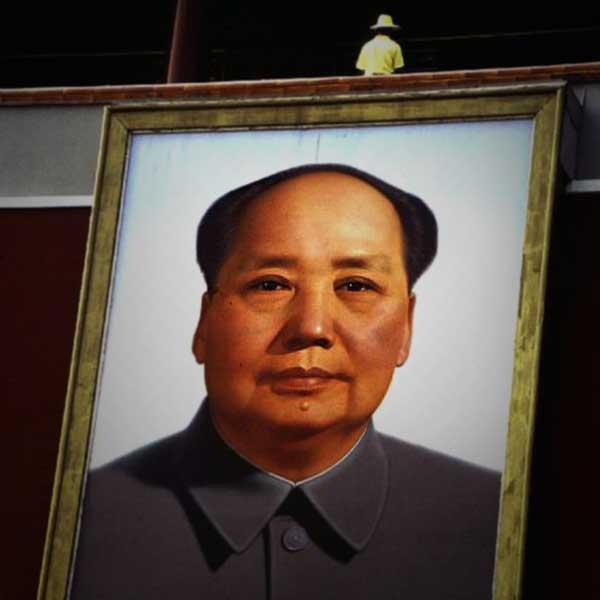
Beijing portrait of Chaiman Mao Tse Tung

Portrait of Chaiman Mao Tse Tung on the wall of the Forbidden City, 2001

Last Thursday at 12.52pm, a BBC Breaking News alert popped up in my email:

"An official in Libya's ruling NTC says ex-leader Muammar Gaddafi was captured as his hometown Sirte fell, though the news is unconfirmed."

A day later, it had been confirmed that Gaddafi was not only captured but had been shot in the head - and around a table in Broadcasting House were sat a team of Radio Documentaries Unit and World Service producers and editors, Radio 4's commissioning editor Mohit Bakaya and BBC reporter Owen Bennett-Jones.

As the news that the dictator was dead sank in, World Service documentaries editor Jeremy Skeet contacted Mohit Bakaya to suggest Radio 4 and the World Service team up and make a programme about what happens when dictators fall.

Great, said Mohit, let's put that out on Saturday week.

Simon Watts, the World Service producer charged with delivering a complex, hour-long documentary in a week, looked a tiny bit tense.

But together we hammered out a central theme to guide the programme: how does the way the dictator falls shape the future of the country they leave behind?

Is it better to kill them quickly - like Gaddafi or Nicolai Ceaucescu in Romania in 1989, or try to try them - like Serbia's Slobodan Milosevic?

What if they face neither fate, but hover in the background for years afterwards, like Pol Pot or Pinochet? Or just die peacefully in bed like Mao and Stalin?

Over the last week, Simon and Owen, assisted by production trainee Leo McGann, have been delivering a programme that attempts an answer to these questions.

They have corralled a huge range of BBC archive, not least from the World Service's 'Witness' programme. Including an interview with an Iraqi who confronted Saddam Hussein in his prison cell.

He recounts having to suppress the desire to kill the newly-captured tyrant there and then, for the good of his country - and how he insisted to himself that Saddam had to be put in the dock instead.

Owen has interviewed historian Richard Overy, foreign correspondents Mark Doyle, Isabel Hilton and Misha Glenny and ex-State Department staffer Nick Burns (with one more historian, Andrew Roberts, to go, as of Thursday lunchtime).

And he's drawn too on his own recollections of reporting from Romania in the immediate aftermath of Ceaucescu's overthrow.

I think, by Saturday evening, we'll have made a clear, sharp account of how the dictator's downfall shapes what follows. Hopefully, if you hadn't read this, you wouldn't know it had taken only a week. And when Simon does his second Archive on 4, he may even get a fortnight...

Phil Tinline is an executive producer in the BBC Radio Documentaries Unit

  • After the Dictator goes out on Radio 4 at 8pm this Saturday 29 October, as well as on the World Service. A shorter version will go out at 3pm on Monday. It'll be available to listen to online shortly after transmission.

Feedback: Any Questions? Any Answers?

Blog comments are currently unavailable. Find out more.

Post categories: , 

Roger BoltonRoger Bolton14:00, Friday, 28 October 2011

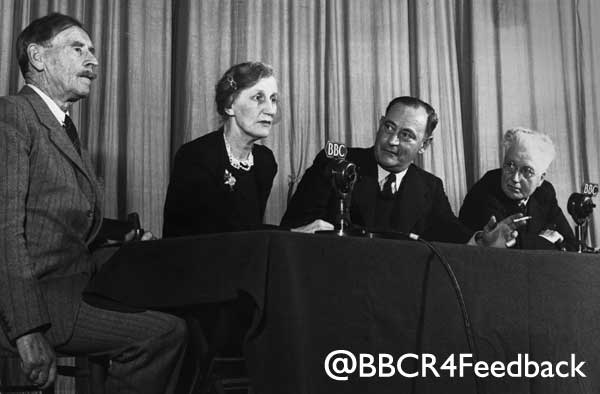
Any Questions 1948

Any Questions? from Taunton, 1 October 1948 © BBC

I am more used to asking questions than answering them. It's easier, on the whole. If stuck one can just ask why? And the interviewee is usually happy to carry on talking while one collects one's thoughts.

However the tables were turned this week when I was called to give evidence to a House of Lords communications committee about the future of investigative journalism.

It was all a little intimidating.

First comes the detailed scanner check and body search, then the walk through the ancient and overpowering Westminster Hall, where Sir Thomas More was condemned to death and the bodies of Kings and Queens have lain in state. It was then up the stairs passed gigantic murals of great events in British history to the long and cavernous corridors where committees meet.

Summoned into the presence of peers I sat facing a semi-circle of questioners, on camera, and tried to give honest and truthful answers while keeping my job at Feedback.

So I had a lot of sympathy this week for Clare McGinn, the editor of Any Questions? and Any Answers?, when I asked her to answer questions about her programmes and their presenter.

You can hear the result here.

In order to see this content you need to have both Javascript enabled and Flash installed. Visit BBC Webwise for full instructions

Next week Feedback is heading to Salford for the Radio Festival and an interview, much sought after, with the boss of BBC English Regions, who is of course responsible for local radio - and the forthcoming cuts to the 40 stations in England.

Any questions for him? I do hope you will be listening.

Roger Bolton presents Feedback

  • Listen again to this week's Feedback, produced by Karen Pirie, get in touch with the programme, find out how to join the listener panel or subscribe to the podcast on the Feedback web page.
  • Read all of Roger's Feedback blog posts.
  • Feedback is on Twitter. Follow @BBCR4Feedback.
  • The picture shows 'Any Questions?' from Taunton, 1948. Major Lewis Hastings, Lady Violet Bonham-Carter, Ralph Wightman and St John Ervine, the team of experts answering questions put to them by members of the audience during the broadcast from the Corfield Hall.

RAJAR listening figures for Q3 2011

Blog comments are currently unavailable. Find out more.

Post categories: , , , , 

Gwyneth WilliamsGwyneth Williams13:20, Thursday, 27 October 2011

The Rajar listening figures. A picture by Adam Bowie.

Yesterday on my way out of Broadcasting House to have lunch with Libby Purves, I met George Soros in the lift - he had just been a guest on Stephanie Flanders' new series Stephanomics. Before I left the office I listened back to Umberto Eco (what a voice; what books) interviewed for Front Row with Kirsty Lang.

Midweek included Terry Wogan (and he sang); last week Michael Morpurgo told Libby that he first got to see his real father on TV playing Magwitch in Great Expectations; and the week before featured a hero of mine (and Libby's it turns out), Albie Sachs, the former high-court judge and an architect of the South African constitution.

Oh, and if you haven't heard them already, don't miss Stephen Fry and Daniel Digby as Marengo and Copenhagen - the war horses of Napoleon and Wellington - in Warhorses of Letters which started this week.

Our Rajar figures are 10.55m - up by some 187k when compared with last year, although down on last quarter's record of 10.85m. It's worth noting that this quarter includes the summer hols in which listening often dips. Share is 12 per cent - up slightly compared with this time last year when it was 11.8 per cent, but again down on last quarter which was 12.4 per cent (share is about the share of listening to all radio that Radio 4 enjoys).

The average hours that listeners spend tuned to Radio 4 each week is up a tad this quarter and up some 19 minutes on the year at 12 hours and 17 minutes.

So on average ten and a half million people listen to Radio 4 for over twelve hours a week.

Oh and a small record or two - for Woman's Hour Drama, the Afternoon Play, as well as You and Yours - and FOOC on Saturday has done particularly well.

Radio 4 Extra's reach is much the same as last quarter at 1.52m (it was 1.53m). It is significantly higher than last year - up 46 per cent. Share is a record 0.9 per cent and total hours spent with the station each week hit a record of 9 million+, thanks to average time spent per listener of just over 6 hours. We hope this means that listeners have now found some programmes they enjoy on Radio 4 Extra and are staying with us to listen to them.

Congratulations to everyone who has contributed to the last three months of programmes.

Our audience guru, Alison Winter, tells me that on Radio 4 and 4 Extra we are seeing a pattern of long term growth. She said she would add a few lines to this note from me for those who might prefer to go to the tutored source as it were.

Alison Winter writes:

"You may recall seeing the headlines 3 months ago when Radio 4 enjoyed a record audience of 10.85m, riding on the tide of good news for radio that saw more people (47.6m, 15+) listening to more radio (just over 1 billion hours every week) than ever before.

So, as we pondered what the results for Q3 might have in store we expected to see a decline, given that Q3 includes the summer months of July and August, when normal routines can be disrupted and people are apt to spend more time out of the home and workplace. And indeed most radio stations have seen declines on the quarter, Radio 4 being no exception. But there is also a pattern of longterm growth as audiences are, by and large, higher than they were a year ago. In the case of Radio 4, the weekly audience has remained above 10 million (with only one exception) since mid-way through 2009, routinely attracting 1 in 5 of the UK population every week.

Gwyn has already highlighted some of the particularly good performances across the network this time round but another one I've found is the relative strength of DAB as a listening platform among Radio 4 listeners: as much as 26% of all Radio 4 listening is through DAB, versus the industry average of 18%. Maybe this explains the good news for 4 Extra, maintaining almost all of those who tuned in last quarter as it launched, and reaching record hours of listening each week."

Gwyneth Williams is Controller of BBC Radio 4 and BBC Radio 4 Extra

The Thinking Allowed Newsletter: Trust me I'm a theorist

Blog comments are currently unavailable. Find out more.

Post categories: , 

Laurie TaylorLaurie Taylor12:50, Thursday, 27 October 2011

Editor's note: This week's episode of Thinking Allowed is available as a download on the Thinking Allowed podcast page or you can listen online on the programme page. It's also repeated this Sunday night shortly after midnight on Radio 4 - PM.

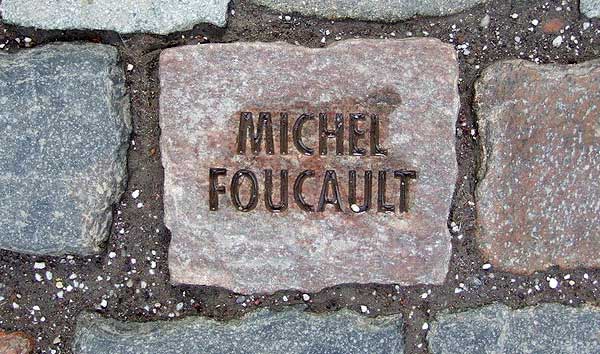
Bonn - Installation in the entrance of the Federal art and exhibition hall in Bonn - paving stone in memory of Michel Foucault

Installation in the Federal art and exhibition hall in Bonn - paving stone in memory of Michel Foucault

"Theory" was a dirty word during my undergraduate years studying psychology at Birckbeck College. At that time, back in the sixties, 'behaviourism' was all the rage. And all proper behaviourists believed that the only way in which we could ever reach a true understanding of human behaviour was by the painstaking observation of how animals (usually rats) responded to their environment.

There was no room here for conjecture or hypothesis. Truth could only be reached by adding up the results of thousands of laboratory experiments.

Of course behaviourism, for all the assertions of its adherents, was very much a theory. It depended upon a reductionist version of human nature which, as such critics as Chomsky were to demonstrate with devastating logic, simply failed to account for such complexities of human behaviour as the capacity to acquire language.

But when behaviourism ruled, theorists were best advised to keep their conjectures and hypotheses to themselves. (Birkbeck did offer an undergraduate course called "Theories of Personality" but this was widely regarded by many of the undergraduates as little more than a soft option for those who were not up to the rigours of fully-fledged behaviourism.)

However, as I soon realised when I embarked upon my postgraduate studies at Leicester University, matters were quite different in a sociology department.

I can still remember being told during the first week that I would be supervised by a young lecturer called Anthony Giddens. "You're in luck there", said my tutor "He's a theorist."

At the time Giddens had good published grounds for claiming to be a theorist, but I slowly realised as my course progressed that in order to enjoy this elevated status it was not strictly necessary to produce any actual theories.

It was, for example, very important to be male. After all, the major sociological theorists of the past - the so-called founding fathers of the discipline - Max Weber, Emile Durkheim, Karl Marx - had all been men.

There was also something necessarily male about the way a proper theorist behaved. Theorists had to defend their position against other theorists. Weberians had to wrestle with Marxists. Symbolic interactionists had fight it out with structural functionalists.

This was clearly a job for grown men.

The women could safely be left to get on with the more domestic task of collecting and organising the data which might or might not confirm one or other theory.

Much of this macho strutting was, of course, undermined by the arrival of feminist theory, which not only challenged many of the gendered assumptions about the nature of the world favoured by earlier male theorists, but also opened up many new theoretical topics (I remember attending one conference in the late seventies at which a well-known male theorist actually began his presentation by apologising in advance for failing to do justice to "a feminist perspective").

In the early years of my career as an academic sociologist, I was only too pleased to leave the theorising to others and spent many happy months in the social psychology laboratory carefully recording data derived from the observation of small problem-solving groups.

But then I discovered the work of Michel Foucault.

There'd been something rather pretentious about my original desire to read his work. It felt good to be walking around campus with copies of Madness and Civilisation or The History of Sexuality tucked underneath my arm. But as I read I grew more and more excited (even somewhat disturbed) by the manner in which his theories undermined so many conventional assumptions. (I still recall the shock of reading his famous rebuttal of the idea that the Victorian era was characterised by a repressive attitude towards sex and sexuality.)

Foucault not only tried to think differently about the world - about sexuality, and madness and medicine - but also tried to theorise about the forms of thought - the ways of thinking - which had characterised earlier historical periods.

It was, therefore, a particular pleasure to come across a new book about the nature of contemporary culture which drew heavily upon the ideas elaborated by Foucault in his later work on self-formation, on the ways in which we actively use culture to create a distinctive version of ourselves.

That book - a fine work of theory - is engagingly called Still Life: Hopes, Desires and Satisfactions. I'll be talking to its author Henrietta Moore in this week's programme. Also the sociologist, Dr Sam Farooq, on young British Muslim women who see no contradiction between basketball and religious belief.

Laurie Taylor presents Thinking Allowed

Radio Times' Pick of the Week: Warhorses of Letters

Blog comments are currently unavailable. Find out more.

Post categories:

Robert Hudson and Marie Phillips16:40, Monday, 24 October 2011

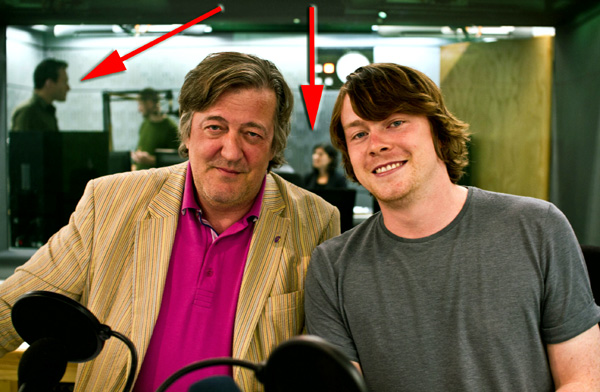
Editor's note: Warhorses of Letters starts on Radio 4 this Tuesday 25 October at 11pm. As the Radio Times puts it: "Only on Radio 4 would one find a gay, epistolary romance in which the letter writers are horses". Stephen Fry and Daniel Rigby (who won a BAFTA for his portrayl of Eric Morecambe on BBC2 this year) play the corresponding horses of Napoleon and Wellington. The series is written by Robert Hudson and Marie Phillips, indicated below by the large red arrows, who explain the genesis of Warhorses of Letters - PM.

Stephen Fry and Daniel Rigby

Marie:

I'm super excited that the BBC has asked me to write this blog.

Robbie:

Us.

Marie:

Whatever. When we first had the idea for Warhorses of Letters...

Robbie:

I dispute your use of the word 'we'.

Marie:

Dispute it with my lawyers.

Robbie:

No, you're right, legally the idea is yours as much as it is mine. We had it when I was alone by myself on the platform at Kilburn tube station, when I wrote the first letter onto a page of my notebook, and we ditched the idea as being unworkable an hour later when you told me it wouldn't work.

Marie:

Not fair.

Robbie:

Ok. What's your version?

Marie:

I was there in spirit when you had the idea because I remind you of a horse. Then we both of us together couldn't think of a way to write it. And then a year later I thought of a way to write it. Which, as luck would have it, is a lot like the way we are writing this, although with more research.

Robbie:

Not a lot more research.

Marie:

I wouldn't know, because you never let me hold the book. Anyway, we wrote it, and we performed it...

Robbie:

I dispute your use of the word 'we'.

Marie:

You and John Finnemore performed it at a comedy night called Tall Tales, the crowd went cobnuts, we sent a recording to Gareth Edwards and he picked it up.

Robbie:

Gareth loves talking animals. Obviously I expected to reprise my role as Marengo, but Gareth picked someone else.

Marie:

Stephen Fry is not better than you, he's just different, in a superior way.

Robbie:

That's what my mum says. Joking aside, Warhorses is one of those ideas which is incredibly fun to write - Marie and I take on the horses' personae and we send letters to each other - but that was nothing compared to the fun of hearing Stephen and Daniel Rigby recording the series.

Marie:

I laughed so much I spilt tea down my front.

Robbie:

Basically, I have dreamed since I was even younger than I am now of having a comedy series on Radio 4, because radio can do things that simply can't be done in any other medium.

Marie:

Like Hitchhiker's Guide to the Galaxy. But, like H2G2, it's being turned into a book, and so presumably there will soon be a television series and in twenty years' time a slightly disappointing film, but we won't mind because by then tens of thousands of people will be able to quote from it at length and it will be a seminal part of their childhood.

Robbie:

So, that's it from us. We really hope you enjoy it.

Marie:

I dispute your use of the word 'we'.

Robert Hudson and Marie Phillips wrote Warhorses of Letters

In Our Time newsletter: Delacroix's Liberty Leading the People

Blog comments are currently unavailable. Find out more.

Post categories:

Melvyn BraggMelvyn Bragg16:36, Friday, 21 October 2011

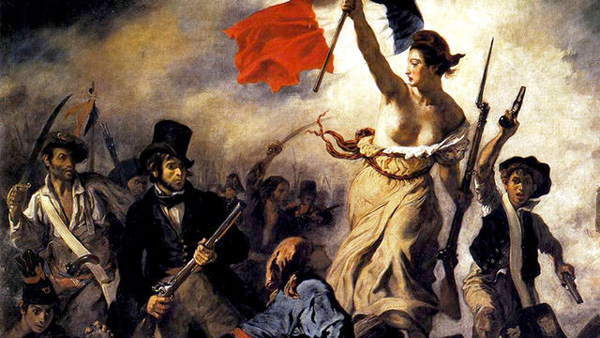
Editor's note: This week Melvyn Bragg and his guests discussed Delacroix's Liberty Leading the People. As always the programme is available to listen to online or to download and keep - PM

Delacroix's Liberty Leading the People

I'm standing under lights in the close of Wells Cathedral.

The lights could be gaslights - there's that yellow glow. Frankly, I feel incredibly privileged. The massive West Front of this cathedral, the outbuildings, the houses around the close, the twilight in the West Country here, those long grey clouds and a lot of blue fading away in the sky.

What a place this can be.

And I've just come out of the cathedral having heard Choral Evensong which I made sure I caught. It is the most magnificent service in any church that I've ever been to, and this evening it was sung by young boys and men of the Wells Cathedral Choir, whom Gramophone have just voted as the best boys' choir in the world. So I'm full of - what? Hard to say really, but certainly an incredible sense of being alive in this country, in this place, at this time.

In an hour or so I'll be back in the Cathedral, at a lectern, talking about my latest book, but for now I'm just looking at this front, remarkably unscathed, although there are gaps where the vandals of previous centuries could get to it.

Okay. After the programme this morning, off to the cutting rooms to work on the three documentaries I'm doing for BBC Two. Extraordinarily, because I was still thinking about the programme, I got lost in the side streets around Broadcasting House. It's a very difficult thing to do. I've worked at Broadcasting House, one way and another, since about 1962.

I thought I only got lost in a fog in Cumbria, usually, or to be more precise, most spectacularly with Chris Bonington on the top of Saddle on Boxing Day, when he nearly led a party of us to doom one misty afternoon.

After the cutting rooms I wandered around those back streets again, trying to lose my bearings and have that rather childish feeling of being lost but knowing that you weren't really lost. It was quite nippy. Yet everywhere I went there were tables on the pavements laid out for, if I cared to count them, literally hundreds of Londoners, happy to sit in the nip and eat lunch in the sun.

And from there to the train to Castle Cary to Wells. Still looking at this front.

I would like to go on to talk about what happened after the programme and the fine poem that was produced there. But I'll have to stop now because I've left my notes inside and I will resume after the talk.

Meanwhile, one little thought. I've just heard some of the best singing I've ever heard, with a fantastic choir, in this indescribably beautiful building, but the people in the choir outnumbered those of us in the church. Why is it that we have one of the greatest assets in all world music in these cathedral choirs and only a handful or two of people turn up to listen to them? It's quite extraordinary. Now in for the rehearsal and then grab the notes and finish this piece.

*

Back in London now. I realise I was completely swept away by the sight of Wells Cathedral at twilight last night. But looking at that massive structure in the smallest city in England, it could have landed from space; so alien, so assured, so self-contained and so extraordinarily beautiful.

So I went back in and did my speech and came back to London very late and now have looked up the notes after the programme, the main one of which was a poem written at the time which Tim Blanning had wanted to read on the programme, but there wasn't time. It's by Auguste Barbier and it's about the painting:

"The truth is that Liberty is not a countess / From the noble Faubourg Saint-Germain / Who faints away at the slightest cry... / She is a strong woman with thrusting breasts / A harsh voice and a hard charm... / Who with her bronzed skin and flashing eyes / Takes satisfaction in the people's cries and the bloody throng."

Well, I think that's a tad nearer the courtesan or prostitute that Heine was referring to, and maybe in the end Delacroix was making a statement about the relevance of women of the streets to the Revolution, then or in the future.

Melvyn Bragg presents In Our Time

Local radio cuts and having the Last Word. It's Feedback

Blog comments are currently unavailable. Find out more.

Post categories: , , 

Roger BoltonRoger Bolton13:30, Friday, 21 October 2011

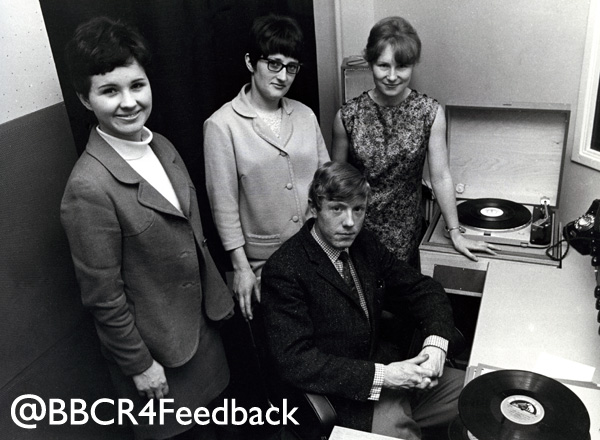
Radio Leicester team, 1967

Radio Leicester's team of station assistants, ready for the start of Radio Leicester on 8 November1967

It was rather lonely in the Feedback studio this week. I was surrounded by empty chairs.

We, and many listeners, wanted to talk about the proposed cuts to the BBC's English local radio stations, and had invited both the BBC's Director of News and the boss of local radio to come and discuss their proposals, which will see over four per cent taken out of the so called content spend, as well as significant job losses.

We would have liked to raise these issues with BBC executives - but they were unavailable. Indeed a strange silence seems to have descended on the senior management floor of the BBC control tower.

Perhaps they have gone on a retreat to contemplate the reaction to their proposals, put forward because of the latest licence fee settlement which makes cuts of 16 per cent unavoidable.

Perhaps we shouldn't complain too much about the empty chairs as we had Tim Davie, Director of Audio and Music, on last week and the BBC Trust Chairman Lord Patten on the week before. Still you want answers and we will continue to try and get them, so the invitations stand.

Not that Feedback listeners are united in their support for local radio.

It is striking, reading the Feedback correspondence, some of which we broadcast this week, that whereas in areas like Cumbria and Shropshire there is massive support for their local radio stations, in other areas there is more support for the national networks. To be continued.

Meanwhile let us contemplate more profound issues like death or at least Last Word, Radio 4's obituary programme.

What do you have to do to get on it, apart from pop your clogs?

That is one of the questions I put to the programme's editor, Phillip Sellars. Here is the interview.

In order to see this content you need to have both Javascript enabled and Flash installed. Visit BBC Webwise for full instructions

By the way the BBC Trust's consultation on the Delivering Quality First proposals continues until December 21st. Details of how you can contribute are on the Trust website.

Make sure you get your points across.

Please join us next week when we hope our chairs will be fully occupied.

Roger Bolton presents Feedback

The Nailympics: Up to Scratch with Kit Hesketh-Harvey

Blog comments are currently unavailable. Find out more.

Post categories:

Kit Hesketh-HarveyKit Hesketh-Harvey16:30, Thursday, 20 October 2011

Ed's note: You can hear Up to Scratch at 11am on Friday 21 October on Radio 4 and shortly afterwards on the website - PM.

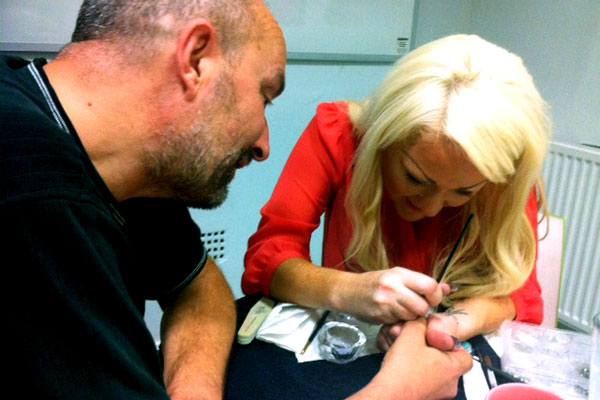
Kit Hesketh-Harvey and Kirsty Meakin

Kit Hesketh-Harvey and nail artist Kirsty Meakin

Look, I'm a bloke. I live in the country. I dig the potatoes for dinner. I fetch coal. I am no stranger to a big end. My fingernails (which I chew) are things without beauty, finesse, or a vividly imaginative makeover.

So it was with trepidation that I came up to London, to Olympia, and found myself in a parallel world of whose existence I had never dreamed.

The Nailympics (I am not making this up) is a three-day competitive event dedicated to the exploding industry that is nail art. What used to be a buff and a polish, or even a splodge of vermilion, is now a wonderland of perfect barrel-curves, of French Pink and White, of crystal-bedecked acrylic extensions and of fantastical 3D graphics that are pushing the boundaries of practicality, post-modern sculpture, and even taste.

Would I be able to carry off a Narnian landscape, an Egyptian tomb, or the Bay of Naples on my fingertips?

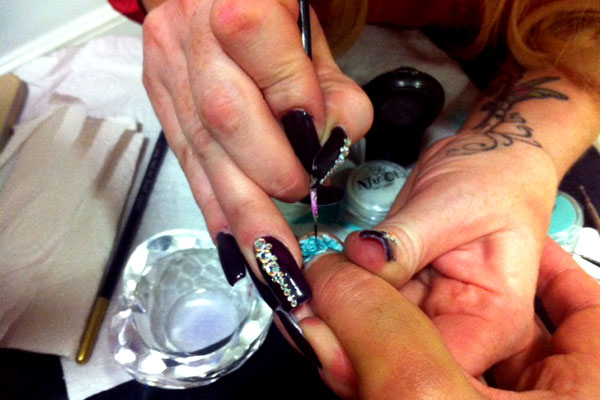
Kit Hesketh-Harvey and nail artist Kirsty Meakin

Kirsty Meakin works on Kit Hesketh-Harvey's nails

What is the anthropology of such adornment? Why are the sums involved now outstripping the money we spend on hair? Who are these people? And what will happen to England's Great Shining Hope for Nailympic glory, the girl from Stoke-on-Trent whose work is currently in the V and A, the great Kirsty Evita Meakin?

It was nail-biting stuff. I was agog, and so will you be.

Kit Hesketh-Harvey presents Up to Scratch at 11am on Friday 21 October on Radio 4

The Rivals: The Return of Inspector Lestrade

Blog comments are currently unavailable. Find out more.

Post categories: , 

Sasha YevtushenkoSasha Yevtushenko15:00, Tuesday, 18 October 2011

Editor's note: The Rivals, starring the often forgotten Arthur Conan Doyle creation Inspector Lestrade, starts on Radio 4 this Wednesday 19 October at 11.30am - PM.

Lestrade

The idea for The Rivals came about when writer Chris Harrald expressed a desire to dramatise a series of re-vamped Victorian detective stories for Radio 4.

He argued that although Conan Doyle dominated the canon, there were plenty of great short stories out there that featured extraordinary sleuths. His research revealed a treasure trove of material, and he set about assembling a collection of stories that would be enjoyed by an audience familiar with the originals and surprise those new to them.

At this stage we hadn't yet figured out a way of linking these stories together - a way to encourage listeners to stay with a series across a number of episodes.

That was the remaining challenge.

We both felt that an important criteria was the personality of the detective in each short story. They should all have the potential to be rivals of Sherlock Holmes. We began by selecting a story that predates Sherlock Holmes by over forty years.

Most historians of the genre argue that Auguste Dupin in Edgar Allan Poe's The Murders In The Rue Morgue represents the first detective in fiction and is the literary prototype for Conan Doyle's hero.

He certainly has eccentricity that would give Holmes a run for his money. We also looked at a short story by Jacques Futrelle, an American writer who perished onboard the Titanic. His story features Professor Augustus SFX Van Dusen, an individual so gifted with intelligence that he is able to think his way out of a locked prison cell.

Again, we felt that he was a natural rival to Sherlock Holmes.

Chris had the idea of using this sense of rivalry to connect a number of stories.

That's when he hit upon the idea of giving Inspector Lestrade a unifying role. The Scotland Yard detective is in many ways the loser in the Sherlock Holmes stories. His reasoning is portrayed as commonplace. Dr Watson, the narrator of the Holmes stories, even describes him snootily as "a lean, ferret-like man, furtive and sly-looking".

With this sort of insult levelled at him, perhaps he would enjoy promoting other, lesser-known detectives? Perhaps it would be a good way of deflating Sherlock Holmes' considerable reputation?

In discovering Lestrade, we had found a way of connecting a number of classic short stories. We catch up with him as he is being pursued by a young journalist intent on interviewing him about Sherlock Holmes. He refuses to answer her questions, instead introducing her to one of Holmes' many rivals. From this point, we jump into the original story, and we have even adapted them in such a way as to give the Inspector an important role in each mystery.

At last, he's been given a chance to rehabilitate his reputation.

Sasha Yevtushenko is a producer for BBC Radio Drama in London

  • The Rivals starts on Radio 4 Wednesday 19 October at 11.30am. You can hear it shortly afterwards on the Radio 4 website.
  • James Fleet plays the Inspector, and he introduces a new 'rival' each week: Auguste Dupin (played by Andrew Scott); Professor SFX Van Dusen (Paul Rhys); Paul Beck (Anton Lesser); and Loveday Brooke (Honeysuckle Weeks).
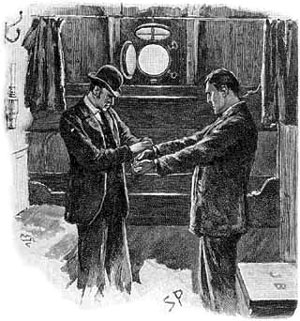
  • The illustration's original caption was "He held out his hands quietly" from the Strand magazine and is by Sidney Paget (1860-1908) via Wikimedia Commons.
  • More Crime Drama from Radio 4 to hear online

In Our Time newsletter: The Ming Voyages

Blog comments are currently unavailable. Find out more.

Post categories: , 

Melvyn BraggMelvyn Bragg11:30, Monday, 17 October 2011

Editor's note: This week Melvyn Bragg and his guests discussed the Ming Voyages. As always the programme is available to listen to online or to download and keep - PM

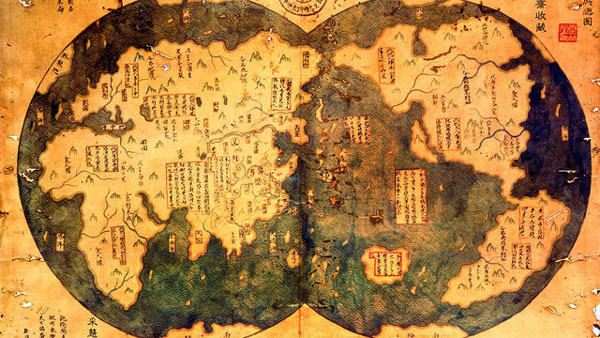
Ming images

As soon as the programme finished, Craig Clunas told us that scholars were turning the subject we had been discussing on its head. Not just a little bit of an alternative reading, but, in his words, "A 180 degree turn".

Pity we hadn't time for a postscript.

One of the points he made was that the idea of the Ming Dynasty springing fresh anew into life, having driven out the Mongols, is simply not true. They adopted a lot of the Mongol ways. They wanted to be Khans, like the great Genghis. They acted like Khans and it seems were built like Khans: not the long tapered fingernails of the traditional Chinese emperor, but tough guys, out on the steppes, fighting away.

Yongle was a warrior who led his troops into battle, although he seems to have been sensible enough to stay at home while the fleet was out for a year or two. Absence makes the throne less secure.

And it appears that the Mings might have pinched the idea of world domination from the Khans. They saw themselves as rulers of the world and the Mings ran with that.

There was talk of why it mattered whether the capital was in Beijing or in the south. Beijing meant that they were concerned with their borders and with the issues of land territory. The south meant that they were concerned with trade and exploration overseas.

I think it was Craig again who said he had been in China while they had shown what he said was "109 episodes, or it felt like 109 episodes, of the history of the Ming dynasty", which portrayed the Mings as peace-loving explorers encountering exotic and primitive peoples around the world, but unlike any other empire, especially the British Empire, they declared that their intentions were not to do with war and colonisation.

There were a number of Chinese scholars who believed that Yongle missed a trick with the fleet. He should have gone right around the world, even to America, and really established world domination while he was at it.

Perhaps, 500 years on, urged on by the 109 episodes on the Ming dynasty on Chinese television, they might have another go?

On to the cutting room to see a film I made about William Golding at the end of the 1970s for The South Bank Show. There's to be a Golding evening on BBC Two and this will be part of the archive. It is very, very curious to see yourself as an archive. But I found it interesting how much I remembered of that encounter with Golding: his house, Stonehenge - around which we could roam freely - sitting on a rock by the sea when he described how his racing boat had collided with a ship. Only chance enabled him, his wife, his daughter and three friends to survive. No more on the sea for William Golding after that. Something which had mattered to him and been part of his life became something he feared.

From the cutting rooms down to the Lords. Had to whisk by the side of St James's Park. No ducks, but saw four proud pelicans sitting on a rock and about forty persons from, I think, Eastern Europe, snapping away merrily.

The debate this afternoon is on the impact of the Government on universities, and it's a chance to say something that might make sense because I've been well-briefed by the Vice-Chancellor of Leeds University, of which I am Chancellor.

And on we go, but that's enough for Ingrid today! (Ed's note: Regular subscribers to the In Our Time newsletter will know that Melvyn dictates the newsletter and that Ingrid produces the transcript - PM)

Melvyn Bragg presents In Our Time

Radio 4's longwave transmitter and cuts to BBC radio

Blog comments are currently unavailable. Find out more.

Post categories: , 

Roger BoltonRoger Bolton13:26, Friday, 14 October 2011

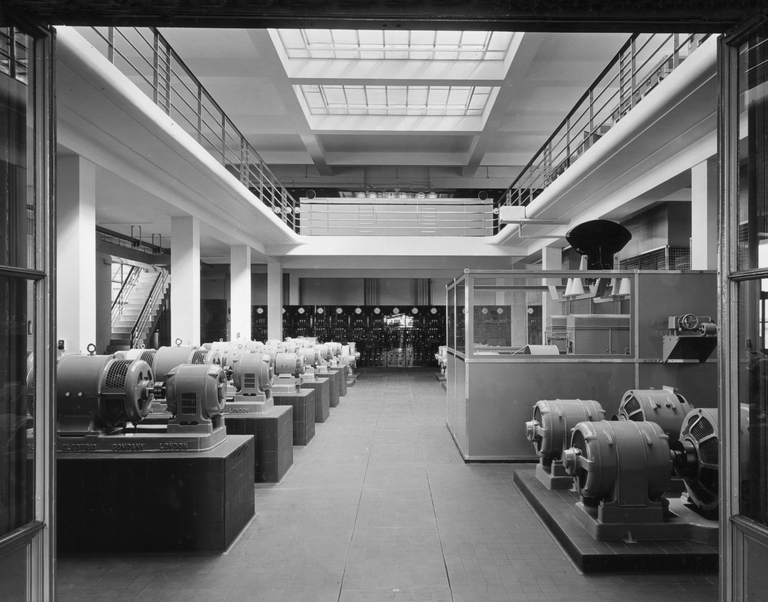
The BBC's Droitwich transmitter in 1934.

It's all a bit like the budget really. The Chancellor makes his statement in the Commons, the Government's PR machine goes into overtime spreading the good news, and then gradually, as detailed scrutiny begins, rather less positive headlines emerge.

So it was last week with the BBC's launch of DQF - Delivering Quality First. To begin with it seemed as if Radio 4 had got off unscathed since it was to suffer no reduction in its 'content spend', whereas Radio 5 live for example, was being cut by 7.5 per cent.

Then a few days later the BBC's own in house newspaper Ariel came out with this headline "Radio 4 takes a hit it wasn't expecting". The paper reported that shortly after the DQF launch by Director General Mark Thompson, Radio 4 producers are up in arms over proposed job cuts and changes to their department.

The Corporation accepts that the overall number of BBC producers will drop, but says the assistant producer total will go up, resulting in an overall net reduction in staff in the Radio production department of five per cent.

The DQF launch also revealed that Radio 3 is facing a cut in its content spend of 2.9%, but this again is not the full story. They are going to be looking into the BBC orchestras which provide much of the network's music. Lots of rumours I hear say one is likely to be cut which would certainly be controvertial.

In order to see this content you need to have both Javascript enabled and Flash installed. Visit BBC Webwise for full instructions

Of course DQF has also been reported as handing down a death sentence on Long Wave. However it is rather more complicated than that so in Feedback I also talked to Radio 4's Network manager, Denis Nowlan about when the sentence would be carried out and the consequences for listeners who still value it.

In order to see this content you need to have both Javascript enabled and Flash installed. Visit BBC Webwise for full instructions

If you want to take part in the consultation about DQF, which runs until December 21st, a questionnaire is available on the BBC Trust website. We'll be tracking that process over the next few months before the conclusions are published in the spring.

Meanwhile the drive to increase productivity, which some call cuts and make other savings has already begun. Don't feel too sorry for the Corporation though. It now knows what its income is for the next few years and that is around £3.5billion. Hardly peanuts.

Roger Bolton presents Feedback

Tonight with Rory Bremner

Blog comments are currently unavailable. Find out more.

Post categories: , , , 

Paul MurphyPaul Murphy14:30, Thursday, 13 October 2011

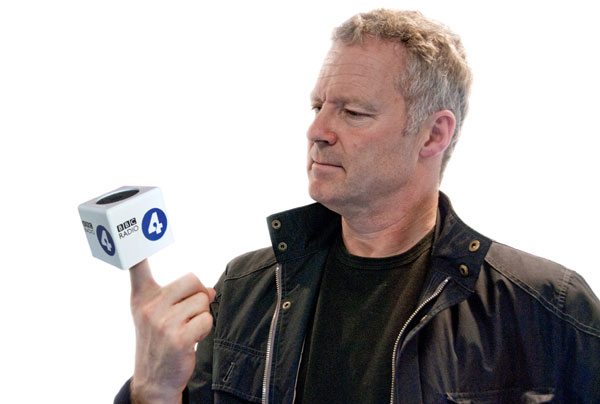
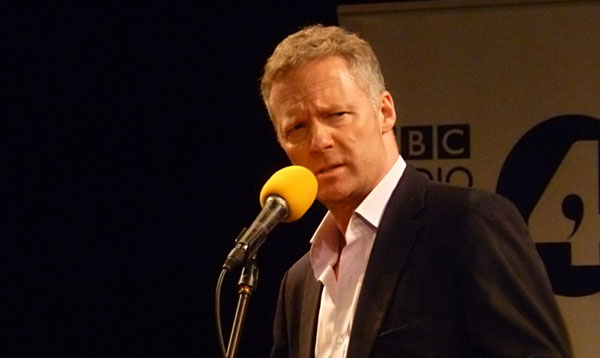
Rory Bremner

Rory Bremner at Radio 4 when he came in to record trails for 'Tonight' (Picture by Stan Was)

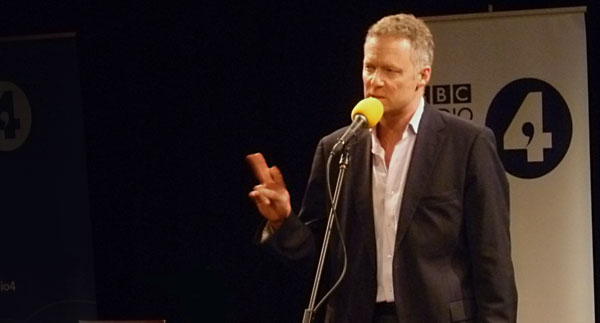
Rory Bremner's new Radio 4 series Tonight starts at 11pm tonight. Recorded last night it features topical satire, stand-up and sketch giving an alternative take on what's happening in the news.

On The Telegraph website radio critic Gillian Reynolds wrote:

"Rory Bremner comes home to radio, hosting this new series which combines topical satire, sketches, stand-up routines, impressions and the kind of investigative parody he made his own on Channel 4 in the darkest days of Blairism. Some fellow satirists mock him for earnestness, self-righteousness. I think they might just be a bit jealous of his powers of observation and mimicry. He's assisted here by comedian and writer Andy Zaltzman and impressionist Kate O'Sullivan."

And here are some pictures from last night's recording to whet your appetite:

Rory Bremner

Rory Bremner recording 'Tonight' at the Drill Hall, London.

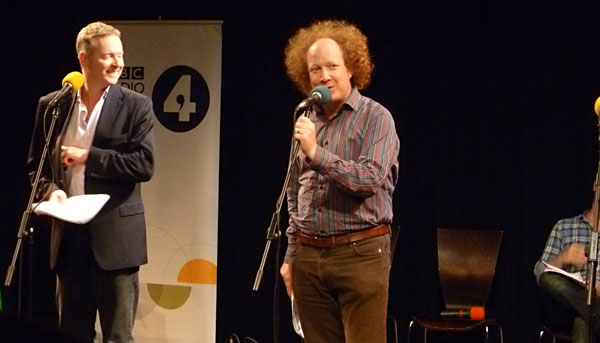
Rory Bremner and Andy Zaltzman

Rory Bremner and Andy Zaltzman

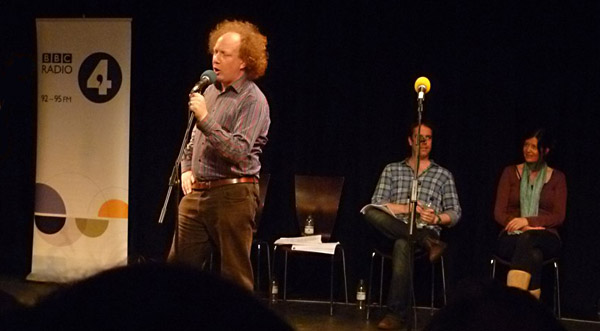
Andy Zaltzman, Nick Doody and Kate O'Sullivan

'Tonight' performers (l to r): Andy Zaltzman, Nick Doody and Kate O'Sullivan

Rory Bremner

Rory Bremner at the 'Tonight' recording

Paul Murphy is the editor of the Radio 4 blog

Noel Gallagher and Don McCullin on Front Row

Blog comments are currently unavailable. Find out more.

Post categories:

Paul MurphyPaul Murphy14:50, Wednesday, 12 October 2011

John Wilson and Noel Gallagher

Front Row presenter John Wilson and Noel Gallagher in the Radio 4 studio (picture by Jerome Weatherald)

Musician Noel Gallagher features on tonight's Front Row at 7.15pm talking to presenter John Wilson. (Ed's update: You can download the podcast, listen online or find out more about this episode of Front Row.)

Amongst other things he reveals that he turned down the chance to be a judge on the pop reality show The X Factor (much to his 11-year-old daughter's disappointment) saying:

"All my mates were going, 'You've got to do it' and I was like it's eight months and I can't have these people round my house crying in the kitchen."
Don McCullin

Don McCullin (picture by Jerome Weatherald)

Also on the show is photographer Don McCullin, whose work is the subject of a new show at the Imperial War Museum, Shaped by War. The exhibition, the largest ever retrospective of McCullin's work, charts his photographic career, from the early days in London to his current landscape works, taking in some of the most memorable photojournalist images of the twentieth century including assignments in Vietnam, Berlin, Biafra, El Salvador and Palestine.

Paul Murphy is the editor of the Radio 4 blog

One to One: Lyse Doucet

Blog comments are currently unavailable. Find out more.

Post categories:

Lyse DoucetLyse Doucet23:00, Monday, 10 October 2011

Editor's note: One to One is a new series of interviews on Radio 4 in which broadcasters follow their personal passions by talking to the people whose stories interest them most. The first set of interviews will be presented by Lyse Doucet in conversation with Afghans - young and old, living at home and abroad - to hear their remarkable stories - PM.

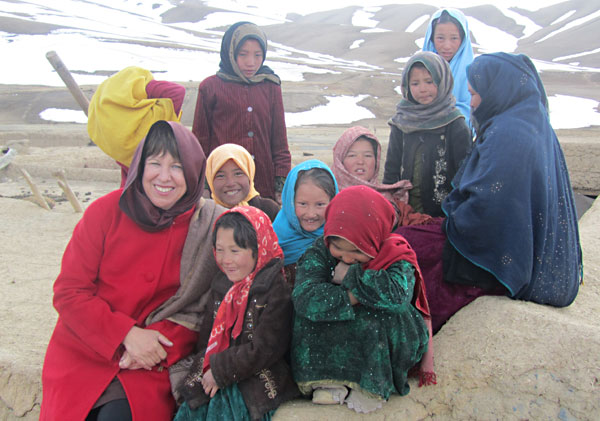
Lyse Doucet in Bamiyan with a group of young girls

Last week it was Damascus. You may have heard me last weekend on Radio 4's From Our Own Correspondent talking about a rare trip by a foreign journalist to Syria.

This week, you will hear me talking about Afghanistan.

It may be madness to travel from Damascus via Amman to Heathrow Airport, go home for a night, unpack and repack, and then go back to Heathrow to fly to Kabul via Dubai. But it doesn't feel like madness. I suppose that's what it means to be passionate about a place.

That's what this new Radio 4 programme One to One is about - the passions of some presenters and correspondents you often hear on Radio 4. We want to share these passions with you. Up to you then to decide if it's all madness... or simply marvellous.

When I was first approached by producer Karen Gregor for stories and people that had captured my imagination that I wanted to share, I sent her quite a long list from quite a few places.

She came back to me after the Editors assembled and said "We decided you should tell us some stories about Afghanistan".

I can already hear you saying "But I already hear about Afghanistan quite a lot."

Yes, it is a place of big mountains with bearded men at the front line firing guns. It's a place where too many British and Afghan lives have been lost in the battle against a Taliban that only seems to get stronger.

It's other Afghan stories from people who have impressed and humbled me, made me laugh and cry, and drawn me into a country that does have an horrific history, and a fragile future.

But it's much more than that.

I first flew into Afghanistan from neighbouring Pakistan on a cold winter's day in 1988. It was Christmas Eve. But all the talk was about Soviet troops preparing to pull out after a decade long occupation. Western embassies were also shutting down, warning that the communist government would topple. It didn't - not until the spring of 1992.

The front desk clerk in a dark, largely empty, hotel on a Kabul hill asked how long I would stay. "Six weeks?" I suggested tentatively.

I stayed nearly a year. I still keep going back.

Over the next four weeks, you will hear some stories Afghans have lived during this time, that I have lived through too.

You'll hear the sadness and joys of a fighter turned diplomat who survived an Al Qaeda attack and lives to see his garden grow.

There's a daughter's pain over losing her father in a suicide bombing, but her persistence and patience in trying to make Afghanistan a better place. That's what the man they call the Murdoch of Afghanistan is also trying to do. In his case, it's about changing a country through TV storytelling including home grown versions of X-Factor and The Office that bring smiles to millions of Afghans, and scandalise conservative clerics and politicians.

Then we'll hear of the dedication of a young Western educated Afghan determined to stay in Afghanistan, no matter how many disappointments and death threats there are.

I sometimes say Afghans are a gift to their friends. They seem to have this knack of remembering the most wonderful details of moments and meetings.

Now they'll share some with you. I hope you'll also find them memorable.

We'll start on Tuesday with Masood Khalili, a poet, the son of a poet, an Afghan who says his life is "10 percent politics, and 90 percent culture".

Lyse Doucet presents the first set of interviews in One to One.

The Life Scientific: Desert Island Discs without the music

Blog comments are currently unavailable. Find out more.

Post categories: , 

Jim Al-KhaliliJim Al-Khalili16:40, Monday, 10 October 2011

Editor's note: The Life Scientific is a new series where each week Jim Al-Khalili, Professor of Physics at Surrey University, asks a leading scientist about their life and work - PM.

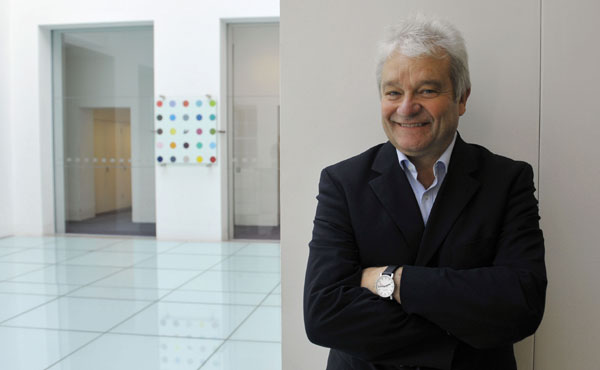
Sir Paul Nurse

Sir Paul Nurse

It's exciting enough to be given my own radio series but to kick off with my guest on the very first episode being arguably the most prominent scientist in Britain today makes it doubly exciting.

Sir Paul Nurse is always great value for money - he has pretty much achieved everything one can in science: he has run his own lab, made incredible discoveries, won a Nobel Prize and held the very top positions in the world of science.

And yet it is his personal life that is even more fascinating.

In this week's programme, I try to play a balancing act between learning about Paul's life and career and what makes him tick while at the same time trying to put him on the spot.

After all, here is a scientist who began from humble working class beginnings to become the personification of the scientific establishment. I make the point that he is in a real sense poacher turned gamekeeper, particularly, given his prominent and influential role in controlling huge amounts of research funds and deciding which areas of scientific research they should go to.

I particularly wanted to follow up on a quote from one of my future guests on The Life Scientific, Sir Tim Hunt, the biologist with whom Nurse shared his Nobel prize, who has said about Paul:

"He was my boss when we worked at the Cancer Research Campaign in the 90s and we got on well, but he could be pretty brutal with those who crossed him. He would liquidate them - metaphorically. He is not a doormat."

Paul Nurse is clearly an iron fist inside a velvet glove. And yet, he is such a likeable bloke, and I am certain that won't just be my perception of him. He has such an interesting story to tell.

I will of course do my utmost to ensure that future guests on The Life Scientific also spill the beans, but I am a long way from achieving the hypnotically engaging charm of Kirsty Young, and have set myself up for that sort of comparison by describing The Life Scientific as "Desert Island Discs without the music".

We shall see. For now, I am just gratified that science is getting such a prominent airing.

Jim Al-Khalili presents The Life Scientific

The 2011 Nick Clarke Award

Blog comments are currently unavailable. Find out more.

Post categories:

Gillian Dear12:40, Monday, 10 October 2011

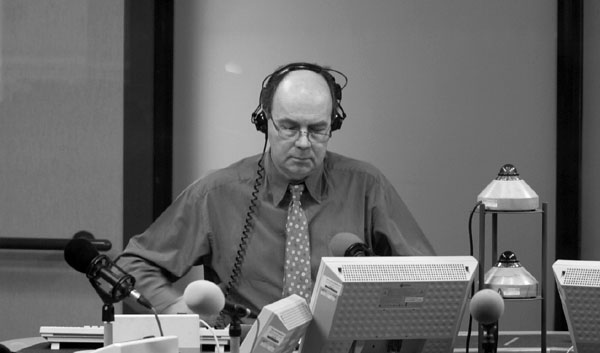
Nick Clarke

Nick Clarke presenting the World at One

The judges have decided to give the 2011 award to Steve Hewlett, presenter of BBC Radio 4's The Media Show for his interview with the former chair of the Press Complaints Commission, Lady Peta Buscombe.

Steve's live interview, against the clock, demonstrated all the features essential to any conducted in the Nick Clarke tradition. It was challenging, well argued, well structured, well informed, impartial and courteous.

The interview was broadcast when the PCC chair was under considerable pressure. Her posture was, understandably, defensive. Steve's polite insistence, bringing into play his own background knowledge and research, enabled him to take the listener with him beneath that posture.

At the time, the issues were complex and the questions changing almost daily. Steve's guidance through all of this was well-planned and well-executed.

In order to see this content you need to have both Javascript enabled and Flash installed. Visit BBC Webwise for full instructions

Gillian Dear is programme organiser, BBC Journalism

The shortlist

Steve Hewlett interviews Baroness Peta Buscombe

The Media Show

BBC Radio 4

Mark Lawson interviews Anne Robinson

Mark Lawson talks to...

BBC4

Matthew Bannister interviews Ameneh Bahrami

Outlook

BBC World Service

Stephen Sackur interviews Courenay Griffiths QC

Hardtalk

BBC World & News Channel

Jon Manel interviews Daniel Biddle and Adrian Heili

PM Programme

BBC Radio 4

Julie Etchingham interviews Paul and Rachel Chandler

A Year at Gunpoint: Tonight

ITV News

Jon Snow interviews John Le Carré

Channel 4 News

Channel 4 News

Eddie Mair interviews Julie Nicholson

PM Programme

BBC Radio 4

  • The judges were Sue McGregor, Steve Hewlett, Bob Satchwell, Francine Stock, Juliette Dwyer, Anne McElvoy, David Lloyd, Ceri Thomas, Peter Preston, Nick Sutton, Jonathan Baker and Roy Greenslade. Judges were in panels of two and each panel put forward one interview from up to seven entries. Steve did not judge his own entry.
  • Kevin Marsh, Gillian Reynolds and Peter Hennessey chose the winner from the eight finalists.

Lives in a Landscape: The Hackney Riots

Blog comments are currently unavailable. Find out more.

Post categories: , , 

Sara Jane HallSara Jane Hall15:00, Sunday, 9 October 2011

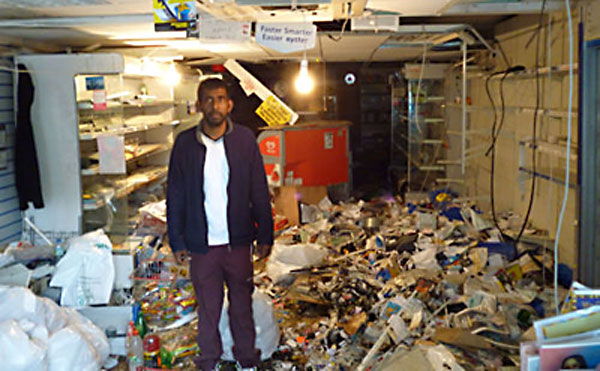
Editor's note: Lives in a Landscape returns on Monday at 11am with the story of Siva Kandiah, a shopkeeper in the heart of Hackney whose life was turned upside down by the August riots. While the community may have rallied around Siva programme producer Sara Jane Hall wonders what the long term effect on the area might be - PM. Update: The programme is now available to listen to online.

Siva Kandiah

Siva Kandiah in his looted shop. Picture by Marcus Mitchell

Never have I been so glad to be in radio, not television.

Presenter Alan Dein and I were recording an interview in Hackney - with a man who had been forced to throw his SLR camera to a baying mob from the balcony of his flat - less than 48 hours after the riots.

Over Alan's shoulder I noticed a TV crew creeping along the street, looking frankly terrified whilst carrying a large camera and a boom microphone.

We, on the other hand, had two clip microphones attached to a shoulder bag and another microphone stuffed in my pocket. A few mic bumps maybe, but safely hidden from view.

Was there a genuine risk still on the streets?

It was still tense. Minutes earlier ten full police vans, each with siren screaming, had passed us by. The street fell silent afterwards - you could even hear the birds - ironic since 'Hackney birdsong' is the local nickname for sirens.

Lives in A Landscape, the series Alan presents, has often covered stories across the UK that don't make it into the news - golfers who play next to the nuclear reprocessing plant at Sellafield, fire-breathing strippers, rat catchers, and that sort of thing... but this time, there was a determination to find out about the people affected directly by the rioting on August 8th this year.

Of course the news was full of stories and photos, and fears, but we wanted to try and get a bit closer to the subject, and to go back the following day, the day after that, the week after that and month later.

Siva Kandiah, the Tamil shopkeeper in Clarence Road, became something of a cause célèbre across the UK media. No one could see his tears after the attack on his shop, or the photograph of him standing in it, without being shocked.

To be there in person was worse. I can still remember the smell created by the whirlwind of destructive behaviour, and the sound of Alan walking through a sludge of devastation. How could this ever be put right?

But what came out of that day was in many ways inspiring, as local people got together to create a fund to rebuild the un-insured shop; giving him first hope, then a huge cheque, and a singular sense that he was actually loved by so many people.

Many people seemed to be shell-shocked by that night's events; but nearly everyone we spoke to remained defensive of the place they lived, and clearly wanted to do their part in putting things right. The HELP SIVA fundraising website was swiftly created by neighbours; the Hackney Homemade market in the churchyard donated their profits for the week; strangers on the street came up to Siva and thrust £20 notes into his hand.

The reopening of Siva Kandiah's shop

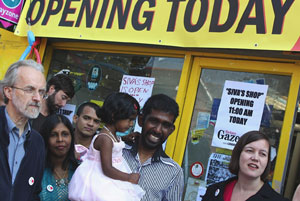
The reopening of Siva Kandiah's shop. Picture by Tony Pletts

Within 10 days the shop had reopened. There were times, Siva told us, when he had felt like news fodder, embarrassed to be famous in such a way, but he also realised his tears had unwittingly helped his cause.

Over the next month a truck load of manure was delivered from the local council, and volunteers from a bank helped shovel it, alongside locals, onto the estate allotment; a tea party for reconciliation was held, with cakes donated by a local chain store; TV crews and the international press had been... and gone.

Siva's shop looked better than ever. Under the surface things were different though. It didn't take long to find a local Caribbean restaurant where the proprietor was quietly throwing away the food she had cooked for absent diners; the area was dead, she said, she had no idea how she was going to make the rent.

So we ate there - it was the least we could do.

Sara Jane Hall is senior producer, Documentaries

The In Our Time Newsletter: David Hume and the Scottish Enlightenment

Blog comments are currently unavailable. Find out more.

Post categories: , 

Melvyn BraggMelvyn Bragg06:00, Saturday, 8 October 2011

Editor's note: This week Melvyn Bragg and his guests discussed the work of the philosopher David Hume, a key figure in the Scottish Enlightenment of the eighteenth century. As always the programme is available, as is the In Our Time archive, to listen to online or to download and listen to on holiday - PM

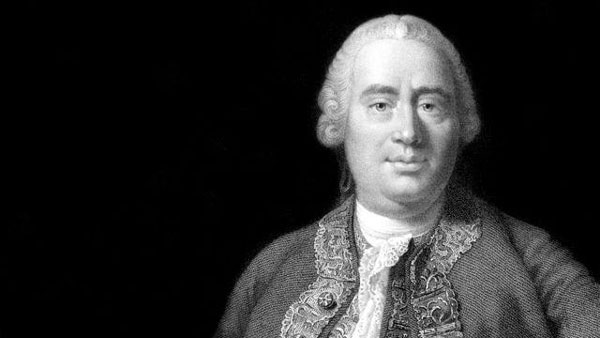
Hume

Far and away the oddest present I got yesterday was a beer mat.

This was given to me after the programme by the Professor of Philosophy at Oxford. It is a David Hume beer mat with a bust of the philosopher, his name, his dates and underneath the bust the motto "Drink and Think"...

On the back there are a selection of sentences under the heading Hume Thought - for instance, "A wise man proportions his belief to the evidence", and "Morality is more properly felt than judged", and "Beauty exists merely in the mind", and "Generally speaking, the errors in religion are dangerous; those in philosophy only ridiculous".

Underneath these and other thoughts is the question "What do you think?"

Presumably, in Oxford and, I hope, in Edinburgh, there are philosophers' pubs where they take their pint and turn over the beer mat and continue their work in circumstances which intellectuals seem to favour. You'll remember that when Crick and Watson thought they had discovered the meaning of life when they completed their work on DNA, they rushed off to The Eagle in Cambridge and sank pints to celebrate.

One thing that we did not talk about in the programme was Hume's History of England, for which he was most famous in his day and which he came to regard as his best work and which was a tremendous commercial success.

By the time we got to that in the structure, I thought that there was still quite a lot more to say about philosophy on which we'd only begun to touch, so I skipped the whole thing. There'll be time, I hope, later on in the decade, to do a programme on The History of England. Perhaps contrasting histories of England from different periods. What did we think we were then, what do we think we are now? Might work.

It seems that the Scottish Enlightenment is not in great favour with the current Scottish government. It's not nationalistic enough and it's too English, or at least too anglicised.

No, the Scottish Enlightenment thrives in Canada where many professors specialise in Hume. I think our guests said there were very few Hume specialists of philosophy in this country. Hume was thought easy and therefore he didn't need to be a specialist subject. Any philosopher could teach Hume.

If that seems a slight on Hume to philosophers, it's one thing that could make a great number of people think it's a compliment to Hume. A fair number have commented of the programme that they could understand philosophy - something that had been hidden from them before. And there is certainly one layer of Hume which invites understanding in a way that many philosophers simply don't. But, as usual, being accessible means being undervalued. I think it was all three who agreed on that. It's quite an interesting observation and seems to hold true across the board.

It's curious, though. In 2009, at the bicentenary celebration of the birth of Burns, Edinburgh was crowded with kilted folk from all over the Scottish diaspora, singing, I'm sure, My Love is Like a Red, Red Rose as they marched in the rain to the castle, and Walter Scott can still excite nationalism both in his house and around his monument.

But Hume, considered by some the greatest philosopher in the English language, has a 300th anniversary this year which is passing away without organisation, without comment, and even our own programme just happened to be an accidental coincidence. (Can a coincidence be anything other than accidental?)

After Hume, off to the office and then to Leeds to give the lecture to commemorate the 75th anniversary of the great Brotherton Library at Leeds University, with some of the descendents of Lord Brotherton present to hear about times of enormous philanthropy. Michael Arthur, the Vice-Chancellor of Leeds, said (at dinner) that philanthropy had decreased after the Second World War because of a much heavier reliance on state support and state subsidy.

Okay, one other unusual present. A friend of mine at Leeds University had made a birthday cake (now that's something I haven't had for many years), but... it was an open Bible, with a reproduction of the frontispiece somehow on the white icing and the icing itself moulded to represent leaves. Quite extraordinary.

Of course, I dare not take a knife to it.

Melvyn Bragg presents In Our Time

Feedback: Lord Patten on DQF and the cuts

Blog comments are currently unavailable. Find out more.

Post categories:

Roger BoltonRoger Bolton16:20, Friday, 7 October 2011

BBC Television Centre

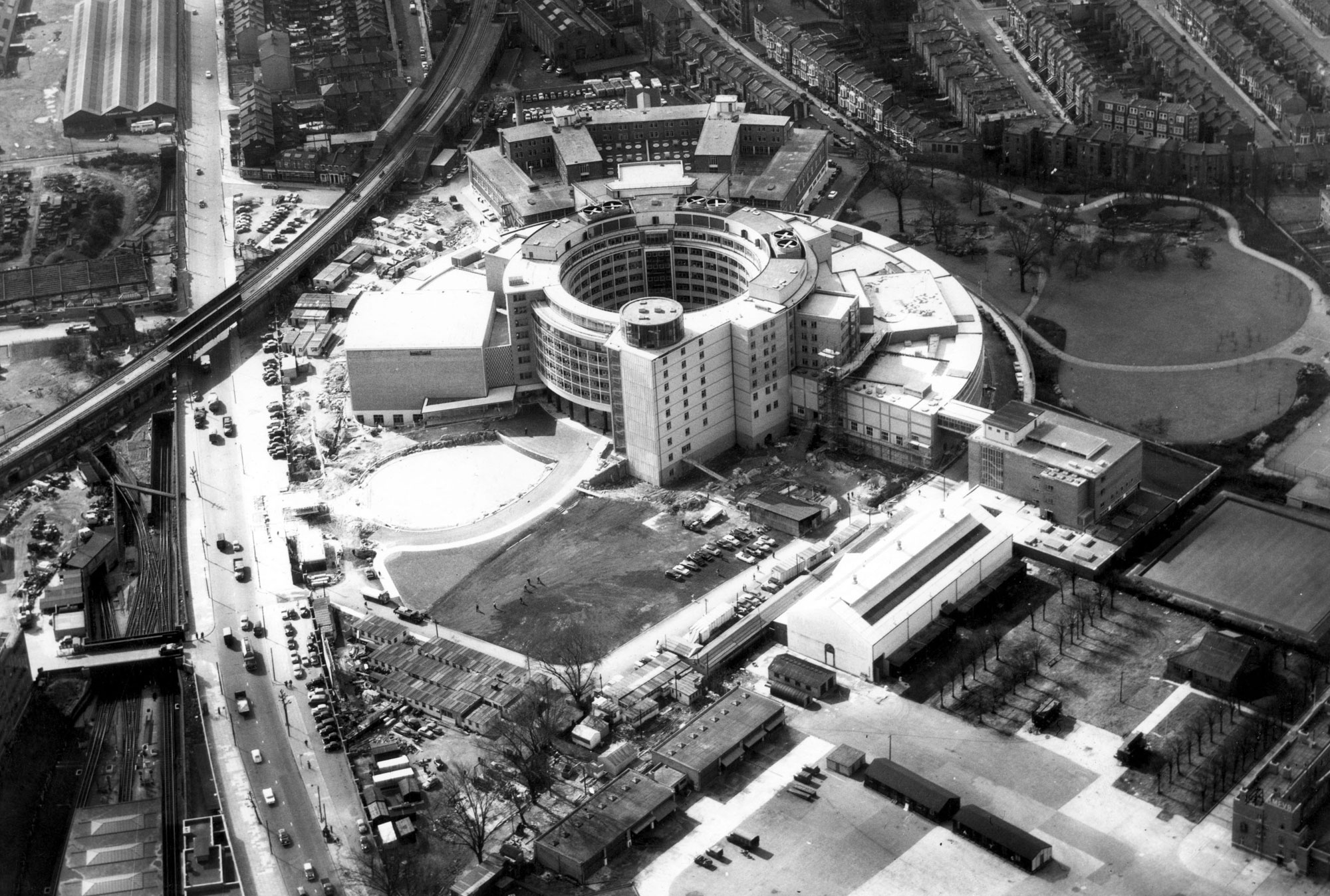
BBC Television Centre in 1960

If in 10 years time, you take the Central Line to White City in West London you will still see the iconic BBC TV Centre, after all it is a listed building, but no-one from the BBC will be in it.

After over half a century's service it is to be sold, along with the BBC's other buildings there a few hundred yards up Wood Lane.

Just about every BBC producer in London will by then be based in the newly refurbished Broadcasting House, just north of Oxford Circus in W1, or in the case of programmes like You and Yours, almost 200 miles north in Salford.

This was announced on Thursday 6 October by the BBC's Director General, Mark Thompson as he and the Chair of the BBC Trust, Lord Patten, laid out the results of Delivering Quality First (DQF) which also has to deliver a 20 per cent cut in the Corporation's spending.

While saying that "We can't do this again", and that the Trust had been "merciless" in its scrutiny of his plans, the Director General seemed on good terms with his boss and glad that at long last he could spell out the plans even though they will result in about 2,000 job losses, which he said he regretted but which were "unavoidable".

Those cuts will be implemented immediately, but the proposals for cuts in programme content will be the subject of public consultation.

You can see the detailed proposals on the BBC Trust's website, but here is a quick summary as they affect radio output:

  • Radio 1's "content spend" will go down by 2.5%
  • Radio 2 by 2.9%
  • Radio 3 by 4%
  • Radio 4 will have no such cost savings imposed upon it
  • Radio 5 Live however is planned to have a cut of 7.5%

There are further cuts in local radio, in the output of the stations serving the nations and in the BBC Asian Network.

In addition to the proposed cuts to Radio 3 an inquiry is taking place into the BBC orchestras, which must fear that at least one of them will be chopped.

Long Wave is doomed and Medium Wave is on borrowed time.

Shortly after the announcements I talked to the BBC chairman, Lord Patten, to try to discover how real the consultation will be.

In order to see this content you need to have both Javascript enabled and Flash installed. Visit BBC Webwise for full instructions

Next week on Feedback I will be talking to the BBC's director of Audio and Music, Tim Davie, about the proposed cuts, so do let me know what you think of them, and the proposed consultation.

Roger Bolton presents Feedback

Woody Allen on The Film Programme

Blog comments are currently unavailable. Find out more.

Post categories: , 

Francine StockFrancine Stock17:29, Thursday, 6 October 2011

Editor's note: You can download the podcast of The Film Programme's interview with Woody Allen - PM.

Francine and Woody Allen

The Film Programme's Francine Stock with Woody Allen

A screen persona is not necessarily what you get in person. Jack Nicholson is not Crazy Jack if you meet him, more like analytical businessman Jack. Comedians are often shy and careful and Woody Allen, everyone he's worked with tells you, is not the querulous neurotic of Manhattan, say, or Bananas.

It is quite a moment, however, when you stand outside the impressive Park Avenue building that has been his production office for decades. A central casting doorman, courteous but watchful, ushers you in; word goes through to the inner sanctum and then you're off on the long walk down a vaulted marble corridor where the arches get smaller as you go along.

It's as if you're being prepared for the scale of the director.

The office itself is a symphony in comfortable 1970s browns and greens, remarkably low key given that Allen is still making on average a film a year. Producer Craig Smith and I are ushered past an editing suite into a screening room, with large metal canisters of films - titles from Allen's back catalogue and, like a manifesto, Fellini's 8 ½ - tucked into corners.

There are piles of the old records he uses as soundtrack, most recognisably in his trademark opening credits, white Windsor font letters on black. And sheet music for his regular Monday performances on clarinet with a New Orleans jazz band.

Then suddenly, Mr Allen has slipped into the room.

The glasses are big and black, if more elegant than Alvy's in Annie Hall. He is extremely polite and gentle in his manner. I worry that my handshake may have crushed his fingers. Later he mentions arthritis and I worry more. He does not fidget or sigh like a Woody Allen character. I remark on the onscreen resemblance in the latest film of Owen Wilson's character to that familiar Allen screen persona, right down to the lopsided walk, the sports jacket and the movement of the hands. Allen is reluctant to concede this.

A couple of days later, back in London, I meet Will Ferrell, who played the Woody Allen character, as it were, in the director's 2004 film Melinda and Melinda.

Did he find himself influenced by the man? It was irresistible, he suggested. Allen writes the words, he's there in front of you, guiding you - after a while, you find you've fallen into his speech patterns and before you know it, it's an impersonation. It's something you have to fight.

It's a powerful thing, that Woody Allen character. A whole generation of younger actors - from Seinfeld to Ben Stiller - incorporate references to it; it is deep in the culture of comedy acting.

Meanwhile, the man himself - already onto his next project - pulls on a little fishing hat and slides unnoticed out onto the street.

Francine Stock presents The Film Programme on BBC Radio 4

Bookclub: Arundhati Roy on The God of Small Things

Blog comments are currently unavailable. Find out more.

Post categories: , , 

Jim Naughtie16:00, Thursday, 6 October 2011

Bookclub

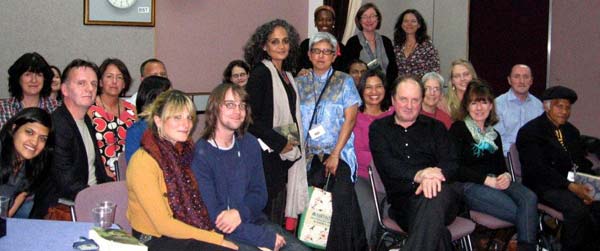
Arundhati Roy with Jim and the Bookclub audience

I do hope those of you who have heard the Arundhati Roy discussion on The God of Small Things enjoyed it. There are very few books of this kind that come our way, so it was a natural for us. Sooner or later we had to come to it. You can hear it online and also download it as a podcast to take away and listen at your leisure.

As you will all know by now past programmes are available at the Bookclub website - a facility which I know many of you appreciate and use a great deal.

The God of Small Things is unusual in so many ways. As Arundhati Roy puts it, the story begins at the end and ends in the middle, and she is determined that she was never going to write a linear story.

In our discussion she made it clear that the feeling of a book that has a circular wholeness, so that you can start the story almost anywhere with the same effect, springs from that part of her mind that made her want to be an architect, which is how she was trained.

The result is that the book's power comes not so much from the development of a story along conventional lines - a beginning in the first pages, and an end on the last page - but from the conception of the world in which the action (concentrated in a few days) is happening around you.

The book that obviously springs to mind is Ulysses, but I find it hard to think of settings that are more different than James Joyce's Dublin and Roy's Kerala, where the texture of life is built up of an impossible vast range of smells, colours, tiny objects and competing cultures and religions. Your senses are assailed by the vividness of the world she describes.

And of course it is a story of love and loss, and therefore tragedy. But when we asked her if it was therefore a pessimistic novel, she said that she thought that the fact the kind of love she describes could have come about in a feudal society was in itself "a fantastically hopeful thing".

At the centre of the story, recollected by Rahel as an adult woman, is the love between her Christian mother and a carpenter who, by the rules of caste, is an Untouchable.

In her conversation, especially when we asked her why she had not written another novel since The God of Small Things was first published in 1997, Arundhati Roy revealed the depth of her political commitments: the extent to which she wants her story to reveal not just the intoxicating feel of India, and the way that the mystical and the practical are woven together in everyday life, but the unfairness and cruelties of a system that pitches different religions and cultures against each other.

Since she wrote the book, which became a worldwide bestseller and won prizes, including the Booker, she's devoted most of her energy to various campaigns which she feels to be more important that the writing of another story.

She told us: "I hope I will return to fiction. I don't want to write books because that's what the world expects me to do. I want to write a book when I have a book that needs to be written or wants to be written; not just because that's a profession." That moment has not yet come.

About her writing technique, which has dazzled so many critics and readers, she says that she knows no rules. She thinks or herself neither as a linear nor hierarchical thinker, and in describing the way she tried to capture the society in which her characters were caught, and the way they lived their lives, it became clear that she wanted to paint a picture of how difficult it is to pursue love - which always produces, she believes, vulnerability - in a society where class and caste impose rigid boundaries and exert hard punishment on anyone who tries to stray across them.

Just as she says that pessimism and optimism aren't in a binary relationship - being opposites between which you have to choose - so she sees the pain of love as something that's inevitable if the joy of it is going to be appreciated. She refused to choose between gloom and hope: they're both there in the book.

I suspect that the reason why it was such a success is that the style in which she tells the story - its layers, the overlapping of time, the back-and-forth twists of the narrative, the idea of the compression of a long story into a brief moment in history - is utterly original.

When you put that together with the sheer exultation in the physical presence of India - especially the smells and the colours - you have a powerful mix.

One of our readers who had grown up in India said that when he read the passages in the pickle factory it made him want to go and wipe his hands afterwards.

The emotions in the book are very powerful - it deals with death, love that has to struggle to be fulfilled, and a touch of incest (because of a shared feeling of desolation) - yet they seem to sit naturally in a society where the natural world always seems about to overwhelm the people, and the rules that are forced upon them are often impossible to obey.

I'm glad we have come to The God of Small Things because in the end I think we had to.

Jim Naughtie presents Bookclub

  • Next month's book is a cult novel of a quite different kind. Iain Banks wrote The Wasp Factory in the mid-eighties and it became something of a latter-day version of The Catcher in the Rye in the way that it tried to unpick the difficulties, the cruelties and the contradictions of the early teenage years. It divided readers then, and still does. It's our book for November - Sunday 6 November at 4pm - and I hope you enjoy it.
  • Visit the Bookclub website where you can listen to the cast archive of author interviews, download the Bookclub podcasts and sign up for the email newsletter.
  • Follow Radio 4 on Twitter and Facebook.

The BBC Soundstart Scheme

Blog comments are currently unavailable. Find out more.

Post categories: , 

Matthew MillsMatthew Mills14:19, Thursday, 6 October 2011

In order to see this content you need to have both Javascript enabled and Flash installed. Visit BBC Webwise for full instructions

Facing an induction week crammed with live performance, master classes with industry specialists, talks and workshops, the six actors gathered in Bush House on 23 July were no doubt a bundle of nerves and excitement.

Each about to embark on a five month bursary as members of the Radio Drama Company, the winners of the BBC's Soundstart scheme follow in illustrious footsteps. Once an exhausting induction week is over they will be let loose onto the "The Rep" to face all that BBC Radio Drama, Readings, Comedy and Factual have to throw at them.

The Soundstart scheme consists of the Carleton Hobbs Bursary Award, for students graduating from accredited drama schools, and the Norman Beaton Fellowship, which looks to find actors from non-traditional training backgrounds.

The Carleton Hobbs Bursary has fed into the Radio Drama Company since 1953 and launched the careers of many household names. Among them Ted Kelsey, Carol Boyd and Tim Bentinck (Joe Grundy, Linda Snell and David Archer of The Archers) as well as Richard Griffiths, Stephen Tompkinson, Julian Rhind-Tutt and C3PO - Anthony Daniels in non-robotic form.

The Norman Beaton Fellowship, now approaching its 10th year, has done much to increase the diversity and reach of Radio Drama through its work with regional theatre companies, providing a vital and unique springboard for those already in the profession with a desire to break into the radio acting industry.

And so, to our Soundstarters: Francine Chamberlain, Rikki Lawton, Alex Rivers and Adam Billington are 2011's Carleton Hobbs winners, and Victoria Inez-Hardy and Christopher Webster are the recipients of this years' Norman Beaton Fellowship.

At the end of their hectic induction week, spirits are soaring and amazingly, so are energy levels. "God knows what to expect" enthuses Rikki "I haven't got a clue, it's going to be mad, but I can't wait". Which is lucky, because as Adam points out "I'm involved in two productions straight off".

With adrenalin and expectations high, our Soundstart winners have embarked on their five month bursary.

There are guaranteed to be highs, lows and drama a plenty, and if history is anything to go by, a surprise or two in store. We'll be checking in with them again, and come December reflecting on their time as members of the BBC's Radio Drama Company.

Matthew Mills is production coordinator, BBC Radio Drama

  • With much already recorded and ready to be aired, you can find the Soundstarters this week in the Classic Serial: Nightingale Wood by Stella Gibbons, which started on Sunday 2 October 2011 and continues next week. You can hear it online for seven days after it's first broadcast.
  • Many thanks to Helen Perry, Production Coordinator in Radio Drama who made the video
  • Sign up for the Radio Drama newsletter

Delivering Quality First on the World at One and Feedback

Post categories: , 

Paul MurphyPaul Murphy12:44, Thursday, 6 October 2011

BBC

On the World at One today the Chairman of the BBC Trust Lord Patten talked about the 20% savings that are being made across the BBC as part of the Delivering Quality First process.

Update: You can hear Lord Patten being quizzed by Roger Bolton about the DQF cuts and how you can take part in a public consultation on the proposals on tomorrow's Feedback.

The BBC Trust are leading the public consultation on the DQF proposals. You can have your say via the BBC Trust website.

Paul Murphy is editor of the Radio 4 blog

Saturday Live Poetry Pop-Up on Radio 4 Extra

Blog comments are currently unavailable. Find out more.

Post categories: , , 

Chris Wilson17:10, Wednesday, 5 October 2011

Editor's note: Thursday 6 October is National Poetry Day and Radio 4 Extra has a special programme featuring the Saturday Live poets to mark it. Full details at the end of this post - PM.

The English romantic poet Shelley said "Poets are the unacknowledged legislators of the world". A grand claim but wreathed in truth. Poetry, whatever its cultural resonance, political colour or artistic aim is, at its best, a distilled entreaty to reflect and consider.

When delivered to you in person by a living poet it's an (occasionally raging) bugle call to pay attention, a vibrant and vital mix of high art and sweaty stand up performance.

Poetry can be very bad.

But it can also be sublime, hysterical, scurrilous and moving, as it was in a recently recorded live poetry show at the BBC Radio Theatre in London.

Murray, Cerys, Richard

Saturday Live from 9 July 2011: Richard Coles with Cerys Matthews and the poet Murray Lachlan Young

For one short hour last Friday evening Broadcasting House was London W1's own Parnassus, inhabited by the regular poets from Radio 4's Saturday Live and 6 Music's Cerys Matthews who sang a version of a Robert Burns poem. The show was designed to celebrate National Poetry Day and it was a great collaborative effort between Radio 4, 4 Extra and 6music as well as the BBC Big Screens who are showing a film of the event.

Working in the Radio Theatre is always a great pleasure and we had a very warm and generous audience. The shared experience of seeing such a diverse group of artists perform is powerful and for a while we were all poetic mariners buffeted and caressed in a maelstrom sea of spoken verse.

Or as Sylvia Plath less floridly put it: "There's nothing like puking with somebody to make you into old friends." Quite.

Chris Wilson is senior producer, BBC Audio and Music Factual Production

"Carol Ann Duffy has the same size feet as David Beckham?!" A Front Row special

Blog comments are currently unavailable. Find out more.

Post categories: , , , 

Paul MurphyPaul Murphy13:20, Tuesday, 4 October 2011

Carol Ann Duffy

If like me you missed the Poet Laureate Carol Ann Duffy's interview with Mark Lawson on Friday's Front Row you can still download it as part of the Front Row daily podcast to listen to at your convenience. If podcasts aren't your thing ("And why not?" I might ask) you can still listen on the Front Row website.

The Poet Laureate talks about how she feel in love with poetry, her new collection of poems as well as the story about the pair of football boots David Beckham promised her in return for a hand-written copy of the poem she'd written about him. Apparently she's still waiting.

For poetry lovers this Thursday there's a National Poetry Day special, Saturday Live Poetry Pop-Up, featuring the Saturday Live poets on Radio 4 Extra hosted by Richard Coles with music by Cerys Matthews.

Also on Sunday (and still available online for the next five days) previous Poet Laureate Andrew Motion talked about National Poetry Day with Jarvis Cocker on 6 Music's Sunday Service.

Paul Murphy is the editor of the Radio 4 blog

Raymond Chandler and Philip Marlowe: The Saturday Play and The Long Goodbye

Blog comments are currently unavailable. Find out more.

Post categories: , 

Paul MurphyPaul Murphy12:30, Saturday, 1 October 2011
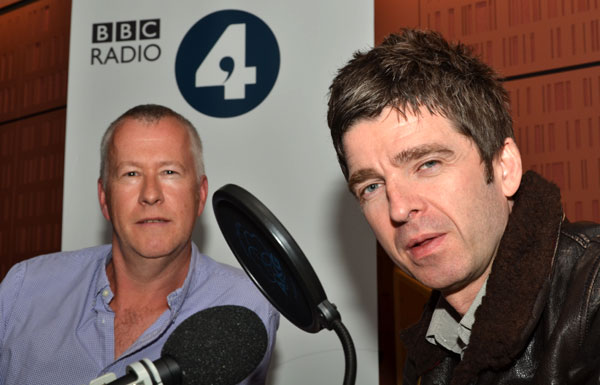
Chandler image

An illustration (detail) for Radio 4's Raymond Chandler season by Andrzej Klimowski

(Ed's update Tuesday 4 October: When I first wrote this I should have mentioned Strangers on a Film, the Afternoon Play last Thursday with Patrick Stewart and Clive Swift, playing Raymond Chandler and Alfred Hitchcock respectively about their famous collaboration on Strangers on a Train. It's available online for another two days - PM)

This Saturday sees the return of Raymond Chandler's fast-talking private investigator Philip Marlowe in the Saturday Play slot with The Long Goodbye. The High Window is on the following Saturday. It's the second part of a series of Radio 4 adaptations of all of the Marlowe novels with actor Toby Stephens in the lead role.

Playback, Farewell My Lovely, The Lady in the Lake and the Big Sleep were broadcast earlier this year and at the time The Guardian's radio critic Elisabeth Mahoney wrote:

"There's lots to admire about The Big Sleep, the first adaptation in a Classic Chandler season dramatising all Raymond Chandler's Philip Marlowe novels. But as you listen, one thing pretty much eclipses all else. It's not the detective plot, the noirish palette to everything, the enviably snappy dialogue, or terse brilliance of Chandler's prose. It's Toby Stephens as Marlowe, and specifically his voice."

She goes on to say:

"Stephens gets the voice so spot on - low, measured, etched by things unspoken, dark as night, taut and spare but intriguing - and his accent is so convincing..."

So perhaps we should add Toby Stephens to the roll call of great Marlowes alongside Dick Powell, Humphrey Bogart, Robert Montgomery, Elliott Gould and Robert Mitchum.

At the time the BBC homepage and iPlayer team used a set of images by Andrzej Klimowski to illustrate the programmes and it seemed like a good opportunity to share one of them with you again (detail above, full image below).

Chandler illustration

Illustration for the Raymond Chandler season by Andrzej Klimowski

I also emailed Andrzej late last night, appropriately enough, catching him just before he left on a trip to Poland and asked him about his use of colour in what for most of us is still a hard-grained black and white genre. Typically enigmatic this is what he wrote back:

"Dear Paul,

Most people think of Chandler's world as being black and white due to the film noir adaptations from the forties and fifties. I wondered what it would look like in colour. Making an illustration for a piece of literature is like signalling a story rather than illustrating it, setting an atmosphere.

Good night and good luck,

Andrzej Klimowski"

The Long Goodbye is on Saturday 1 October 2011 at 2.30pm on Radio 4 shortly afterwards on the website.
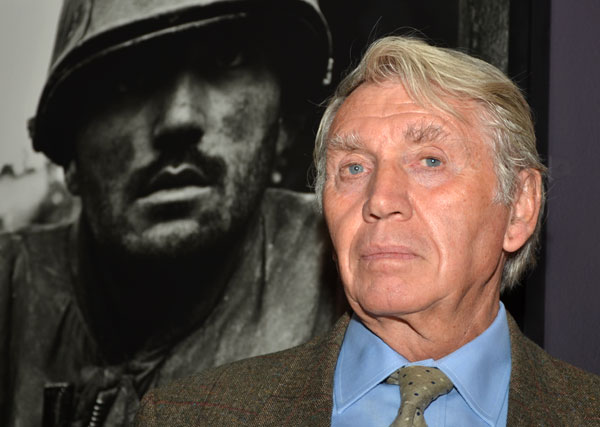
The Little Sister and Poodle Springs are also coming up as part of the season.

Paul Murphy is the editor of the Radio 4 blog

It's a Painful Business: On The Hour with Eddie Mair

Blog comments are currently unavailable. Find out more.

Post categories: , , 

Sarah WadeSarah Wade01:00, Saturday, 1 October 2011

"I've got my rum and coke," he says, as he saunters into a deserted Radio 4 Extra office.

Eddie Mair

Eddie Mair in the Radio 4 Extra studio

It's 7.50 am on a Wednesday morning.

I've scrubbed out a R4 Extra mug specially in readiness for a demanding, adrenalin-fuelled presenter. (Along with the script, audio and studio set-up, the key item when preparing for a studio guest is a drink.)

I've offered him a coffee. But he's clutching a plastic frappuccino thing with a straw. And I've forgotten how wonderful Eddie Mair's voice is. Fresh back from holiday he's tanned and relaxed.

As an On The Hour enthusiast, Eddie Mair kindly agreed to present an On the Hour special for Radio 4 Extra.

Unbelievably, it's twenty years since the show first aired back in August 1991. Liz, one of our presentation producers, noticed the anniversary and plans developed to find the right presenter.

A trained journalist, not only did Eddie work on the same programme as Armando Iannucci (OTH's producer) at BBC Radio Scotland but he listened avidly to the series and says "I got into the news business because of one programme and one programme only and it's not the bloody World At One."

During the recording with Eddie, the fact we are all laughing continuously when we hear snippets of On The Hour is testament to its brilliance. It's still funny twenty years on - not least because it pre-empted the era of 24 hour rolling news. "Today we're live," shouts Chris Morris, "Out on the street, closer than ever before to where the news actually happens... You sir you're a person on the street, how close are we to NEWS?!" says Chris hot-footing it down the street clutching a microphone.

Apart from the lack of references to email and Twitter - it remains spot on.

The three hour special also includes programmes from spin-off series Knowing Me, Knowing You with social climbing Alan Partridge and Armando Iannucci's Charm Offensive.

With the script and the trails recorded I quickly take a few dimly lit and, as it turns out, blurred studio photos of Eddie on my phone to use on our website and upload on Twitter.

Eddie heads off to prepare for PM, Radio 4's 5 o'clock news programme.

"What a great way to start the day," he says. Indeed. I discuss the trail with Kerry our trails producer who, having done a bit of presenting herself says, "I'm so in awe of presenters." I tell her of the professionalism and the glorious voice and we wonder if the adage "women fall in love with their ears" is true.

Later in the day I go to a lunchtime session on how to take a decent photo in a studio (never use a phone).

Sarah Wade is a producer for Radio 4 Extra

More from this blog...

Categories

These are some of the popular topics this blog covers.