 | 28 October 2014 |

| |
| BBC Homepage | | |
| |||
| Contact Us | | |
Saving Planet EarthYou are in: Black Country > Saving Planet Earth > An influential conservationist 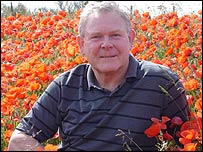 An influential conservationistChris Baines, the man behind the Black Country Urban Forest and one of the twenty most influential conservationists in the UK, talks about his passion for conservation and his work over the years... Although born and brought up in Sheffield, I’ve lived in the Black Country for almost 40 years. In both places the landscape is full of the ghosts of an old industrial past and I have always loved the way that nature manages to creep back in amongst the ruins. I trained as a horticulturist and spent three years in the 1960s being taught how to kill things. In those days wildlife in gardens was a weed, a pest or a disease. I suppose I've spent most of my time since then challenging that point of view. 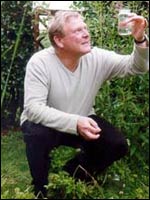 Chris in a garden A love of natureMum and Dad gave me a love of nature, but it was working in the grim inner city areas of London and the West Midlands in the mid 70s that taught me how important nature on the doorstep was for people. It was obvious that a few minutes in leafy green surroundings, perhaps planting a tree or fishing in a pond or canal, could really lift the spirit and relieve the stressfulness of daily life. Revolution in nature conservationIn 1979 (encouraged by the landscape architecture students I was teaching at Birmingham Polytechnic at the time) I helped to found the country’s very first urban wildlife group, which we imaginatively called The Urban Wildlife Group. This was a revolution in nature conservation circles. We believed that people were every bit as important as wildlife; that close contact was the key to enjoyment and that rarities and obscure Latin names could be off-putting for many people. Pretty soon urban wildlife groups sprang up in other towns and cities. I helped to launch the London Wildlife Group in 1980, and this was followed by similar groups in Manchester, Edinburgh and elsewhere. The same revolution was taking place in towns and cities all around the world and now there is an international network. 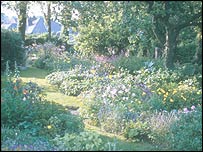 Chris's mum's garden A wildlife gardenAs a horticulturist it seemed obvious to me that gardens were the best place for most of us to enjoy wildlife and I set out to encourage that idea. I created a wildlife garden in the grounds of the BBC studios in Birmingham and appeared regularly on Pebble Mill at One. I went on to make a whole series of TV programmes through the 1980s. The long-running programme Countryfile grew out of my midlands conservation series Your Country Needs You. My book How to Make a Wildlife Garden made it into the best sellers and is still in print after more than 20 years. 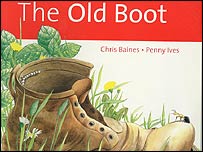 The Old Boot A Chelsea firstIn 1985 I created the very first wildlife garden at Chelsea Flower Show and the Royal Horticultural Society was so confused by the idea, that they inscribed my medal “to Chris Baines, for a wildfire medal”. Now wildflowers, natural ponds and bird feeders are a feature of almost every show garden; a wildflower meadow was the chosen image for the 200th anniversary magazine of the RHS and the Wildlife Trusts are partnering them in the Wild About Gardens campaign. Black Country Urban ForestI have campaigned energetically over the years for nature in towns and cities, and the Black Country Urban Forest has been one encouraging success. The train journey between Birmingham and Wolverhampton has been 'greened out' of all recognition over the past 20 years. I am still very concerned about the threats to our big street trees, especially since we are now realising how much difference they make to the healthiness of the urban environment. But over, all I think there is a much improved awareness of the nature in and around our towns and cities. 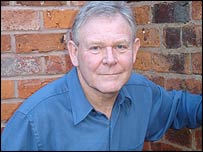 Chris Baines Making time for charitiesI am self-employed as an environmental adviser to house builders, quarrying companies and the water industry, but I also devote a lot of time to conservation charities. I’m a Vice President of the Royal Society of Wildlife Trusts and of the Wildlife Trust for Birmingham and the Black Country. I sit on the board of the Waterways Trust, campaigning for conservation along the canal network, and for the past nine years I’ve been helping to make the big decisions about the way the Heritage Lottery Fund spends its £300 million each year. I’m very involved with the BBC ‘s Breathing Places Campaign and sit on the steering committee along with the head of BBC Television, the Chief Executives of the Big Lottery and of Natural England. Having said that, I do still find time to encourage the wildlife in and around my own Wolverhampton inner city garden. In 2004 I was very proud to be awarded the RSPB’s Medal of Honour, in recognition of my contribution to conservation. And now BBC Wildlife Magazine has named me as one of the twenty most influential conservationists in the UK - so I must be doing something right! last updated: 26/03/2008 at 19:17 SEE ALSOYou are in: Black Country > Saving Planet Earth > An influential conservationist
 Nature in the Black Country | ||||||||||||||||||||
| | About the BBC | Help | Terms of Use | Privacy & Cookies Policy |

