 | | Abolition campaign |
Alongside its involvement in the slave trade, through manufacturing and the importation of goods produced by slave labour, Wolverhampton and the surrounding Black Country played their part in the campaign to abolish slavery. This is a subject currently under-researched, but some tantalising references to these local campaigns have begun to emerge from the city's Archives. 18th century Wolverhampton ChronicleA good source of information is the local newspaper during the late 18th century, the Wolverhampton Chronicle. This includes reference to a concert given at the town's theatre in April 1792, at which a poem entitled 'The African's Appeal' was performed, and funds collected for the anti-slavery cause. Poems supporting the abolitionist cause was published in some numbers by the Chronicle and its competitor the Staffordshire Advertiser during the early 1790s. Alongside these, sermons by local church ministers detailing the evils of slavery were also printed, confirming the importance of this issue to local people. 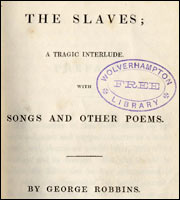 | | Poems pamphlet |
Alongside these items produced locally, Wolverhampton's newspapers also carried detailed reports of the debates in Parliament regarding the slave trade and its abolition. The newspapers reflect the idea that the abolition movement was a national one; and one which, by implication, shows just how important the slave trade was to the life of Britain as a whole. Also included in the local press are advertisements asking for funds, from national bodies such as the Anti-Slavery Society, and details of public meetings. Black Country abolition campaignThe names of local individuals can also be found in the works of well-known abolitionist campaigners. Olaudah Equiano (1745-1797) was a former slave, and the publication of his autobiography in 1789 did much to highlight the abolitionist cause. Amongst the list of subscribers are two Wolverhampton men. Joseph Pearson was an active member of the Unitarian church in the town, and may be connected to those Pearsons with lands in Antigua. Also named is the Reverend James Wraith. Originally from Scotland, Wraith came to Wolverhampton around 1782 to take up the post of minister at Temple Street chapel, a post he continued to hold until 1791. Local theatre and politics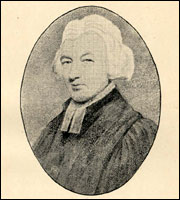 | | Rev James Wraith |
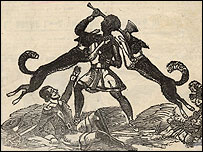
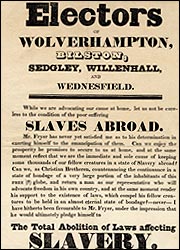
Other local writers were clearly taken with the issue of slavery and abolition, with poems and plays on the subject continuing to be written and performed. A pamphlet held in Wolverhampton's archives, and written by an anonymous clergyman, suggests the ways in which the trade may be gradually reduced and abolished; whilst posters from the town's theatre describe performances on the same subject. The slave trade also continued to be an important political issue after 1807. With the continuation of slave-owning in the Caribbean, politicians and other would-be candidates firmly argued for one side or another, either arguing for immediate total abolition, or for something more gradual. Posters from the 1832 election make this clear, and confirm that this was still very much an issue of interest to the general public, some 25 years after the passing of the Act that had begun the formal abolition process. All images are copyright Wolverhampton Archives and Local Studies, and are used with permission. |