Atomic structure and the periodic table
Atoms, elements and compounds - AQA
Chemists use symbols and formulae to represent elements and compounds. Word equations and balanced chemical equations represent the changes that happen in chemical reactions.
QUIZ: Atoms, elements and compounds
This interactive quiz is suitable for GCSE Chemistry (single science) students studying atoms, elements and compounds. Revise chemical symbols and chemical reactions.
Mixtures - AQA
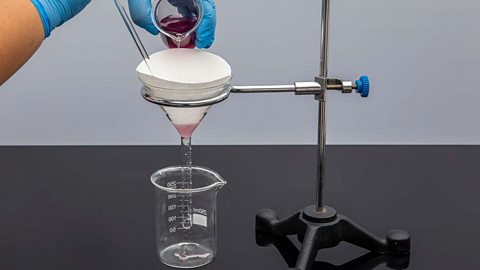
There are different ways to separate mixtures, such as filtration, crystallisation, simple distillation, fractional distillation and chromatography. The method chosen depends on the type of mixture.
QUIZ: Pure substances and mixtures
This interactive quiz is for GCSE Chemistry (single science) students studying pure substances and mixtures. Test your knowledge of filtration, crystallisation and distillation.
Atomic structure - AQA
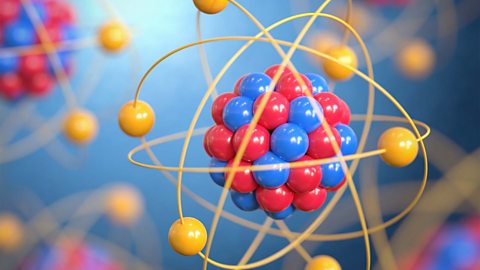
Atoms consist of a nucleus containing protons and neutrons, surrounded by electrons in shells. The number of subatomic particles in an atom can be calculated from the atom's atomic number and mass number.
QUIZ: Atomic structure
This interactive quiz is for GCSE Chemistry (single science) students studying atomic structure. Test your knowledge of atomic models, atomic number and calculating atomic mass.
The periodic table - AQA
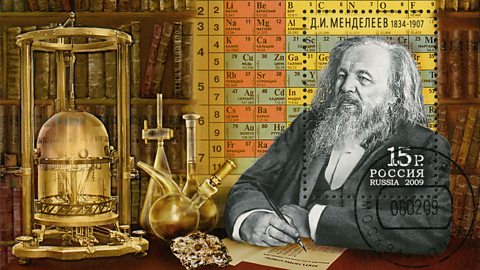
Mendeleev made an early periodic table. In the modern periodic table, elements are in order of atomic number in periods and groups. Electronic structures model how electrons are arranged in atoms.
QUIZ: The periodic table
This interactive quiz is for GCSE Chemistry (single science) students studying the periodic table. Test you knowledge of elements and Mendeleev’s early periodic table.
Groups in the periodic table - AQA
Elements in the same group of the periodic table show trends in physical properties, such as boiling point. They have the same number of electrons in their outer shell, so they are similar in their chemical properties.

QUIZ: Groups in the periodic table (activity 1)
his interactive quiz is for GCSE Chemistry (single science) students studying the periodic table. Test your knowledge of where the different groups are in the periodic table.
QUIZ: Groups in the periodic table (activity 2)
This interactive quiz is for GCSE Chemistry (single science) students studying the periodic table. Test you knowledge of chemical and physical properties and chemical reactions.
Transition metals - AQA
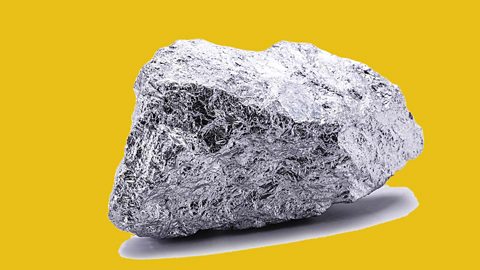
The transition elements are metals. They have high melting points and densities, and are strong and hard. They form coloured compounds and act as catalysts.
QUIZ: Transition metals
This interactive quiz is suitable for GCSE Chemistry (single science) students studying transition metals. Revise the physical and chemical properties of transition metals.

Sample exam questions - atomic structure and the periodic table - AQA
Understanding how to approach exam questions helps to boost exam performance. Question types will include multiple choice, structured, mathematical and practical questions.
Links
- External linkExternal link
- SubscriptionSubscription
- External linkExternal link
- External linkExternal link
- External linkExternal link
