What are the key facts about light and shadows?
- Light comes from the Sun, stars, fires, light bulbs and more. It helps us see everything around us.
- Shadows are made when something blocks light. They look like dark shapes on the ground or walls.
- Opaque things, like bricks, block all light and make dark shadows. Translucent things, like tissue paper, let some light through and make lighter shadows.
- Shadows change size depending on how close the object is to the light source and the angle of the light. Closer objects make bigger shadows.
Speaker 1 - Quintin Question: Hellooo! Big shout out to all you QQFFMers out there and welcome back to QQFFM. You know us by now. I'm Quintin Question and over there we have my robotic brain box friend, Frank the Facts Machine. Let's jump straight in.Great. Frank's happy. I'm happy. We're all happy. Now let's make you guys happy by answering some questions. We're looking out for some sciency vibes today, so let's see. Einstein2.0 wants to know if we could survive just eating insects. I mean… What kind of question…? Why would you eat…? Ok, Astronaut2001 is asking what space smells like.
Speaker 2 - Frank the Facts Machine: I’m reliably informed that the centre of the Galaxy smells like raspberries.
Speaker 1 - Quintin: I don't know. I don't, I don't really… What is going on today? Ah, yes. This is more like it. JKHowling wants to know what shadows are made of. Excellent JK, loving your work. Frank, take it away. What are shadows?
Speaker 2 - Frank: Hmm. Actually, shadows aren't anything.
Speaker 1 - Quintin: Now, Frank, I think we've all seen enough shadows to know they do actually exist. Is it time to switch you off and switch you back on again?
Speaker 2 - Frank: No Quintin, you misunderstand me. They exist, of course, but rather than being something, they are actually the absence of something. Light! Shadows are created when a source of light shines on an object, but the light is blocked from passing through it. This happens when the material that the object is made of is opaque. That means dense enough for no light to pass through, like your head, Quintin.
Speaker 1 - Quintin: Just one flick of the off switch, Frank. One flick of the off switch and you're out of the show.
Speaker 2 - Frank: When light shines on an opaque object, it creates a dark area on a surface the other side of that object. Shadows can change depending on the position of the light source. The closer to the light source an object is, the bigger the shadow will be. This is because the object blocks more of the light. The further away from the light source an object is, the smaller the shadow will be. This is because the object blocks less of the light. As the source moves, the shadow will change. When the light source is directly above the object, the shadow will be directly underneath. When the light source is the one side of the object, the shadow will appear on the opposite side.
Speaker 1 - Quintin: Ok, nicely done Frank. So shadows can be very long, but what's the biggest shadow in the world? I bet it’s the shadow of Mount Everest, yeah?
Speaker 2 - Frank: Well, yes, but think again, Quintin, The biggest shadow in the world is caused by an enormous opaque object that hangs over us all.
Speaker 1 - Quintin: Is it your sense of superiority? Hahaha.
Speaker 2 - Frank: I'm sorry, I didn't catch that. Did you say soup is a priority?
Speaker 1 - Quintin: Oh get on with it Frank.
Speaker 2 - Frank: In fact, the largest shadow made on Earth is that of the moon during a solar eclipse.
Speaker 1 - Quintin: Hey, Frank, how do you organise a solar eclipse party?
Speaker 2 - Frank: I don't think I know the answer to that one, Quintin.
Speaker 1 - Quintin: You plan it! Planet! Plan it. Eh? Love it! Hahaha! Hey, Frank, how does the man on the moon cut his hair? He clips it! Get it? Eclipse it, hahaha. Never mind. Ah well, see you next time here on QQFFM. Eclipse it, hahaha. I’m here all week! Frank? Frank!
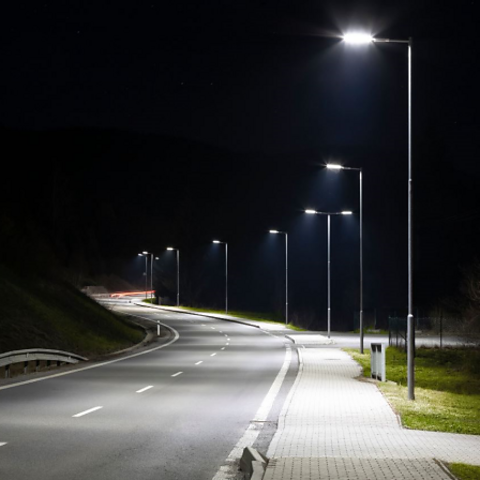
Light is something we use and need every day. It is a form of energy that allows us to see all around us!
Lots of different sources produce light.
Earth's main source of natural light is the Sun.
At night, moonlight is created by the moon reflecting the Sun's light.
This allows us to see at night, although not as easily as during the day.
Light can also be produced by stars, fires, light bulbs, torches, street lights, glowsticks, candles, lasers and even blue light from smartphones.
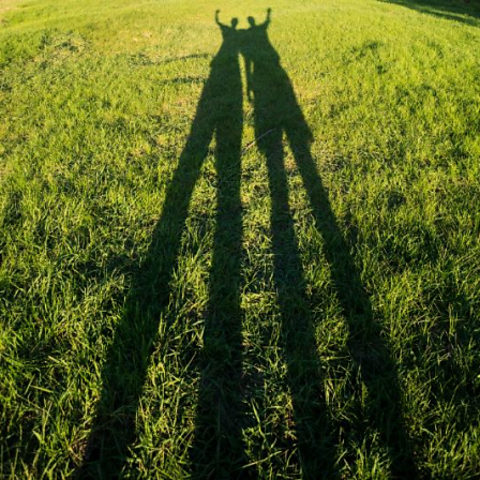
What are shadows?
Light rays travel in straight lines. Light cannot bend around opaque objects in their way. Shadows are created when an object blocks light from the Sun or another light source.
When the light can't pass through the object, it makes a dark spot on the ground or wall behind it, which is the shadow.
You can see your shadow when the Sun is shining and you stand in front of it. The closer you are to the source of light, the larger your shadow will be.
If you move around, your shadow will also move with you. Shadows are a bit like a picture of where the light can't go because something is in the way.
How do materials affect shadows?
Opaque or translucent materials can produce shadows.
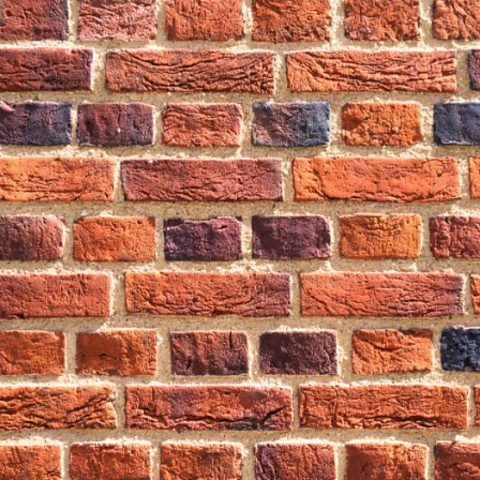
Opaque materials, like a brick or a toy, completely block light and create a shadow on the opposite side of where the light is coming from.
Shadow puppets, made of cardboard or paper, are another example of materials that can produce shadows when held in front of a light source.
Translucent materials, such as tissue paper or a stained glass window, allow some light to pass through but still create a shadow because they partially block the light.
To make a darker shadow, an object has to be opaque.
Can shadows change size?
The size of a shadow can change depending on a few things.
Firstly, it can change depending on how far the object and the light source are from each other.
The further away from the light source an object is, the smaller the shadow will be. This is because the object blocks less of the light.
Secondly, the size of a shadow also changes depending on the angle of the light. The shadow will be smaller if a light source is directly above an object.
But if the light hits the object at an angle, the shadow will be longer and will change shape. Let's think about a real-life example of shadows changing size.
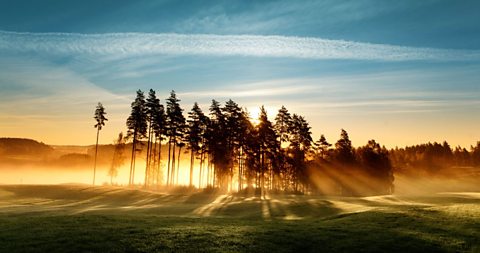
When the Sun is low in the morning or evening, shadows can be much longer and stretched out than in the middle of the day when the Sun is directly overhead.
More on Sound and light
Find out more by working through a topic
- count2 of 7
- count3 of 7
- count4 of 7
- count5 of 7

