Number
NEW: Whole numbers
Use place value to compare and order whole numbers. Practise adding, subtracting, multiplying and dividing whole numbers with quizzes and interactive activities.
Quiz: Whole numbers
This interactive quiz is suitable for GCSE maths students studying writing whole numbers as words, ordering whole numbers, and multiplying and dividing whole numbers.
Quiz: Whole numbers 2
This interactive quiz is suitable for GCSE maths students studying order of operations, negative numbers, adding and subtracting negative numbers.
NEW: Order of operations and negative numbers
Revise how to add, subtract, multiply and divide negative numbers using the correct order of operations (BIDMAS). This guide contains video and quizzes.

NEW: Decimals
Decimal points separate whole numbers from parts of a number. Practise using decimals with video, quizzes and interactive activities.
Quiz: Decimals
This interactive quiz is suitable for GCSE maths students studying place value and ordering decimals, adding, subtracting, multiplying and dividing decimals.
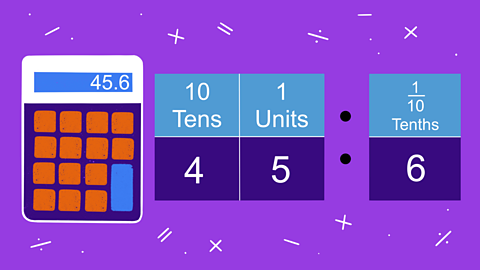
NEW: Converting between fractions, decimals and percentages
Converting between fractions, decimals and percentages is a useful problem-solving skill. Practise writing data in different formats, with quizzes and a game.

Quiz: Converting between fractions, decimals and percentages
This interactive quiz is suitable for GCSE maths students studying converting decimals to fractions and percentages, fractions to decimals, and percentages to decimals.
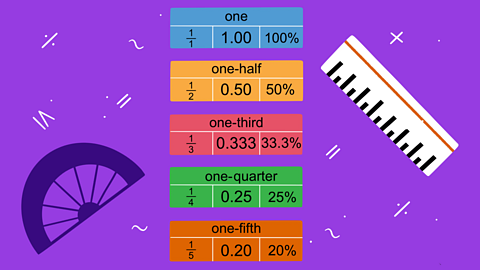
NEW: Higher – How to convert recurring decimals
A recurring decimal exists when digits repeat forever. Practise understanding dot notation in recurring decimals with a video, quizzes and interactive activities.

NEW: How to round numbers
Round numbers when an exact value is not needed. Practise rounding to decimal places, estimating calculations and truncation with a video, quizzes and interactive activities.

NEW: What is accuracy in maths?
Limits of accuracy give a range of values a rounded number could have. Practise recognising degrees of accuracy and upper and lower bounds with quizzes and a video for Higher.

Quiz: Approximation
This interactive quiz is suitable for GCSE maths students studying approximation, rounding to decimal places, rounding to significant figures, truncation, estimating calculations.
NEW: What are fractions?
Fractions show parts of a whole. Learn how to simplify and order fractions, and to write mixed numbers and improper fractions, with quizzes and interactive activities.

NEW: How to add, subtract, multiply and divide fractions
Learn how to add, subtract, multiply and divide fractions, as well as how to use a calculator for fractions and finding fractions of amounts, with video and quizzes.

Quiz: Fractions
This interactive quiz is suitable for GCSE maths students studying ordering fractions, using fractions, mixed numbers and improper fractions and fraction arithmetic.
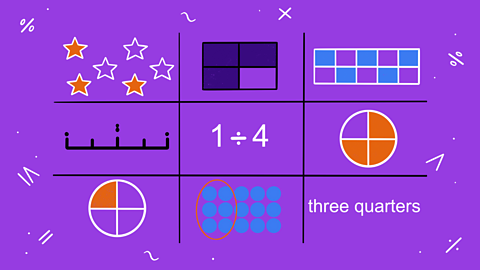
Quiz: Fractions 2
This interactive quiz is suitable for GCSE maths students studying ordering and using fractions, multiplying and dividing fractions, fraction arithmetic, and fractions of amounts.
NEW: Multiples and factors
Revise multiples and factors, prime, square and cube numbers, the product of prime factors and powers and roots, with quizzes and interactive activities.

Quiz: Multiples and factors
This interactive quiz is suitable for GCSE maths students studying multiples and factors, prime, square and cube numbers, powers and roots, and highest common factor.
NEW: Highest Common Factor and Lowest Common Multiple
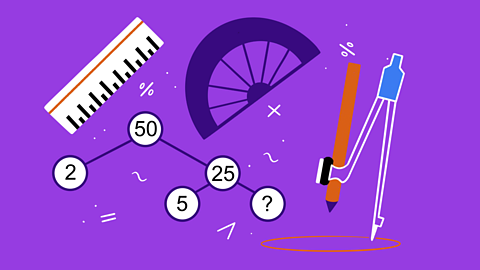
Revise Highest Common Factor and Lowest Common Multiple, HCF and LCM using prime factors, and powers and roots, with quizzes and interactive activities.

NEW: Laws of indices
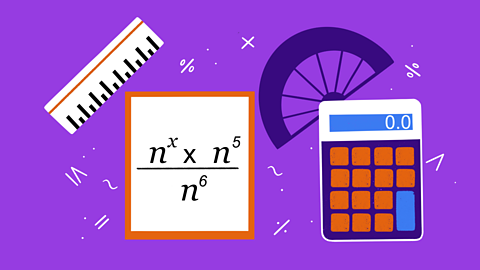
Index notation involves a base number (or variable) raised to a power. Practise multiplying and dividing indices, and raising a power to a power, with video and quizzes.

Quiz: Laws of indices
This interactive quiz is suitable for GCSE maths students studying using an index or power, law of indices – multiplication and division, and raising a power to a power.
NEW: Negative and fractional indices
Indices may be positive or negative integers, or fractional values. Revise working with negative and fractional indices, with video and interactive activities.

NEW: Standard form
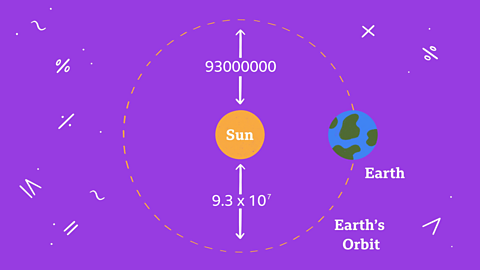
Standard form is a way to write very large and very small numbers so they're easier to work with. Practise working with standard form, with quizzes and interactive activities.

Quiz: Standard form
This interactive quiz is suitable for GCSE maths students studying standard form, converting from standard form, ordering numbers in standard form, and calculating standard form.
NEW: Calculations using standard form
Learn how to add, subtract, multiply and divide standard form with and without a calculator. Practise writing numbers in standard form with quizzes and interactive activities.

Surds - Higher - Edexcel
Surds are numbers left in square root form that are used when detailed accuracy is required in a calculation. They are numbers which, when written in decimal form, would go on forever.

Quiz: Surds
This interactive quiz is suitable for GCSE maths students studying simplifying surds, adding and subtracting surds and rationalising denominators.
Financial mathematics - Edexcel
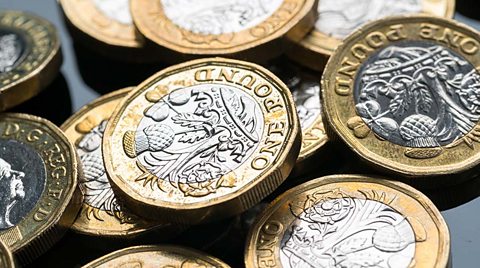
Financial maths is needed for all jobs, from calculating wages to working out profit, loss and VAT. Knowledge of financial maths is also required to be able to understand bank statements and savings.
Quiz: Financial mathematics
This interactive quiz is suitable for GCSE maths students studying wages and salaries, salary and pay, profit and loss, bank statements and savings and VAT.

Links
- External linkExternal link
- SubscriptionSubscription
- External linkExternal link
