Commas in sentences
Adding a comma can change the meaning of a sentence.
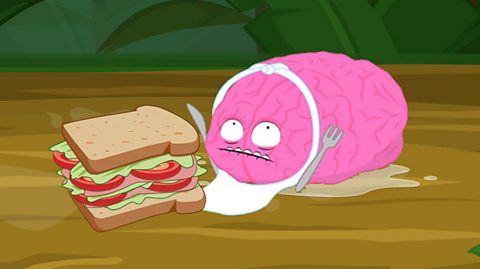
Let's eat Albert. = We're going to eat Albert.
Let's eat, Albert. = We're eating with Albert.
In a long sentence, you can use commas to separate out extra information and make the sentence easier to read. These commas do the same job as brackets but look a lot neater in your writing.
Albert (the alien with blue spots) is from the planet Zoink.
Albert, the alien with blue spots, is from the planet Zoink.
A clause is the building block of a sentence. Commas can be used to break up sentences that have more than one clause and make them easier to read.
When Albert saw the food, his tummy started to rumble.
Albert got used to the blue spots, but then they started itching.
Both these sentences have a subordinate clause. Subordinate clauses do not make sense on their own.
These clauses need the main part of the sentence to make sense, so they are connected with a comma.
The comma shows that they are closely connected to the main part of the sentence.
If the clauses make sense on their own, you don’t need to use a comma. For example:
- Albert was excited about eating. He wanted to use a knife and fork.
More on Punctuation
Find out more by working through a topic
- count3 of 8
- count4 of 8
- count5 of 8
- count6 of 8