Exam practice
GCSE Biology: exam-style quiz by topic
Try this quiz based on GCSE Biology past papers. Choose the topic you would like to revise and answer the questions.
GCSE Biology: exam-style questions
GCSE foundation and higher triple science exam practice with Bitesize interactive quizzes covering feedback and common errors in cells, organisation and more.

GCSE Biology: quick-fire questions
Foundation and higher exam quiz based on GCSE biology past papers to boost your revision in photosynthesis, respiration, plant disease and more.

GCSE Biology: using past papers effectively
Boost your confidence for the biology exam with step-by-step worked examples, tailored tips, and practice questions.

- Guide Number7 Guides

Video playlists
- Video Number11 Videos

- Video Number7 Videos

- Video Number5 Videos
- Video Number5 Videos
- Video Number8 Videos
- Video Number6 Videos
- Video Number3 Videos

- Video Number5 Videos
- Video Number5 Videos
Podcasts
The Cell
All living things are made of cells, which is why they’re called the building blocks of life.
The organisation of plants and animals
Learn all about plant and animal organisation with Dr Alex Lathbridge.
Infection and response
Learn all about infection and response for your GCSE biology exam with Dr Alex Lathbridge.
Homeostasis
Learn all about homeostasis for your GCSE Biology exam with Dr Alex Lathbridge.
Inheritance, variation and evolution
Learn all about inheritance, variation and evolution for your GCSE Biology exam with Dr Alex Lathbridge.
Ecology
Learn all about ecology for your GCSE Biology exam with Dr Alex Lathbridge.
Science exam techniques
Learn all about science exam techniques for your GCSE science exams with Dr Alex Lathbridge.
Cell biology
Cell structure - AQA
Organisms are made up of cells. Most organisms are multicellular and have cells that are specialised to do a particular job. Microscopes are needed to study cells in detail.
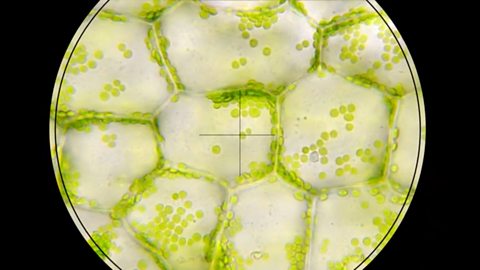
QUIZ: Cell structure
This interactive quiz is suitable for GCSE Biology students studying cells and their structures.
QUIZ: Types of cell
This interactive quiz is suitable for GCSE Biology (single science) students studying cells and the different cell types.
Cell division - AQA
Chromosomes carry genetic information in a molecule called DNA. A type of cell division called mitosis ensures that when a cell divides each new cell produced has the same genetic information.
QUIZ: Cell division
This interactive quiz is suitable for GCSE Biology students studying cell division and the process of mitosis.
Interactive activity: Mitosis - AQA
Understand the steps of mitosis with this interactive activity from BBC Bitesize made to the GCSE AQA Biology specification.

Transport in cells - AQA
For an organism to function, substances must move into and out of cells. Three processes contribute to this movement – diffusion, osmosis and active transport.

QUIZ: Transport in cells
This interactive quiz is suitable for GCSE Biology (single science) students studying transport in and out of cells.
Sample exam questions - cell biology - AQA
Understanding how to approach exam questions helps to boost exam performance. Question types will include multiple choice, structured, mathematical and practical questions.

Organisation
Animal organisation - gaseous exchange systems - AQA
Most animals and plants consist of different types of cells organised as tissues, organs and systems. The human respiratory system is a body system adapted for efficient gas exchange.
QUIZ: Animal gas exchange systems
This interactive quiz is suitable for GCSE Biology (single science) students studying gaseous exchange systems in animals.
Animal organisation - digestion - AQA
The major nutrients required for a healthy diet are carbohydrates, proteins and lipids. The digestive system breaks down large molecules of food, which are then absorbed into the bloodstream.
QUIZ: Digestion
This interactive quiz is suitable for GCSE Biology (single science) students studying the digestion system and its processes.
Animal organisation - transport systems - AQA
Multicellular organisms require transport systems to supply their cells and remove waste products. In humans, one of the functions of the circulatory system is to transport substances.
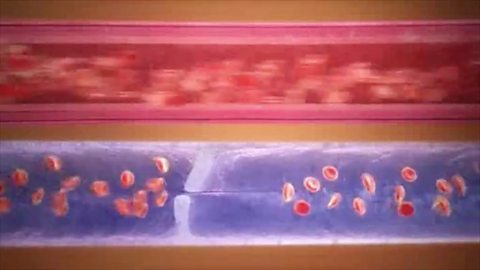
QUIZ: transport systems activity 1
This interactive quiz is suitable for GCSE Biology (single science) students studying transport systems in humans.
QUIZ: transport systems activity 2
This interactive quiz is suitable for GCSE Biology (single science) students studying transport systems and ways of managing cardiovascular disease.
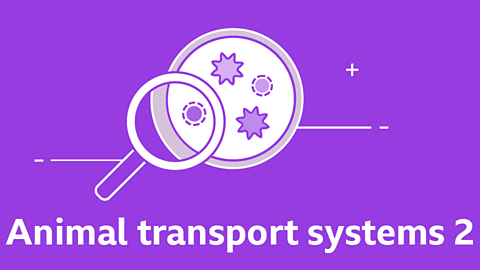
Plant organisation - AQA
Plant cells, tissues and organs are adapted to their functions. The stem, root and leaves form an organ system that transports substances into, around and out of a plant.
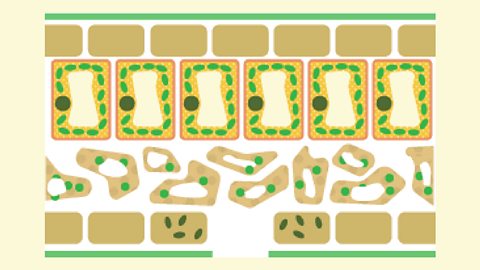
QUIZ: Plant organisation activity 1
This interactive quiz is suitable for GCSE Biology (single science) students studying plant structures, their functions and how substances are transported in and out of a plant.
QUIZ: Plant organisation activity 2
This interactive quiz is suitable for GCSE Biology (single science) students studying plant organisation, exploring processes such as transpiration and osmosis.
Non-communicable diseases - AQA
Health is the state of physical and mental well-being. Factors work together and affect physical and mental health. A disease is a disorder that affects an organism's body, organs, tissues or cells.
QUIZ: Non-communicable diseases activity 1
This interactive quiz is suitable for GCSE Biology (single science) students studying non-communicable diseases such as Type 2 diabetes and tumours.
QUIZ: Non-communicable diseases: data analysis
This interactive quiz is suitable for GCSE Biology (single science) students studying non-communicable diseases and the role data analysis plays in reporting statistics.
Sample exam questions - organisation - AQA
Understanding how to approach exam questions helps to boost exam performance. Question types will include multiple choice, structured, mathematical and practical questions.
Infection and response
Communicable diseases - AQA
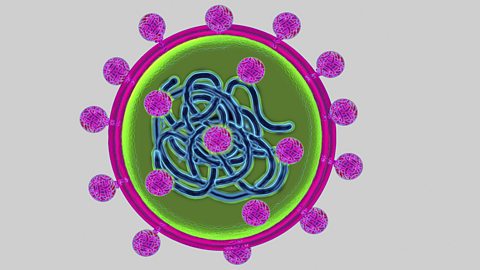
Pathogens are disease-causing viruses, bacteria, fungi or protists, which can infect animals and plants. Humans have an immune system, which can defend them from pathogens.
QUIZ: Communicable diseases activity 1
This interactive quiz is suitable for GCSE Biology (single science) students studying communicable diseases, including the viruses, bacteria and protists that can cause them.
Treating, curing and preventing disease - AQA
Some diseases can be treated with antibiotics. Vaccinations allow protection against specific diseases, but the level of protection depends on the amount of people vaccinated.

QUIZ: Communicable diseases: prevention
This interactive quiz is suitable for GCSE Biology (single science) students studying communicable diseases and how the body and medicine work to prevent them.
QUIZ: Vaccinations and antibiotics
This interactive quiz is suitable for GCSE Biology (single science) students studying treating and preventing diseases - through the provision of vaccinations and antibiotics.
QUIZ: Bacterial growth and drug discovery
This interactive quiz is suitable for GCSE Biology (single science) students studying bacterial growth and how medicines have been developed to fight illness.
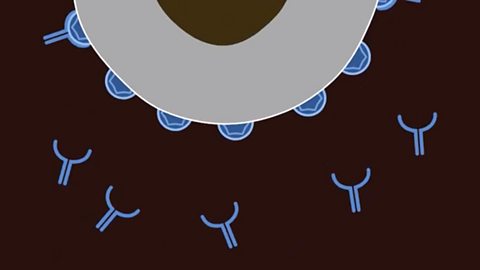
Monoclonal antibodies - Higher - AQA
Monoclonal antibodies are identical copies of one type of antibody.
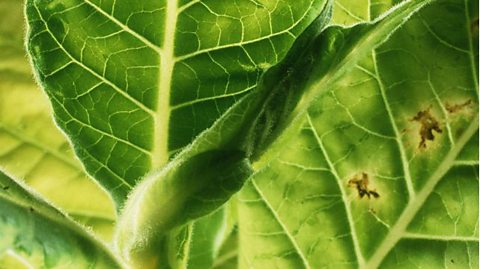
Plant disease - AQA
Pathogens are disease-causing viruses, bacteria, fungi or protists which attack plants as well as animals. Plants have physical and chemical defences against pathogens.
QUIZ: Plant disease
This interactive quiz is suitable for GCSE Biology (single science) students studying the physical and chemical defences plants have to combat diseases.
Sample exam questions - infection and response - AQA
Understanding how to approach exam questions helps to boost exam performance. Question types will include multiple choice, structured, mathematical and practical questions.
Bioenergetics
Photosynthesis - AQA
Plants make their own food using photosynthesis. The food that plants produce is important, not only for the plants themselves, but for the other organisms that feed on the plants.

Respiration - AQA
All organisms respire in order to release energy to fuel their living processes. The respiration can be aerobic, which uses glucose and oxygen, or anaerobic which uses only glucose.

Sample exam questions - bioenergetics - AQA
Understanding how to approach exam questions helps to boost exam performance. Question types will include multiple choice, structured, mathematical and practical questions.
Homeostasis and response
Coordination and control - The nervous system - AQA
The nervous system enables humans to react to their surroundings and to coordinate their behaviour. It comprises millions of neurones and uses electrical impulses to communicate very quickly.
QUIZ: The nervous system
This interactive quiz is suitable for GCSE Biology (single science) students studying the nervous system and how it enables humans to coordinate movement.
Coordination and control - The human endocrine system - AQA
The endocrine system secretes hormones into the bloodstream from glands throughout the body. Hormones produce an effect on specific target organs in the body.
QUIZ: The human endocrine system
This interactive quiz is suitable for GCSE Biology (single science) students studying the human endocrine system and the role hormones play.
Hormones in human reproduction - AQA
Hormones are secreted by glands in the endocrine system. During puberty, hormones create changes in physical and emotional characteristics.
QUIZ: Hormones in human reproduction
This interactive quiz is suitable for GCSE Biology (single science) students studying the role hormones play in human reproduction.
QUIZ: Sexual and asexual reproduction
This interactive quiz is suitable for GCSE Biology (single science) students studying sexual and asexual reproduction in humans, animals and plants.
Homeostasis in humans - AQA
Homeostasis is the regulation of internal conditions inside cells or organisms, to create the optimum conditions for biological function.

QUIZ: Homeostasis in humans
This interactive quiz is suitable for GCSE Biology (single science) students studying homeostasis and how important it is to regulation of the body.
Plant hormones - AQA
Hormones promote growth within plants. Plant hormones are unequally distributed throughout the stems and roots, which results in parts of the plant growing in a particular direction.
QUIZ: Plant hormones
This interactive quiz is suitable for GCSE Biology (single science) students studying hormones and how they promote growth in plants.
Sample exam questions - homeostasis and response - AQA
Understanding how to approach exam questions helps to boost exam performance. Question types will include multiple choice, structured, mathematical and practical questions.
Inheritance, variation and evolution
Reproduction, the genome and gene expression - AQA
Reproduction occurs in all organisms. DNA is important, as it allows new proteins to be synthesised. Mutations in the DNA can have serious implications.
QUIZ: The genome and gene expression
This interactive quiz is suitable for GCSE Biology (single science) students studying the genome, genes and DNA.
Genetic inheritance - AQA
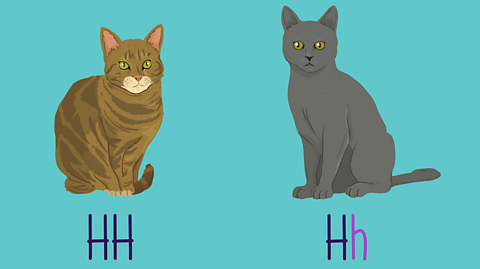
Our genes are inherited from our parents, and the different combinations of these genes make us unique. Genetic inheritance controls the characteristics of all living things.
QUIZ: Genes and inheritance
This interactive quiz is suitable for GCSE Biology (single science) students studying genes and inheritance and how the latter controls the characteristics of living things.
QUIZ: Inherited disorders and genetic testing
This interactive quiz is suitable for GCSE Biology (single science) students studying inherited diseases and genetic testing.
Variation - AQA
Variation in species can be generated by genetics. Mutations arise spontaneously and can sometimes lead to genetic disorders or death. Genes can be inserted into a genome through genetic engineering.
QUIZ: Variation
This interactive quiz is suitable for GCSE Biology (single science) students studying variation and selective breeding n different species.
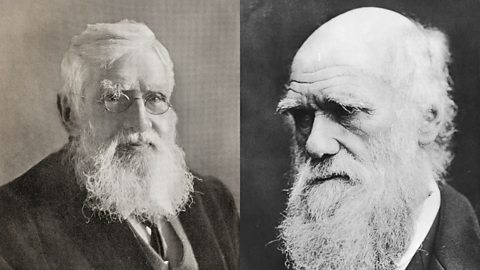
Evolution - AQA
Evolution is the change of inherited characteristics within a population over time through natural selection, which may result in the formation of a new species.
QUIZ: Evolution
This interactive quiz is suitable for GCSE Biology (single science) students studying evolution and the concept of survival of the fittest.

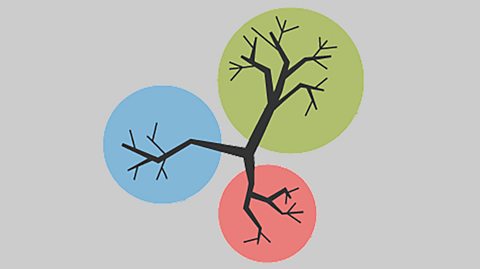
Classification of living organisms - AQA
Living things are classified using a system developed by Carl Linnaeus. Organisms are commonly named by the binomial system of genus and species.
QUIZ: Classification of living organisms
This interactive quiz is suitable for GCSE Biology (single science) students studying how organisms have been classified into systems.
Sample exam questions - inheritance, variation and evolution - AQA
Understanding how to approach exam questions helps to boost exam performance. Question types will include multiple choice, structured, mathematical and practical questions.
Ecology
Adaptations, interdependence and competition - AQA
The abundance and distribution of organisms in an ecosystem is determined by biotic and abiotic factors. Animals and plants have adaptations to allow them to compete for resources.
QUIZ: Adaptations, interdependence and competition
This interactive quiz is suitable for GCSE Biology (single science) students studying adaptations in animals and plants and their ecosystems.
Organisation of an ecosystem - AQA
The feeding relationships between organisms in an ecosystem can be seen in food chains. Sampling allows us to measure the abundance and distribution of these species.

QUIZ: Organisation of an ecosystem
This interactive quiz is suitable for GCSE Biology (single science) students studying ecosystems and their relationship with food chains.
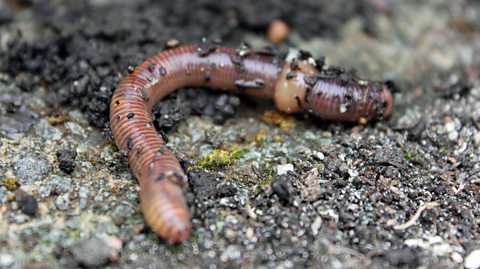
Decomposition - AQA
Decomposition, or decay, is the breakdown of dead matter. The rate at which this happens depends upon the number of decomposing microorganisms, the temperature, and water and oxygen availability.
QUIZ: Decomposition
This interactive quiz is suitable for GCSE Biology (single science) students studying decomposition and the rate of decay under various circumstances.
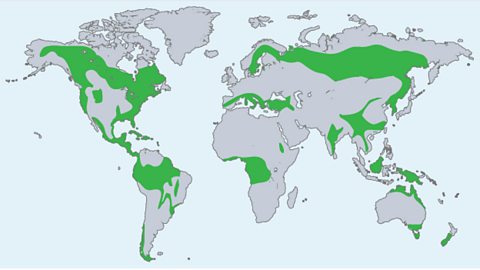
Biodiversity and the effect of human interaction on ecosystems - AQA
Biodiversity is a measure of how many different species live in an ecosystem. Human activities like changing land use, deforestation and peat bog destruction reduce this.
QUIZ: Biodiversity and the effect of human interaction on ecosystems
This interactive quiz is suitable for GCSE Biology (single science) students studying biodiversity and the impact human activity has on it.
Trophic levels in an ecosystem - AQA
Feeding relationships are shown in food chains. Each stage is a trophic level. Biomass is a measure of the total mass of living material in each trophic level.

QUIZ: Trophic levels in an ecosystem
This interactive quiz is suitable for GCSE Biology (single science) students studying trophic levels in ecosystems and biomass.
Food production - AQA
Factors such as the increase in human population, new pests and pathogens, overhunting and armed conflict, can result in food scarcity in some countries.
QUIZ: Food production
This interactive quiz is suitable for GCSE Biology (single science) students studying food production and how various factors affect productivity.
Sample exam questions - ecology - AQA
Understanding how to approach exam questions helps to boost exam performance. Question types will include multiple choice, structured, mathematical and practical questions.
Practical skills
Practical skills
Scientific investigations have several stages - planning, collecting data, analysing data and evaluation. It is important to understand how to carry out each stage of the investigation.

Revision resources
How to revise for your biology exams
Get ready for the GCSE biology exams with these interactive resources from BBC Bitesize.

Links
- External linkExternal link
- SubscriptionSubscription
- External linkExternal link
- External linkExternal link
- SubscriptionSubscription
- External linkExternal link
- External linkExternal link
- SubscriptionSubscription
