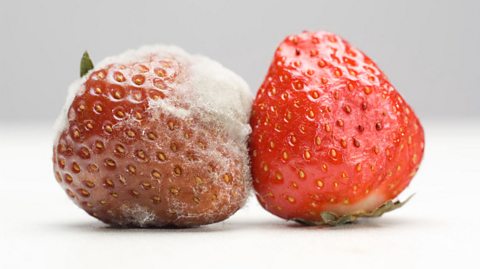
A quick search online for 'mouldy food' can throw up some interesting results.
Is it safe to eat? What happens if you accidentally eat it? Or even - what happens if you feed it to chickens?
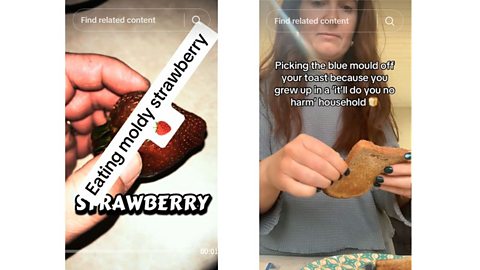
Then there are also plenty of similar questions on socials and some examples on TikTok of people knowingly eating mouldy food! Sometimes it’s for comedy reasons, and it may be for more clicks too hits, but there are also posts aiming to be informative on the subject.
To answer some of the more popular questions online and on socials about mouldy food, BBC Bitesize Other Side of the Story spoke to Professor Robin May, an expert in infectious diseases at the University of Birmingham.
Can you eat mouldy bread?
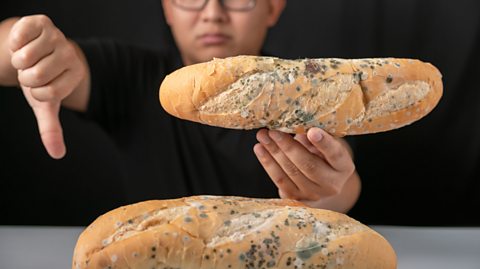
It's a popular search online. This may be because you have grabbed a loaf out of the cupboard to make a bit of toast and noticed those annoying bluey-green splotches appearing on the crust. It’s starting to go mouldy, but you wonder whether it’s fine to toast a slice from the opposite end where you can’t see any mould? It’s a no.
Prof May said: “The idea that you will cut off your mouldy bit and it’ll be fine - it’s not true.
“Most fungi, what you see on the surface, is less than 10% of the biomass [the total amount of fungus that is in the food].
“If you slice a bit out of mouldy bread and leave it until the next day, it will be mouldy again. That’s not a coincidence. That’s because you haven’t really got rid of it.”
The UK's Food Standards Agency (FSA) agrees with Prof May - and adds that if your bread is going stale, rather than mouldy, it can still be used in recipes as breadcrumbs - or even croutons in soup.
So even if there’s just a few signs of mould appearing on your loaf, it’s best to bin it - it’s not worth the risk. And don’t feed it to the birds, either - the toxins in mould can harm them too.
What happens if you eat mouldy food?
There are posts on Instagram about mouldy food (or under the US spelling of 'moldy') which have had hundreds of thousands of views. There are also thousands of different types of fungus. Not all of them grow on food and not all of them will do you much harm if you eat them.
There are some, however, which are best avoided. Prof May explained: “The biggest risk in food is the mould that produces toxins. That's one of the reasons why you shouldn't just cut [the mould] off and throw it away because even if you get all the mould off, the toxin it has produced might have spread through the food elsewhere.”
Mould is unlikely to grow inside you if you eat it but the toxins it can produce - called A toxic substance produced by a fungus. - may cause you to be ill if you eat them regularly, including stomach problems and possible damage to your liver and kidneys.
The FSA also advises against eating mouldy food, especially if you are a child, an older person over the age of 65, someone who is pregnant or have a weak immune system.
What about mouldy fruit and veg?
Not all fresh produce is the same so there is different advice where mould is concerned.
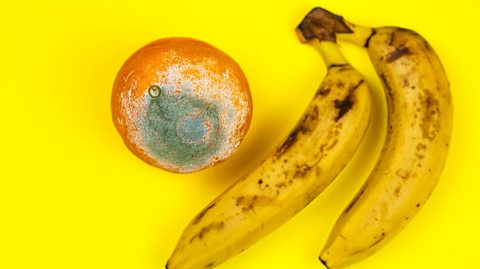
For example, Professor May advised that if you had a firm cabbage where mould is only showing on an outer leaf, then removing that leaf can mean the rest of the cabbage is fine to eat - although check thoroughly for any mould that has sprung up elsewhere. If it’s a softer fruit, such as a strawberry or a peach, then any kind of mould is a no-no.
The FSA says it is fine to eat soft fruit that may have gone a little mushy or wrinkled - but make sure you check thoroughly for any signs of mould.
What other foods can grow mould?
You may know about mould on bread, fruit and veg, but what about the food you may not realise has fungi growing on it?
Prof May explained: “If you keep your grains or seeds in a damp place they can grow a set of mould which is famous for producing lots of toxins.”
Cereal companies keep a close eye on their grains and screen them for toxins and the FSA website explains how the growing, harvesting and storing of these grains is subject to strict safety regulations.
If you have any grains stored in kitchen jars, keep an eye on them. Signs of mould could be an unusual smell, a slimy touch, or crusts gathering on the grains themselves.
Why are there white dots on my chocolate?
Have you ever opened a box of chocolates and found that there are strange white dots all over them - almost like bits of flour? If you do, don’t worry - it may look like mould, but it’s not.
Prof May said: “That’s usually caused by cocoa butter. What’s happened, typically, is the chocolates are a bit hot and the cocoa butter is slightly melted and separates. It’s completely harmless although it doesn’t look very nice. If chocolates are genuinely mouldy, in the sense of being fluffy, that is not cocoa butter and you need to throw it away.”
Some cheeses are also made with mould as part of the ingredients. This is specially prepared at the production stage and is considered safe to eat - but if cheese starts to go mouldy after it’s left the factory and is on your plate, then it’s set for the bin.
Should I eat mouldy food?
The answer is almost certainly no. While some foods - like the cabbage Prof May mentioned - can sometimes be salvaged, it’s usually not worth the risk. If someone online is claiming otherwise, it may be misinformation or even disinformation - designed to deceive, grab attention, clicks or views rather than provide accurate advice.
There is lots of information and claims about health and healthy eating on our socials, and not all of it is true. It’s always best to follow advice from trusted experts and official sources, such as Prof May or the Food Standards Agency, which also advises against eating mouldy food.
It’s important to think critically about where information comes from online. Viral videos and posts can sometimes spread misleading claims, especially when creators aren’t experts or don’t provide evidence. Bias can also play a role, people may share information that supports what they already believe, even if it isn’t true.
This article was published in May 2026

Not sure if the news you’re seeing on social media is true or false? Can you always tell if the things you see online are real or fake?
Learn how to get the other side of the story with our quizzes, videos and explainers about media skills and viral trends including popular food myths.
Do we feel happier when the sun's out?
What is SAD and does daylight really affect our mood?
Other Side of the Story
Back to our homepage for more quizzes and explainers about fake news, viral trends and media skills.