Since its beginnings more than 20 years ago, World Book Day has been one of the highlights of the school calendar.
Pupils dress as their favourite fictional characters, swapping tales - or even books - and sharing in the sheer wonder of storytelling.
With such an emphasis on the visual, and the written or spoken word, World Book Day is a slightly different experience for children who have challenges with seeing and hearing. But there’s still no limit on the imagination and story-making, as BBC Bitesize found out.
Storytelling without pictures
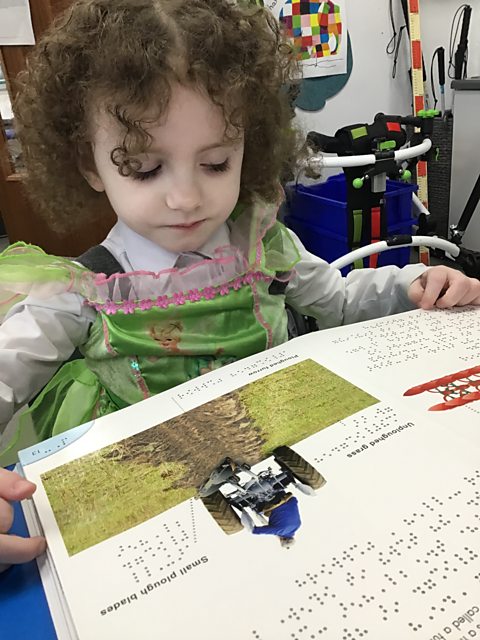
Jean Weiss works with children of all ages across Berkshire who have visual impairments and are based in mainstream schools. The days and weeks leading up to World Book Day involve a lot of preparation, so she can help optimise their experience.
One example is the choice of costume for the day, as Jean explained: “If a child is partially sighted, we would want them to avoid any costume which restricts their vision any further.
“We are willing to give advice and support to parents over costumes as well.
“For example, have a costume with bells on it, or with some nice textures such as silk or velvet, that they like the feel of.
“It also shouldn’t cover their ears as they rely on their hearing so much.”
Preparing the imagination
Jean begins Book Day preparations for pupils in January. This includes making sure that any books chosen for younger children have clearly drawn pictures - bold images on a light background or vice versa - so partially sighted children find it easier to focus on them. If a World Book Day story involves, for example, a train journey, she can also encourage pupils’ families to take them on a train trip beforehand, so they have an idea of the atmosphere, sounds and smells associated with the experience before they hear about it in the classroom.
If time allowed, this kind of preparation could be done for every book on the curriculum. However, the extra work that goes into World Book Day stories can give the event a special feeling for children with vision difficulties.
“It’s about bringing the book to life,” Jean said.
“We can have a bag full of objects that relate to the story… or when the story is being read, using different voices for the characters.
“Some story books have special sound effects built in which can be played as they are read out, so the children can hear the animals and vehicles involved.”
Bringing in the other senses
Making a story as multi-sensory an experience as possible is a key aim for Jean. She recalled one occasion where vegetable soup was made alongside a telling of a story where it was featured. It meant the children could experience the smells, sounds and - eventually - tastes associated with the story they were hearing.
Stories are made available for children who are blind and partially sighted as part of World Book Day. Available as audio books, braille and large print, they include titles in Welsh. Some braille stories can also be read with a special pen that detects labels placed alongside the dots. When the pen scans the label, it produces pre-recorded sound effects. Jean explained: “The multi-sensory way is the best way forward.
“It’s generating that real love for books and stories.”
Calls for greater representation
The National Deaf Children’s Society has previously worked with The Gruffalo author Julia Donaldson for World Book Day. Donaldson has hearing challenges herself and believes there should be greater representation of disabilities in children’s literature. During her time as Children’s Laureate, she wrote a book called Freddie and the Fairy which features lip reading. Another of her books, What the Jackdaw Saw, is about sign language and she worked with a group of deaf children during its creative process.
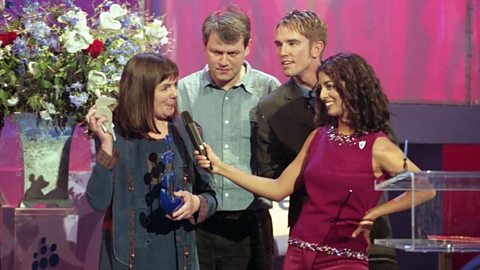
Former Hollyoaks actress Rachel Shenton won an Academy Award in 2018 for her short film The Silent Child, about the relationship between a social worker and a deaf girl who communicate through sign language. She said in 2019: “For World Book Day, which is such an exciting time for kids across the country to think about the stories they love, we need to remind everyone involved in the industry of how vital disability inclusion is.
“From children’s authors to book publishers, featuring disabled characters and the experiences they go through couldn’t be more important.”
Real-life experiences
Claire Spencer is a teacher at Elmfield School for the Deaf in Bristol. Throughout the year, they run a bilingual curriculum which includes sign language. Specialist staff at the school have been working to adapt the World Book Day activities to make the experience as immersive as possible for children with hearing impairments.
To mark the big day, her pupils and colleagues will enjoy an assembly with a Magic of Reading theme for the primary age children (who will be dressed as their favourite characters), while parents will be invited in to learn more from experts about reading with a child who is deaf or has limited hearing. There is also a multigenerational aspect, with grandparents who have hearing issues invited to a bedtime stories event. At secondary level, there will also be dressing up alongside some book-themed quizzes and code breaking sessions.
Claire told Bitesize: “Our children really enjoy celebrating World Book Day together. At primary level, we often visit a book shop together and we receive a very warm welcome. It is a great way for the children to develop their life skills.
“We also use our school council and and pupil feedback, including verbal or signed suggestions for next year, to be used in our end of term review.”
This article was published in March 2020
Seven alternative World Book Day characters
The tips you need for last-minute costumes that are light on stitching and sticking.
The classic novels opening line quiz
It was the best of challenges, it was the worst of challenges.
Seven books that made history
If you've ever wanted to read a book as tall as a bus, you've come to the right place.

