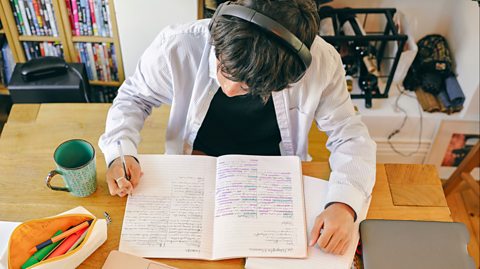
As GCSEs and Nationals loom for students, many parents will be worrying that their teenager might not be doing as much revision as they need to.
If that includes you, to help, Bitesize Parenting has consulted a panel of parents and carers from across the UK who’ve been through this recently or are in the middle of it now. We asked about barriers to revision, how involved they were in their teen's exam prep and for any advice they could share with other families.

How involved should parents be?
We asked our panel how they found the revision period before exams and how involved they were with their child's revision. Some were quite relaxed and confident that they could leave their teenager to stay on track, while others were more directly involved in helping with timetables and offering revision help.
Getting them organised
Matthew found that helping them with their timetable - when to study or allowing for breaks worked well, although “there were some days they could not be bothered which I did not go against as they worked hard the other days.”
Nancy says “I helped my children do a revision timetable. I find that this helps them to calm down and feel like they know exactly what they're doing and when. I've always said to them if you can get things down on paper, it can get things out of your head.”
Let them get on with it
For Katherine, “Both my boys just get on with their revision, sometimes they ask me questions, and I help where I can but mostly, they are able to get on with it themselves. Most of the work they do goes over my head anyway!” Katherine says she does try to be supportive and make sure “they eat well, stay hydrated and get plenty of rest as this is also important with combatting exam stress.”
Francesca found a balance, “We helped my son whenever he needed us and tested him but mainly left him alone to get on with it. He's a very good student and a very hard worker so we trusted that he was studying hard and he did so well with 6x9s, 3x8s and 1x7.”
Simon took on a supporting role - asking “Are you okay? Do you need help? Don't cram your head with too much too quickly. Space it out, take time away from your desk.”
But the night before English GCSE might not be the time you would expect this response…
Charlie Baker shares a funny anecdote about his son's revision.
Charlie Baker: The night before his English GCSE, right? I don't think he'd read one of the books, I don't think.Kerry Godliman: Oh that's key.Charlie Baker: And I said, what have you got tomorrow? And he went erm Romeo and Juliet.Kerry Godliman: And he hadn't read it?Charlie Baker: I went have you? Have you read it? 'No!' Oh, no.Kerry Godliman: I almost admire the confidenceCharlie Baker: 'Why are you asking me that?' I mean, this is the nicest boy you can imagine.Kerry Godliman: Night before?Charlie Baker: You know. But that's when you say you are as a parent. The battering ram. You know, that is… that is your…that's what you're there for.Kerry Godliman: Yeah. Yeah.Charlie Baker: And you have to sort of suck that up I think. Yeah. It's like yeah, do it, do it to me because it's safe.Kerry Godliman: Yeah, yeahCharlie Baker: Why would you ask me that. Right. And I was like, oh, God. I said, oh well, have you watched the film? He went, yes. I said, why don't you watch it now? 'I've seen it.' So when did you see it? 'Six months ago.'Kerry Godliman: Did he pass?Charlie Baker: He passed yeah.Dr Charlotte Armitage: Oh my…Charlie Baker: He got his English.
Watch the rest of this episode of Bitesize Parenting Teens - How to help teenagers revise - and deal with exam stress for advice and some funny anecdotes from Kerry Godliman, Charlie Baker and psychologist and psychotherapist Dr Charlotte Armitage.
What's stopping them from revising?
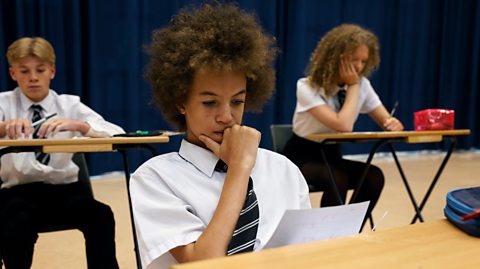
We also asked the panel of parents what they found to be the biggest barrier to getting their teenager to focus and revise at home.
Motivation and confidence
Rhia suggests it is any subject they’re finding hard, “because it's like they have a wall up and have convinced themselves they can't do” She says that they need you to show them they can do it – “if that's to act like your even more baffled than them so they don't feel as bad then so be it, don't get mad that they don't know something, help them to understand it and boost their confidence”
But for Morag, “My son gets more stressed about me suggesting he revise than he does about exams so I didn't find a way to help him.”
Exam stress - How can parents help
Tara highlighted motivation as a barrier, “I think they've got to want to do it - they just get distracted really quickly.”
Keep on top of device use
Tara also points to one barrier to revision flagged by many of the parents - technology: “Make sure their phones are somewhere else entirely - not in the same room.”
Ayesha similarly states “Remove the mobile phone if possible as it's a BIG distraction.” As does Katherine - “Distractions from phones or other tech…you have to try and encourage them to switch off from it, focus.”, Marc simply said “Xbox and PlayStation”.
Simon agreed but had a suggestion, “Social friendship via media apps are the main distraction… so, pleasant threats of ‘wi-fi is going off if work doesn't commence’…it’s never been switched off yet. So, all good.”
Five ways to help your teen to spend less time on their screens
How can parents and carers help with revision?

Schedules and timetables
Lesley says, “Have a schedule and don’t overdo it. Allow time for hobbies and downtime and reward them when they are able to stick to their schedule. Ask them to leave their phones in a separate room whilst they’re studying.”
Matthew’s advice is to set a realistic timetable that you do together so you can help them stick to it. Allow breaks “some longer than others when it is a harder subject.”
Calmness, keep it fun and take breaks
Ellen suggests “Keep a calm, consistent household, and if they need to sleep more than usual, let them, as it is emotionally exhausting.”
Rhia likes to join in saying she likes to make it “as fun as possible, almost quiz them on the subjects and topics they have to learn but in a fun way, if they are doing a story and theirs a film to match it, just watch it with them and almost act like you don't get what's happening because they love feeling like they are teaching you something and by them explaining it all to you like you’re dumb helps it stick in their head.”
Tara suggests teenagers do small bits of revision with breaks in between – “kids attention spans are really short.” She suggests getting them to vary their methods and mix up video, reading, sample questions, online quizzes etc… “Make sure you're watching them do it - get them to work in communal areas. Make sure they're doing 'active' revision rather than sitting staring blankly at a book.”
Patience with no pressure.
Katie comments, “Do not put too much pressure on them. we all want our kids to do well but putting pressure on them is only going to make matters worse.”
For Simon, “With our daughter it's let her attack it at her own pace, no pressuring her to meet deadlines if due. She tends to get it all done with time to spare anyway. Other children may need that push of revision commitment, but Evie seems to understand the importance of these 2 years and is buckling down to it. So…for us it’s: Patience with no pressure.”
And Nancy rounds off, “I would say don't judge your child and don't make comments about whether or not you think they are supposed to be revising. If they've got a timetable and they’re sticking to it or they need to change it then that's fine. They're doing the best they can”

If you want to help guide your teenager cope with their exam worries, techniques to revise and do's and don'ts ahead of sitting exams show them Bitesize Study Support.
If you want to help them with their exam preparation Bitesize has revision help for all curriculum and exam boards.
Bitesize Parenting
Fun activities, real-life stories, wellbeing support and loads of helpful advice - we're here for you and your child.

How to support your teen’s wellbeing during their GCSE revision
Bitesize Parenting caught up with Young Minds to get some top tips on supporting teens with their wellbeing this exam season.

What not to say to your kids during exam season
Exam season is stressful enough, so here are some top tips to avoid unnecessary rows.

How to help your teen stop doomscrolling
We can lose all sense of time scrolling through videos or articles on our devices. But what are the issues for teens who scroll endlessly?
Five ways to help your kids kick-start revision
If you're a parent, how you can support your teenager this exam season?

Is music a distraction for my teenager while they revise?
At revision time music can be a flashpoint- so is music an aide to concentration or a big no-no? A neurologist has some insights.