Scamming and fraud is not new. As long as humans have traded goods, before money and currency was even invented, we have been tricked by those who want to profit from deceit.
For Scam Safe Week 2025, BBC Bitesize dug through court ledgers, mediaeval manuscripts and ancient hieroglyphics to unearth some of the first known examples of scams, some still happening today.

3000BC - Truly ancient tax fraud
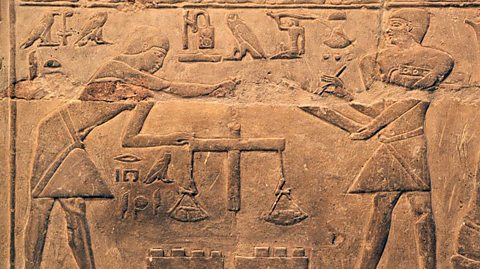
The Ancient Egyptians invented the first tax system 5,000 years ago. The state collected these taxes to fund operations such as building, foreign wars and to maintain social order.
Records from 3000BC show that ancient Egyptians celebrated the festival of Shemsu Ho. During this time their ruler, the Pharaoh, would tour the kingdom collecting a tax on any livestock people owned. Egypt didn’t have coin money then, so grain was used instead as it could be valued, collected and traded. But people would try cheat the system - officials weighted scales to gather more grain and skim off a profit or people would put a rock in their sack of grain to make it heavier and then worth more.
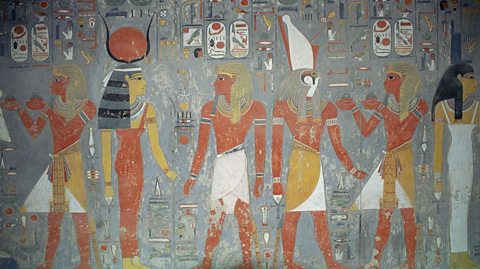
By 1300BC, Pharaoh Horemheb was so fed up of the scammers he passed a law outlawing both tax extortion and evasion, punishable by removal of the person's nose and exile.
300BC - Bottomry and a sinking ship
In Ancient Greece in 300BC, a sea merchant and his accomplice tried to fiddle the money lenders by sinking their own ship. Hegestratos and Zenosthemis took out loan called a bottomry, common at the time. Usually you’d borrow the money to insure against anything going wrong, once the cargo is delivered safely the loan is paid back with interest. If the loan is not repaid the ship and cargo would be repossessed.
But the two men planned to deliberately sink their empty ship, keep the cargo and run off with the loan. Unfortunately both men were caught in the act by the crew, Zenosthemis was captured and sent to trial but Hegestratos fell overboard, presumed drowned.
AD193 - One Time Offer: the Roman Empire for sale
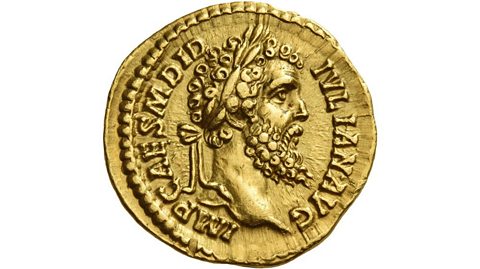
Next, we’re in Rome AD193, know as the Year of the Five Emperors, due to the chaotic jostling for power. Emperor Perinax was assassinated by his own elite band of soldiers, the Praetorian Guard, who then auctioned off the Roman Empire to the highest bidder. It was bought by an ambitious senator Didius Julianus who offered 250 pieces of gold to each solder.
But the Empire was not the soldiers’ to sell. Julianus’ reign lasted 66 days until General Septimius Severus seized power and began a new and powerful imperial dynasty. He also made sure his own, trusted men took over the Praetorian Guard.
1200s - A Middle Ages manual: how to scam the Lord of the Manor
Life in England in the 13th Century was tough. Many people were peasants tied to work the land and live in villages owned by a local landowner. These medieval Lords of the Manor had the power to decide where people lived, how they worked and who they could marry. And the Lord would get their In the Middle Ages, an estate manager, second in command, for the lord of the manor to collect taxes from these peasants for the privilege.
In the 1260s, a farmer and former bailiff on the Isle of Wight wrote six ways peasants, shepherds and bailiffs could scam their taxes ,or each other. He, Robert Carpenter, included this advice for a sheep farmer - instead of giving the Lord all your 160 lambskins, sell 25 of the best for a penny each. Then use that money to buy 50 poorer-quality lambskins for a half-penny each. Replace the lambskins you took, deliver 160 to your master and keep 25 good ones for yourself.
And this tip for cheese makers to shrink their produce just slightly every day, so that the Lord or bailiff wouldn’t notice, but enough so that they had enough milk to make an extra secret cheese to keep at the end of the week.
1600s - Sir Isaac Newton vs the coin forgers
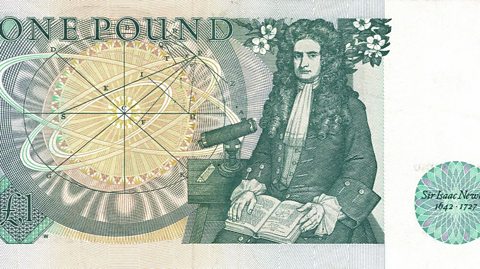
17th Century London, and the period called the Age of Enlightenment brought new levels of understanding for science, mathematics and economics. But also new and bigger levels of fraud.
In 1699 Sir Isaac Newton, esteemed mathematician, was made Master of the One of the oldest companies in the world - in charge of supplying all coins to the UK for over 1,100 years. He set out to improve the reliability of British currency and fight the forgers.
One infamous forger was William Challoner. Born in Warwickshire he learnt his trade in Birmingham then set off for London, where his schemes and wealth made from forgery saw him grow in influence. He was arrested multiple times but thanks to his vast network of supporters in both political and less legitimate circles, he avoided charges. It took Sir Issac two years to gather enough evidence against him and Challoner was eventually hanged for high treason.
1800s - A fake Prince promises paradise
As the Industrial Revolution took hold there was new wealth being made and distributed, and in 1822, a former soldier from Scotland wanted a piece of it.
Gregor MacGregor pretended to be the fake Prince of Poyais, an incredible (made up) land in what is now modern day Honduras, Central America. He suggested to the wealthy people of Scotland that this would be a perfect colony for those willing to invest and settle in. Gregor even did newspaper interviews, produced drawings and wrote a book under a different fake name, telling potential investors what a wonderful place Poyais would be to live.
The scam worked well. The Prince of Poyais managed to take £200,000 directly from people and his market value ran to the equivalent of £3.6 billion in today’s money. But even more than this, Gregor persuaded seven ships’ worth of people keen to settle in this new fake land.
250 people set sail, but after a two month journey across the Atlantic, they arrived to discover a wasteland in a desolate area of Honduras. The new settlers began to fall ill and die. A passing ship rescued the survivors and the British Navy was called in to contact other ships and send them home.
MacGregor fled to France where he tried the exact same scam, posing as the Prince of Poyais. Luckily, the French government grew suspicious and MacGregor was thrown in jail.
Late 1800s - Not all snake oil is made the same

The Cambridge Dictionary says a snake oil salesperson is ‘someone who deceives people in order to get money from them.’ The term originates from an actual 19th Century fraudster who called himself the Rattlesnake King.
In the United States in the 1800s, workers were needed to build the Transcontinental Railroad. Among those who came for the job were over 100,000 Chinese people. They brought with them their food, culture and traditional medicines, including real snake oil. This oil from the Chinese water snake was believed to ease arthritis, joint and muscle pain. Recent scientific studies have shown it’s rich in Omega-3 acids so may have anti-inflammatory benefits.
But back to the fraudster. Clark Stanley was a former cowboy who claimed to have been taught by a Hopi medicine man. He travelled across the US selling his version of snake oil as a miracle cure-all. Stanley would put on a show, killing a real rattlesnake to make oil in front of the crowd. But it was all a scam.
After the US government passed the Pure Food and Drug Act in 1906, they tested his potion. It contained only mineral oil with a small amount of fats, probably from beef, chilli pepper and turpentine. No snake, or indeed the beneficial Chinese water snake was in there at all. Stanley was taken to court and fined.
Early 1900s - Charles Ponzi has a financial scam named after him
A Ponzi scheme is investment fraud that uses money collected from new investors, to pay out to previous ones. It took its name from Charles Ponzi, an American in the 1910s, who offered people investments in international postal vouchers for an inflated 50% return on their money.
Also known as pyramid schemes, they rely on constant waves of new investors, and their money, to maintain the payouts. Ponzi’s plan worked to begin with, investors loved it and the huge sums he was bringing in enabled him to pay off those first clients.
But it was Ponzi’s over confidence in his own scheme that brought about his downfall. After a newspaper article in 1920 questioned his methods, Ponzi invited the government to take a look at his books. Word got out and investors panicked, demanding their money immediately and the whole scheme collapsed.
1925 - Victor Lustig sells the The Eiffel Tower not once, but twice
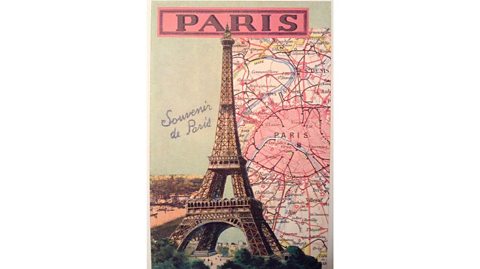
Victor Lustig was a notorious con-artist operating scams across America and Europe in the early 20th Century. In 1925 his scheming took him to Paris where he set his sights on their famous landmark, The Eiffel Tower. Or rather the 7,300 tonnes of iron it’s made from.
Lustig paid a skilled forger to create paperwork and then posed as a French government official, supposedly in charge of demolishing the Eiffel Tower. He convinced an ambitious scrap metal dealer that the contract and the iron tower would be his, in exchange for a bribe. Once the money was in Lustig’s hands he fled, and the scammed dealer was apparently so ashamed he didn’t report it to the authorities.
Once Lustig realised he’d got away with it he decided to return to Paris to try the same scam again. But this second time, the dealer he tried to trick became suspicious, the police were called and Lustig fled empty handed.
This article was published in November 2025
BBC Scam Safe 2025 quiz: How scam savvy are you?
Boost your scam awareness and spot the scam from the real by playing our BBC Scam Safe 2025 quiz.

Three common online scams and how you can protect yourself from them
We take a look at some common online scams and look at the things you can do to help keep yourself safe

What is sextortion?
Scam Interceptor Nick Stapleton gives us the lowdown on sextortion and how you can avoid falling for it