How big a part does your phone play in your life? Could you put it to one side for at least an hour without giving it a second thought - or would you be checking your socials within five minutes?
Health experts say a digital detox - where we spend less time connected to smartphones and tablets - can have a positive impact. There are more than 80k TikTok posts on the subject, with differing views on how reducing smartphone use helps with your wellbeing.
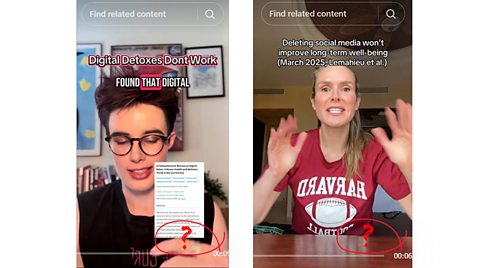
BBC Bitesize Other Side of the Story has got together with the BBC One series Just One Thing to explore a little more about the plusses we may experience from putting our phones away. Beauty therapist Lucie took up the challenge from presenter Zoe Ball to try to limit her phone use to two hours a day, with just 30 minutes of that for social media.
Does a digital detox work?
In November 2025, a study was carried out at Georgetown University in Washington DC, USA. Around 500 people were asked to install an app on their smartphones that would stop it accessing the internet - meaning they could only call or text people - for two weeks.
Fewer than 150 of the participants were able to complete the task successfully. But the results did show that from an average of five hours of phone use a day, the people tested went down to an average of two-and-a-half hours. They also reported feeling less anxious and stressed and, across the group, they had an extra 20 minutes of sleep each night. They also completed a computer exercise at the beginning and end of the experiment - a two week digital detox without phones saw people’s attention spans improve so much, the study found it was the same as the focus of someone 10 years younger.
In Just One Thing, Lucie and members of her family lock their phones away in a safe for one hour during their evening meal time. Instead of looking at their socials, they had a dance, watched a film and ended up leaving their phones locked away for longer than planned. It’s only one example which took place on one evening, so not the same as an official study, but it did show that the family didn’t miss their phones much on that particular occasion.
What can a digital detox do for our health?
Beginning in March 2025, another study in the USA worked with young people aged between 18 and 24 who used smartphones regularly. After a one-week detox from socials, researchers found there were reductions in the participants feeling depression, anxiety, loneliness and - like the experiment already mentioned - feeling unable to sleep.
Using our smartphones a lot can also affect our eyesight. Moorfields Eye Hospital in London say that too much phone usage can be a strain on our eyes, and looking at our screens close-up can also lead to nearsightedness in children and young people.
According to Moorfields, the blue light which comes from our phone screens can, among other things, make us unable to sleep if we look at our phones before bedtime. The light can impact the production of a hormone called melatonin which tells our brain when to sleep and when to wake up.
Why are our smartphones so appealing?
The designer Konrad Piercey wrote in an article for the website Medium about why we find the icons on our smartphone screens so enticing: “When it comes to your smartphone apps, all those little square icons on your home screen, some are actually driving you to tap on them more than you realise, and it doesn’t rely on pop-ups, notifications, or loud alerts to drive you to engage.
“There’s a small subconscious nudge that tells your brain, ‘Hey! you want to tap on this.’ ‘Take a look at me, I’m interesting, remember!’”
If you’re trying to do a digital detox, all those shapes and colours calling out to you could be a willpower-testing distraction but a 2020 study in the USA’s Social Science Journal found that by participants switching off the colours on their smartphones in its settings, making everything grey (or grayscale), reduced their time spent on their phones by around 40 minutes.
This was something Zoe tried during Just One Thing. She also asked her daughter, Nelly, to create something called a focus in her phone. This is where only specific contacts and apps can send you notifications to cut down on distractions throughout the day.
When you don’t have as many distractions from tech, it is possible to focus on other things. For example, at the end of the Just One Thing experiment, Lucie’s colleague said she had been able to spend more time baking and painting.
How important are reliable sources?
The information presented on Just One Thing comes through thorough research, using studies completed by experts in wellbeing. These are what is known as a trusted, or reliable source. It’s important to use sources like this when researching a subject and not rely on claims made on socials - even if someone doesn’t mean it to be, they could be fake news, also known as misinformation.
Just One Thing will look at other subjects in its latest series, as well as digital detoxes. It includes making dark chocolate part of your diet, eating oily fish, or even dancing and press-ups becoming one new thing to add to your daily routine and maybe make a difference.
Just One Thing begins on BBC One on Monday 23 March. Episodes will also be available to watch on BBC iPlayer.

Not sure if the news you’re seeing on social media is true or false? Can you always tell if the things you see online are real or fake?
Learn how to get the other side of the story with our quizzes, videos and explainers about media skills and viral trends including popular food myths.
Is dark chocolate good for you?
Just One Thing challenges people to add a bit of dark chocolate into their daily routine

Is my phone listening to me?
Are we really fed adverts based on our most recent conversations?
Other Side of the Story
Back to our homepage for more quizzes and explainers about fake news, viral trends and media skills.