If you’ve just received your GCSE results and they’re not what you expected, don’t panic. Not getting the grades you hoped for won't hold you back from doing what you want to do, whether that means going down a vocational route or going to university.
Bitesize spoke to two young people who got where they wanted, despite results day not going the way they’d anticipated.

I'm living my dream as a PhD researcher - and I love it!
Jessica Crosbie is currently doing a PhD in Criminology. Alongside her job as a researcher, she is co-leader of a network for postgraduate researchers, she also works at her university's student union providing advice to students, and if all that wasn't enough she's also a content creator online!
The worry you feel about your future is a normal reaction; however, I can safely say this is the first time I have been asked what my GCSE results were since I applied for university!
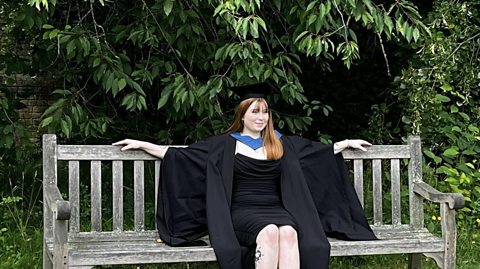
Jessica, can you talk about what GCSE results you got. How did they compare with what you were hoping for?
I really struggled during my GCSEs, I had family and personal health issues going on at the time which meant I did not do as well as I was expecting. In the end I got three 6s, two 5s, three 4s, and failed two. At the time, I was really hoping for a 7 in something, but I was satisfied that I had at least passed maths and English and got the grades I needed for sixth form.
At the time, how did you feel? What were your next steps?
When I received those results, I remember having to remind myself I had at least got what I needed for my next steps. But seeing the piece of paper with these numbers was really disheartening considering the hours I'd put into revising. I even had a tutor for maths for a while.
I remember being really critical of myself, knowing that I could have done better or revised harder. I felt like a disappointment, despite having a supportive family. I decided to use this disappointment in myself to make changes and work harder for my A levels as university was important to me.
When you’d done your A levels, what path did you take and how did it lead you to where you are today?
After school, like many, I went to university. I did my undergraduate degree in Criminology and then a postgraduate degree in Crime, Justice, and Psychology. During my education, I spent 3 years volunteering in the magistrates’ court supporting witnesses and 1 year working on a victim’s helpline.
These things have led me to where I am today as I am currently pursuing my PhD which looks at both topics. I've also spent this year creating content on social media inspiring others to invest in their education.
What are the key steps that have helped you get to being a PhD researcher?
I credit the experience that I gained while at university as being the key steps in building my career. I realised in the second year of my degree that previous degree to career pipeline was no longer as easy as it sounded.
This is why I took the initiative to get volunteering experience within my university, and then with the Witness Service, to make myself stand out, and this worked! Most importantly, both of these experiences have been instrumental in shaping my current PhD focus.
What would you say to students receiving GCSE results they might be disappointed by?
The worry you feel about your future is a normal reaction; however, I can safely say this is the first time I have been asked what my GCSE results were since I applied for university!
There are always ways to achieve your goals and dreams - you just have to get creative or take a longer of a journey to get there. I knew in Year 9 I wanted to pursue a PhD, however, I did not think someone who got a 4 in maths and English language would ever be able to do one. The determination to overcome my GCSE grades, and self-belief, has motivated me ever since.
A route into further education wasn't for me - but travelling the world and building festival sites is!
Aidan Brachi is a freelancer in events production. He currently works in a team helping to build the sites for some of the country’s most popular festivals. It’s a hands-on, physical role that demands long hours, but one that he absolutely loves.
I now find myself at 29, 13 years after finishing my GCSE’s, knowing that despite my lack of formal education I have been able to carve out an exciting life.
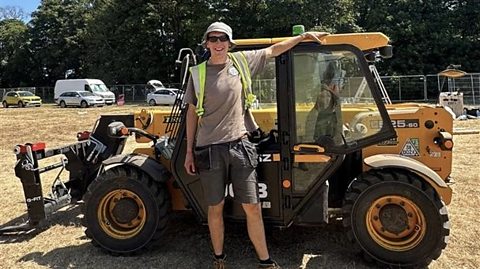
Aidan, can you talk about your GCSE results day? How did it feel to not get what you hoped?
There was a big disparity between what I wanted, what the school predicted, and my actual grades. I hoped that, despite my absolute lack of revision and attention paid in class, that I would come away with decent enough grades. Unfortunately, on results day I opened that white envelope and with every new line, a greater sense of disappointment washed over me.
As my friends were celebrating their grades and congratulating each other, I was staring at my really disappointing results. I also had a lot of resentment towards others that applied themselves. A journalist from the local paper asked my friends to gather for a group photo and I am noticeably absent from it.
When you got those results, that were lower than you’d expected, what did you do next?
I was able to get into my local sixth-form college, but I continued to be uninterested in studying, focusing more on playing football, and hanging out with my mates. Also, around this time, I landed my first proper job, stacking shelves at the local supermarket. The second I received my first pay cheque, I realised I was really motivated by financial independence and the satisfaction that comes with hard work.
I finished sixth-form with a few D’s and a pass grade in a BTEC. Apart from a lingering sense of embarrassment, I forgot about my grades, and went onto a higher paying nightshift pattern at the supermarket.
And when you left college, what did you do next?
Unlike most of my friends, I didn’t have the grades for university and knew that formal education wasn’t for me. So, I threw myself into work. I had various jobs after leaving school. As well as working, I read a lot, explored new countries and, most importantly, learned how to be constantly interested in the people I met along the way, no matter who or what they did.
At 22 I moved to Australia where I continued to work as many jobs as I could and saying yes to every experience. I chose to take every new opportunity from farm work to construction, hospitality, butchering and mining.
I now find myself at 29, 13 years after finishing my GCSE’s, knowing that despite my lack of formal education I have been able to carve out an exciting life, in a job that I love, with the understanding that my grades had no bearing on my future.
In your current role in the events industry, what are the most important skills?
I have found that getting on with people is the key skill - no event goes well without a cohesive team. Every job I’ve had has given me the skill to interact smoothly with anyone from any background. This has already paid off well, as I was selected for a solo work trip to Egypt this year, with less than two year’s experience in the industry. This opportunity was not based on my understanding of the job, but rather my ability to work within a team and get along with people.
What would you say to students receiving disappointing GCSE results this year who are worried about their future?
I think that they should know that these grades do not define who they are or what they will become, their potential is infinite. Not knowing what you want to do is fine, but that doesn’t mean you can drop out of life entirely.
They might also be a sign, as in my case 13 years ago, that you may not have an academic future ahead of you and that you need to seriously consider how you will tackle the future, apathy will not work.
If you need support
You should always tell someone about the things you’re worried about. You can tell a friend, parent, guardian, teacher, or another trusted adult. If you're struggling with your mental health, going to your GP can be a good place to start to find help. Your GP can let you know what support is available to you, suggest different types of treatment and offer regular check-ups to see how you’re doing.
If you’re in need of in-the-moment support you can contact Childline, where you can speak to a counsellor. Their lines are open 24 hours a day, 7 days a week.
There are more links to helpful organisations on the BBC Bitesize Action Line page for young people.
How to talk to your parents or carers about your GCSE or Qualifications Scotland results
With the whirlwind of emotions swirling around GCSE or Scottish results day, we've got some tips for how to tell your parents or carers about your grades.

Unhappy with your GCSE or Scottish exam results? Here are your options
Unhappy with your GCSE or SQA results? Here are your options