Understatement, sarcasm and surrealism are all elements associated with Britain’s brand of humour.
From Shakespeare’s comedies to Billy Connolly’s command of an audience, Gavin & Stacey’s taste of Welsh whimsy to Derry Girls’ earthy look at life in the 1990s, humour has been central to the history of storytelling across the UK for a long time.
But where does our humour actually come from, and is it tied to a quintessential idea of Britishness? We’ve asked one teacher of comedy to give us his thoughts.
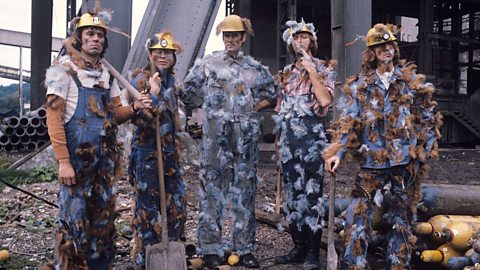
Can we pin it down?
People all over the world laugh, but we don’t all find the same things funny. While some gags might seem universally hilarious (slipping on a banana peel, anyone?), humour normally depends on the cultural norms of a people, their history and shared experiences, as well as what the mechanics of their language allow.
If you’ve ever tried to crack a joke based on a pun or a play on words to a non-native English speaker, and the punchline was followed by deafening silence, you’ll know what we mean.
But is it possible to point to a map and know for sure what will cause some LOLs over there?
Dr Ian Wilkie, a lecturer in performance at the University of Salford, explains: “Having taught younger American students, they take the British sense of humour to be Monty Python, by which they mean a sort-of slightly erring towards the surreal, very iconoclastic in terms of attacking the big targets, very silly.”
However, he says that, while those traits can become shorthand for ‘the British sense of humour’, he doesn’t think “that cuts the mustard.”
‘Port cities’
Dr Wilkie points out that there are already differences in popular humour in the four home nations. It diversifies even more between the major cities, making it difficult to pinpoint a blanket ‘British’ humour.
One example is the Scottish brash-with-a-twinkle style of Billy Connolly or the more gentle approach of his compatriot Susan Calman: “[Scottish people] like witty jokes, there is a lot of respect for learning and that it likes quite hard-hitting jokes, ones of mockery.”
While he notes there are similarities between Glaswegian humour and that found in other port cities, such as Liverpool, that Scottish style might not necessarily translate into a Welsh sense of humour, or a broader English one.
Attending a comedy night, with many different acts, would show how difficult it is to categorise humour along geographical lines:
“You may laugh at different aspects of their schtick, but it would then be difficult to say, ‘well, there’s a British sense of humour’ because of the disparate kind of approaches and world views coming across.”
Influences from overseas
Another element worth considering is how much the humour of other countries has influenced British comedy.
If you’ve sat and enjoyed the exaggerated characters in Fawlty Towers, the characters and scrapes they find themselves in reflect the sketches of the Commedia dell’arte, a form of theatre from 16th Century Italy. Among other elements, it involved a series of recognisable characters from all aspects of society engaged in witty dialogue.
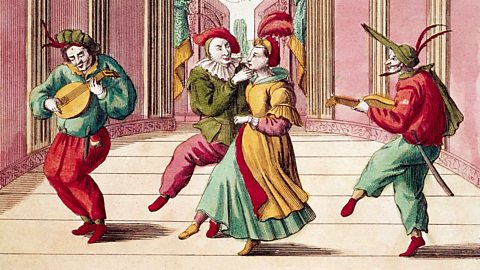
Surrealism, long considered a staple of British humour – think Monty Python, Vic Reeves and Bob Mortimer – was, as Dr Wilkie puts it, performed by: “Dadaists from countries that we may choose not to think of as particularly funny, such as Germany.
“They were doing surrealism to the nth degree, quite deliberately as a performative art, in the early part of the 20th Century. I think it’s something we like to appropriate in a way and imagine that we’re the custodians of it, but it’s not culturally specific at all.”

When nostalgia meets humour
With Monty Python held up as a good example of leftfield humour from the UK, the Carry On… series of films suggests a national affection for a less sophisticated bawdiness loaded with double entendres.
While they did enjoy popularity outside the UK (Carry On Nurse ran in Los Angeles for more than two-and-a-half years on its initial release), Dr Wilkie doesn’t see the humour contained within the 30 titles of the franchise as something that defines a nation. If anything, it’s a comfort blanket.
Dr Wilkie explained: “Carry On… kind of made fun of itself in its day, it was already slightly self-consciously old-fashioned and seaside postcard, but people could enjoy it because they could say, all bets are off really, we’re going to see something that’s sexist, end of the pier and a bit silly and that was fine.“
The jelly explanation
It’s these different styles and presentations of comedy by British performers which Dr Wilkie believes make it impossible for an academic to point, with confidence, at various elements and state categorically that they alone make up the nation’s famed sense of humour.

“No, I wouldn’t say there is a British sense of humour,” he concluded. “I think the best you can hope for is some big, beacon terms (eg. sarcasm, understatement, self-deprecation), that maybe, over a fair amount of time, might hold water.
“Comedy and humour is always so completely open to counter examples that you can never really pin anything down.
“It’s like trying to nail jelly to a wall.”
The unusual laws quiz
Quiz yourself on the UK’s most unusual laws to find out if you need to hand yourself in.

Myth or Maestro: the true or false classical music quiz
Test your knowledge of classical music myths with this true or false quiz.
What happens when we laugh?
The incredibly complicated process which enables us to giggle.