Now that the news had had a bit of time to settle, you may have a few questions about why, exactly, social media is set to be banned for all under-16s in the UK from next spring.
We’re still waiting for a full list of the apps that will be on the government’s list but BBC Bitesize Other Side of the Story has taken a closer look at the facts behind the ban, which explain why some familiar icons could be disappearing from some smartphones and tablets in a few month’s time.
“Less time for scrolling, more time for play”
The announcement made on 15 June also saw information published on the official government website gov.uk - a reliable source of information if you ever need to check the facts about big political news or changes to the UK’s laws.
One of the reasons given for the social media ban was concerns over how much time young people below the age of 16 are spending on their phones and other devices.
Instead, the government would like to see young people getting more involved in activities that don’t involve devices, such as sport, the arts, creative activities and also those involving nature. This would be at school, and outside of it too. Work will also get underway to make sure young people from all backgrounds will have access to these activities, which have been described by the government as “enrichment opportunities”. There’s a plan in place to make 250 youth centres available around the country where some of these activities can take place.
The official government statement explained how the social media ban will: “…reclaim childhood for all young people, including through reforms to the curriculum so that every child gets the skills they need to get on in life, and support throughout their school years to explore and develop their talents.”
Protecting children online
When you use social media regularly, the algorithm inside each app suggests new content based on what you’ve already looked at.
This can sometimes lead to younger social media users seeing stuff that’s intended for an adults-only audience, usually above the age of 18. There is also the possibility of strangers making contact with young people online and inappropriate content being streamed in places where a younger audience can access it.
The plan is that the social media ban will stop younger people seeing any unsuitable material on their devices and stop strangers being able to contact them over the different apps.
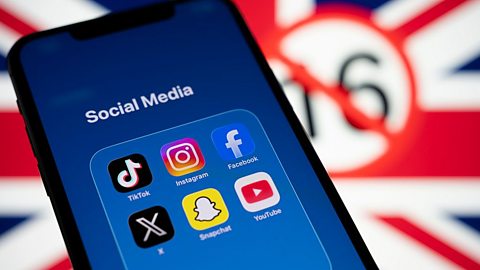
Once any ban is in place, there will be barriers set up to stop anyone under the age of 16 accessing the restricted socials. The platforms Snapchat, TikTok, YouTube, Instagram, Facebook and X are among those that will be part of the ban, although messaging services, such as WhatsApp, will not be.
Helping parents to cope
Before the planned social media ban was announced, more than 100,000 people shared their thoughts with the government about social media and how it affects young people. This included parents, experts on the subject, and children themselves. Nine out 10 of the parents who took part said they supported a social media ban for under 16s. Two-thirds of the young people who took part agreed with them.
Parents and carers have become concerned with what their children are seeing online. The government statement read: “The changes will back parents grappling with the risks for children that come from the online world and help empower them by providing a clear decision on what is safe and age-appropriate for children.”
The first set of regulations is set to come into place in the spring of 2027. As with any new law in the UK, it will have to be voted through Parliament first.
This article was published in June 2026

Not sure if the news you’re seeing on social media is true or false? Can you always tell if the things you see online are real or fake?
Learn how to get the other side of the story with our quizzes, videos and explainers about media skills and viral trends including popular food myths.
How to sleep in a heatwave: And other popular questions answered
The Met Office on what to do when the temperature rises

Other Side of the Story
Back to our homepage for more quizzes and explainers about fake news, viral trends and media skills.