If there's one thing people seem to love on socials - it's animals. Especially our pets.
In fact, there's now something called a 'petfluencer' - an animal that has become so popular on different platforms, it is used by some brands to promote their goods.
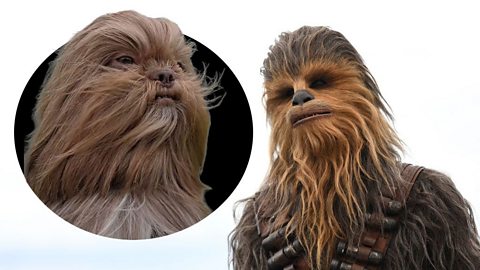
One pet who has built up a strong following is George Cowboy. The A small breed of dog that originally came from China. It was once known as the Lhasa Lion dog. has become a sensation for looking a lot like Chewbacca, a character from the sci-fi film series Star Wars which began in 1977 and still has thousands of fans across the world. His verified Instagram account @georgiecowboy has more than 200k followers and videos featuring him on TikTok have amassed more than 40m likes, with many users posting how much they enjoy the similarity between George and Chewbacca - or Chewie, as he's known.
Pet celeb lookalikes go big on socials
George isn't the only pet lookalike to grab people's attention. In 2023, you may remember a kitten in Ohio, USA, who many people thought looked a lot like the singer Ed Sheeran. The TikTok video featuring the furry lookalike has had almost 33m views since.
In George’s case, looking like a character from a very popular series of films - a bit like resembling a singer as huge as Ed Sheeran - has attracted attention from official Instagram accounts that have dedicated posts about him. These have then been shared by other people. They could be other shih-tzu owners, Star Wars fans, or friends and relatives alerting people who love those things. Those shares add up, and makes a post go viral.
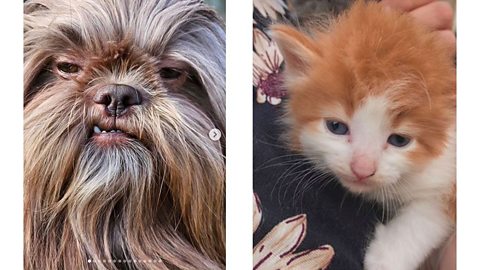 Image source, @georgiecowboy
Why are animal stories so popular?
If you have a pet that you love, whether it’s a dog, a cat, a budgie or a tarantula, there’s a good chance you will enjoy seeing videos about similar animals online.
One of the most famous is Nala the cat in New York with more than 4m Instagram followers on the @nala_cat account. Nala has made more than £80m from advertising different products. That's a lot of animal lovers being encouraged to buy stuff!
A 2025 study led by Professor Ghalia Shamayleh from Essec Business School in France found that sharing pictures of cute animals with people we care about, in order to make them smile, is an activity known as pebbling. It gets its name from a group of penguins that present pebbles to potential mates as a sign of affection. Prof Shamayleh told the BBC Science Focus magazine: "Our research observes a similar behaviour in humans interacting on social media."
She continued: "We share them with our loved ones as a token of affection, to reinforce our relationships." Animal posts were seen by the researchers as a good example of 'pebbles'.
Other research has found that videos that bring out strong emotions in us, such as joy, are twice as likely to be shared on our socials. If you love dogs and are a huge Star Wars fan, the sight of George Cowboy as Chewie could very likely make you joyful enough to share it.
Star Wars is a hugely popular series of films and TV spin-offs. Dogs are well-loved pets. That means they are relatable to lots of people and gives a sense of connection - again, this makes them very shareable. Also, if something is easy to share on our socials and has hashtags which are popular or trending, then it can quickly reach a big audience - helping George, and his other furry friends, get all those millions of likes.
How do I know if an animal video is real?
As AI becomes more sophisticated, you may seem some animal videos that look genuine but have been generate through a chatbot. The wildlife TV presenter Steve Backshall has expressed his concerns about these videos as they can feature animals showing behaviour they wouldn’t normally do so - and it could affect conservation programmes aimed at helping them.
Steve filmed a video for Other Side of the Story where he gave his own advice on how to spot AI animal videos and why they make him so concerned.
Pictures and videos of George doing his stuff are brilliant, but some viral posts can spread fake news - or misinformation. They are posts created by people who want to get false information out there, and it can be shared unwittingly by people who believe it is true.
This article was published in April 2026

Not sure if the news you’re seeing on social media is true or false? Can you always tell if the things you see online are real or fake? Learn how to get the other side of the story with our quizzes, videos and explainers.
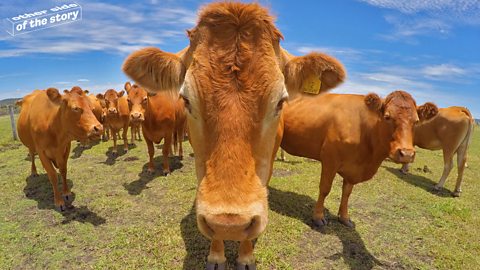
Do cows really love jazz?
Is the TikTok trend proof that cows enjoy laid-back beats - or is there more to it?