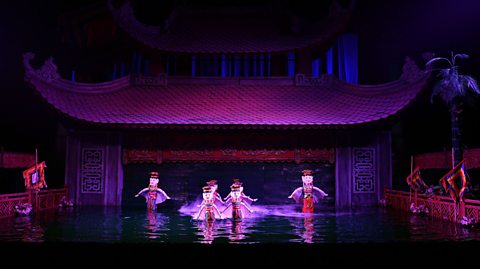
Theatre doesn't look the same in every country in the world.
In the UK, we have the wonderful pantomime style of theatre, which can be baffling to anyone experiencing it for the first time.
Other countries and communities around the world have their own unique forms of theatre. Join BBC Bitesize as we tread the boards with three types of theatre you might not be familiar with.
Wayang
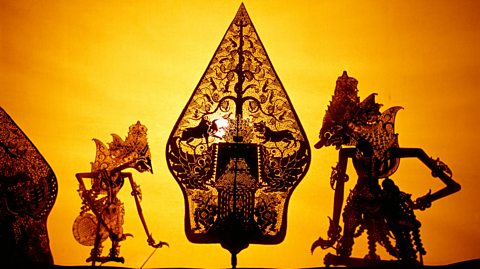
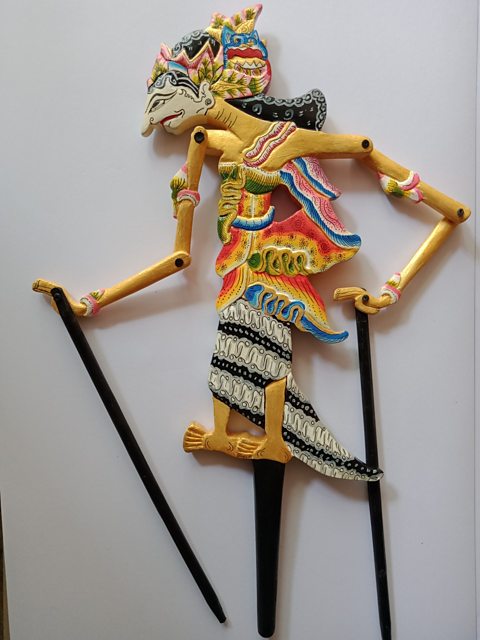
A traditional form of puppet theatre, wayang has its roots in the Indonesian islands of Java and Bali, although it has since spread across the nation’s other islands. Puppets are held up in front of a light, casting their shadows onto a screen behind them, and slender rods are used to manipulate their movement. The show can be watched from either side of the screen.
The incredibly intricate hand-crafted puppets come in a variety of shapes and styles, but can be generally categorised into two different types:
- Wayang klitik or golèk - made from wood and three-dimensional
- Wayang kulit - made from leather and two-dimensional
Typically, the good characters first enter the stage from the right whilst the evil ones enter from the left.
Performances can last for many hours, often all night. The puppeteer, known as a dalang, not only operates the puppets but also provides narration through dialogue and song, supported by a chorus of singers and traditional Indonesian percussion instruments (gamelan). They are able to recite the lengthy narratives from memory, with the stories having passed down orally through generations of families. Dalangs are highly respected for their artistic skills and spiritual knowledge.
Most of the stories told in wayang are taken from the Hindu epics Rāmāyaṇa and Mahābhārata, with distinctly Indonesian elements added in.
Passion Plays
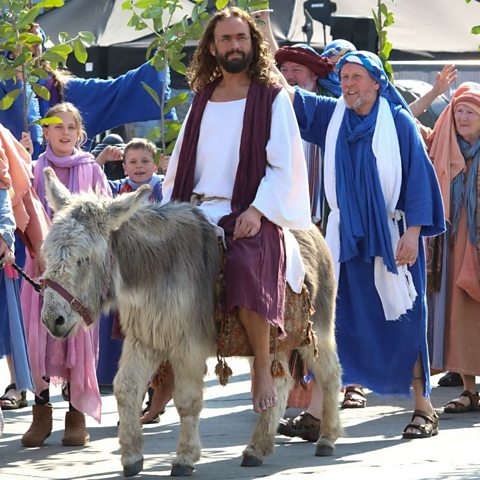
In a tradition that dates back to medieval times, Christian communities worldwide regularly put on dramatic re-enactments of Jesus Christ’s life, particularly focusing on the events of Holy Week: his arrest, trial, suffering and death.
This period is referred to as the Passion of Christ. Some plays will begin with Jesus’ entrance into Jerusalem on Palm Sunday, others with the Last Supper or confrontation in the Garden of Gethsemane.
At a time when the Bible was still being written in Latin, making it unreadable for much of the population, passion plays doubled up as both a source of entertainment and way of educating people about the Christian faith.
They would often be performed in public places, such as on wagons which could moved around the area.
One of the largest and most famous passion plays still takes place every ten years in the German town of Oberammergau. In 1634, the area had been hit hard by plague and the desperate residents made a pledge to perform a passion play each decade if God spared them. As the legend goes, their prayers were answered and no one else died.
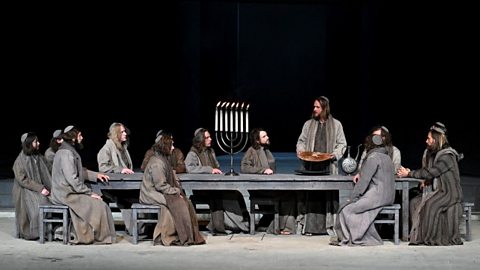
Since that pledge, the town has only failed to perform the play on a handful of occasions, such as during the Covid-19 pandemic. To take part, actors must have been born in the town or lived there for 20 years and it was only in 1999 that non-Catholics were first permitted to play a role. Over a thousand people take part. On Ash Wednesday of a performing year, the Hair and Beard Decree goes into effect, banning anyone involved from cutting their hair (with the exception of musicians, backstage crew and those playing Roman soldiers).
Throughout history, passion plays have been intertwined with anti-Semitism. As part of the narrative, Jewish people have frequently been portrayed as the ones responsible for the death of Jesus and this has been used to fuel hatred towards them. In recent years, the organisers of the Oberammergau passion play have made changes to try and remove the antisemitic elements. This has included placing greater emphasis on the fact that Jesus was himself Jewish.
Noh
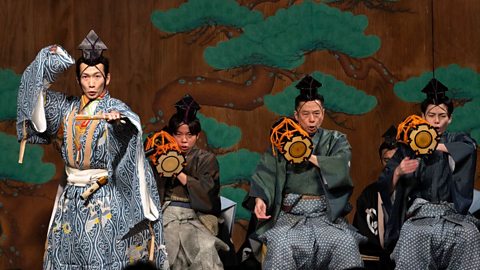
Another traditional form of Asian theatre, this time from Japan, Noh gets its name from the word nō, meaning talent or skill. Performers rely on their appearance and abstract movements to convey the story rather than extensive dialogue. The pace is slow and the language more poetic. Its a blend of song, dance and drama.
Around 2,000 Noh texts still survive, and these can be roughly split into five different genres, including plays focused on warriors, demonic creatures and central female characters.
Because Noh plays tend to be quite short, several of them will be performed in succession. In between each play is a comedic interlude known as a Kyōgen, which has a more everyday and less mystical focus.
Highly elaborate costumes, masks and props are used to help the performers convey different expressions through their movements. For example, a fan can be opened, closed or held differently to represent objects like a lantern or dagger. A mask prevents the audience from seeing a performer’s face, but emotions are conveyed using tilts of the head instead.
This article was published in March 2024
Four LGBT+ plays and musicals that left a lasting impression
From The Boys in the Band to Fun Home, Rent to The Prom, BBC Bitesize explores some of the most influential LGBT+ plays and musicals in theatre history.
Three times the show couldn’t go on
From Lincoln's assassination, to riots in London, theatre history is full of drama.
Four incredible theatres around the world
The world's only active double-decker theatre, a floating stage and more.