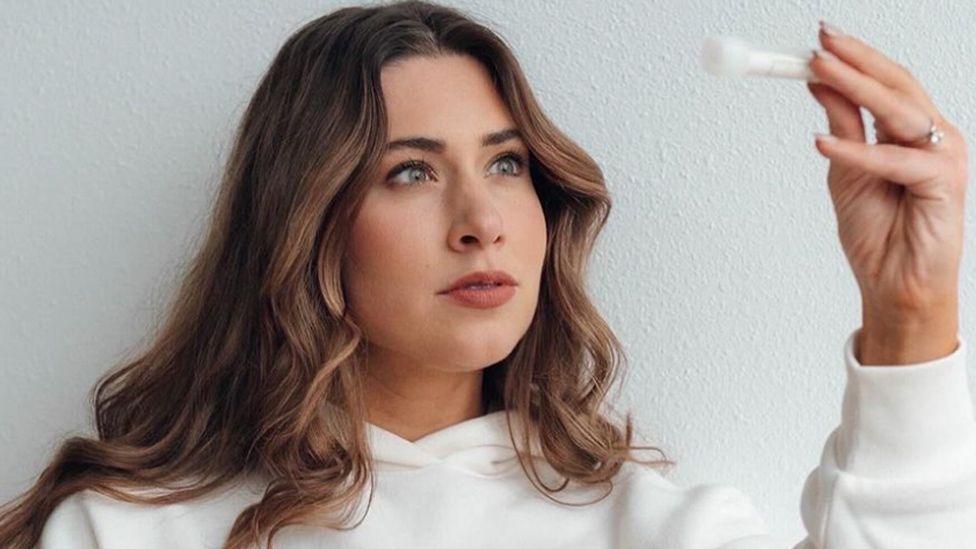
Celeb GP calls for more regulations on viral health trends

Clickbait Clinic, presented by Stacey Dooley, sees Dr Nighat Arif and Dr Alex George investigate viral health trends
- Published
Warning: This story contains discussion of suicide and information some readers may find distressing
GP and presenter Dr Nighat Arif wants to see more regulation of online health advice because, in her own words, "I see the harm that comes through my doors."
The doctor spoke to the BBC ahead of the release of Clickbait Clinic, a new series that sees her team up with Dr Alex George and presenter Stacey Dooley to interrogate online health advice - and whether it's helpful, or harmful.
In the series, the doctors look into everything from extreme processes like leg lengthening - a painful operation that involves breaking and resetting bones - to injecting extra testosterone, in a process known as T-Maxxing.

In the series, Stacey Dooley speaks to Jesse, who has been through leg lengthening surgery
According to a 2025 report from Healthwatch, an independent body looking into health and social care, polling of 3,575 men suggests 31% of those aged between 18 to 24 use social media for information on staying healthy.
Dr Arif says that seeing people go online to search for answers "really struck" her personally.
When she was young, Dr Arif recalls being told to "go and lose some weight, you're fat" after being diagnosed with PMOS (polyendocrine metabolic ovarian syndrome), formerly known as PCOS.
Seeing others with the condition turn to alternate solutions resonated with the doctor, "because it just showed the struggles that individuals have in a space of medicine where there is such little research done - and PCOS is that area".
In fact, in 2024 the BBC found influencers selling unproven cures for the health condition.
'Quite severe'
Dr George, meanwhile, says that when looking into online health trends the cases he found particularly compelling were those of men undergoing extreme aesthetic procedures, like injecting testosterone for bigger muscles and leg lengthening.
"On the face of it, you can think, 'Oh, it's just about men getting muscly'", he says, "but actually the depths of that is quite severe."
Dr George, who previously appeared on Love Island UK and worked in A&E, says these procedures can sometimes be linked to body dysmorphic disorder, external (BDD) - a mental health condition where a person spends a lot of time worrying about their appearance.
In some people, the doctor explains, BDD can present as wanting to get bigger and stronger - and may be the reason behind some undergoing costly and unregulated procedures they see online.
Leg lengthening, for example, can cost hundreds of thousands of pounds and involves patients having to re-learn how to walk.
Dr George, who has previously shared his own struggles with suicidal thoughts, notes that body dysmorphia has a particularly high suicide rate.
'We're not dismissing anybody'
And it's not just social media trends that the doctors looked into - Dr George reveals he found AI deepfake videos circulating of both him and Dr Arif recommending health products on social media.
"I was quite distressed about it," he says about his reaction when he first came across them. "It was really worrying. I didn't really know what to do."
Dr Arif, meanwhile, says the fake videos have garnered millions of views, and she has even received messages from family and friends asking: "Is this you? Is this right? Shall we buy this?"
"It's the seedy exploitation that worries me," Dr Arif says, adding that the videos are "exploiting our trust that we've built up as doctors".
Some of the online health advice has reached Dr Arif's patients - and she says she wants to keep the dialogue open about online health advice.
"I think it's really important to know that we're not dismissing anybody," she says.
Dr George says he understands why some people might turn to social media. "Traditional medicine, for whatever reason, isn't answering their needs," he says. "I think that drives people."
But when people are scrolling online he wants us to ask: "Who is saying this? Why are they saying it? Is there any vested interest?"
And Dr Arif wants to see more regulations around AI doctors and for any harmful content to be taken down away from potentially vulnerable viewers.
If you have been affected by the issues raised in this story help and support is available via the BBC Action Line.
Clickbait Clinic with Stacey Dooley
Dr Nighat Arif and Dr Alex George look into online health trends with Stacey Dooley.
Related topics
- Published7 December 2024