Pursue truth with no agenda
Independent, fearless and fair.
In an uncertain and fast-changing world, with truth and facts under growing assault, the BBC’s commitment to impartial, accurate and trusted news and information is needed now more than ever. It is our promise to the UK and audiences worldwide. Brave, public service journalism – local, national and international – which strengthens our democracy, our national security, and our society, available digitally, on audio and on video for all.
- 467 million - BBC News’ international weekly reach, an increase of 12% year on year
- 141% - The increase in monthly views on BBC News’ TikTok – rising from 367 million in 2024/25 to 883 million this year
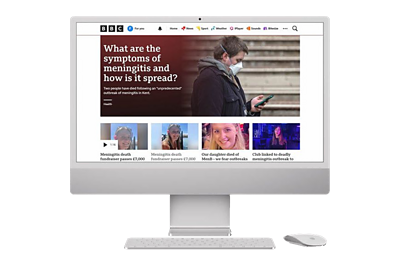
- 8 million - The number of views on BBC News live online pages in the week of the Kent meningitis outbreak
In a year marked by global instability, the BBC has been a beacon for audiences seeking free, fair and accurate reporting together with our fearless investigative journalism.
There is no doubt we have faced challenges. In an increasingly contested news landscape, with truth and media freedom under growing assault, it is getting harder for journalistic organisations to maintain the trust of audiences. Alongside other providers, the BBC saw a decline in trust this year, as well as in perceptions for impartiality and accuracy. This was exacerbated by the Panorama edit of President Trump’s speech on January 2021 and the breach of our Editorial Guidelines by Gaza: How to Survive a Warzone. It is vital that the BBC should always be fully accountable when mistakes are made.
Despite these issues, the BBC remains by some distance the first media organisation UK audiences turn to for fact-checked, accurate reporting and content that people can trust.
From our headquarters in London, through to our local, regional and national offices across the UK, to our 64 news bureaux around the globe, this year BBC News’ scale and expertise have helped audiences make sense of an ever more complex world by putting them at the very heart of our coverage.
We’ve done this in many ways, from BBC News TikTok answering ‘your questions’ on the meningitis outbreak in Kent (see case study), to our climate editor, Justin Rowlatt, putting the concerns of our younger audiences to a UK cabinet minister at COP30 on Newsround. It also includes our expanding Your Voice initiative informing BBC News stories on key issues and giving voters an opportunity to question candidates, such as the Your Voice Live Debate from Wrexham ahead of the 2026 Senedd elections.
And as misinformation and disinformation flows ever more freely across social platforms, fuelled by AI, we have also stepped up our efforts to counter these new threats, such as the fact-checking and forensic analysis carried out by BBC Verify.
The increased risk of AI misinformation was demonstrated in research published by the European Broadcasting Union (EBU) and the BBC in October, revealing that AI assistants misrepresented news content in 45% of responses tested, regardless of language or territory.
Meanwhile, BBC Bitesize – the UK’s most trusted educational brand – launched Solve the Story, a media literacy series to equip students and educators with practical tools to help separate fact from fiction. The launch responds directly to teachers’ needs, with BBC research showing that half say they require more support to help pupils identify online distortions.

The challenge around misinformation is not unique to the UK, particularly during a year of accelerated global change. Millions turn to the BBC during these times as the world’s most trusted provider of international news reaching 467 million people globally on average per week.
Much of that reach comes from the BBC World Service – on audio, video, social platforms, and in 43 languages – whose journalists continue to pursue truth on behalf of UK and global audiences, from countries and regions where media freedom is under growing threat. The remarkable growth we have seen in World Service weekly reach this year is testament to how critically our services are relied upon by those in growing need around the world.
For example, the BBC’s Persian service has been at the heart of our coverage of the US-Israel war with Iran as well as protests from inside of the country, despite working under extreme pressure (see BBC for All below). The BBC World Service has engaged with the UN over the protection of its Iranian journalists and their families since 2017 and filed two appeals to the UN this year: the first highlighting escalating harassment and threats against BBC News Persian journalists in the UK and their families in Iran, and the second raising serious concern about the extreme language in Iran’s subsequent response.
In February, the World Service also launched a new temporary emergency lifeline radio programme for Iran, airing daily for 30 minutes across medium and shortwave frequencies to counter some of the impact of the internet blackout.
Despite the challenges, BBC News Persian coverage has reached tens of millions every week, adding to the huge numbers who have relied on BBC News across our platforms for the latest reports and analysis from the Middle East. In the week the US-Israel war with Iran began, BBC News marked its biggest ever week for international digital audiences, whilst on the opening day of the conflict the BBC News channel in the UK saw its biggest audience since 2022.
A BBC For All - BBC News Persian
BBC News Persian reaches a total weekly audience of over 24 million and is the largest Persian-language media outlet outside Iran. The BBC reaches one in four people in Iran despite being banned. Our team’s journalism serves as a key source of insight and reporting on Iran for the BBC World Service and BBC News.

Covering the protests and the US-Israel war against Iran has tested us at the Persian service in every possible way. Working under intense pressure and with severely restricted access, our journalists have had to navigate a constant stream of information and misinformation to deliver the most accurate picture possible. In a highly polarised Persian language media landscape, BBC Persian remains the only independent and impartial broadcaster—refusing to sacrifice truth for any political agenda.
This commitment brings pressure from all sides: from Iranian authorities, from elements of the opposition, and from those who want our reporting to align with their narratives. Yet the strongest response comes from our audience in Iran. In the first week of January, before the internet shutdown, we reached 33 million people on digital platforms alone, while our TV channel remains the largest international broadcaster inside Iran. The pursuit of truth has never been simple, but it has never been more essential."
The BBC has also continued to cover the Israel/Gaza conflict, despite international journalists not being allowed into Gaza. In the autumn the BBC, AFP, AP and Reuters jointly launched a film highlighting the importance of independent journalism and collectively called for access to report from the Strip.
Even after the ceasefire came into effect in October, reporting has continued to be an extremely difficult and dangerous job for reporters, and as a subject it is as polarising and divisive as ever.
BBC News marked the four-year anniversary of Russia’s full-scale invasion of Ukraine with a day of special coverage, including BBC News Ukraine’s Zhanna Bezpiatchuk reporting from Kyiv on how she, her colleagues, and ordinary Ukrainians are surviving the war. Zhanna’s report featured in a new weekly current affairs programme on BBC Two and iPlayer, Global Eye, which brings the World Service’s international journalism to UK audiences.
We also launched The Global Story, a new daily podcast with former NPR White House correspondent Asma Khalid and former international reporter at Al Jazeera, Tristan Redman, as hosts. With Asma in Washington DC and Tristan in London, the podcast tells the intertwined story of America and the world – how each shapes the other daily.
We know that during these periods of uncertainty, many of us unite around our local community. That makes the stories that unfold on our doorstep more essential than ever and it’s why our Local and Nations news teams work tirelessly to connect audiences with the issues that matter to them, telling stories from every corner of the UK.
In covering emergencies such as the Huntingdon rail incident, Manchester Synagogue attack, severe weather disruption in January, Ballymena riots, and Glasgow city centre substation fire, the BBC has provided calm, clear and trusted information at critical moments this year, from across the UK.
Case study: Essential coverage in times of emergency
The BBC demonstrated its vital public value as the fatal meningitis outbreak took hold in Kent this March. With local communities and a national audience seeking trusted information, the BBC’s news teams in Kent and the South East provided clear, authoritative coverage whilst answering questions across multiple platforms for audiences of all ages – particularly younger people, who accounted for the majority of cases.
In the week of the outbreak, the BBC News live online pages were viewed more than 8 million times, BBC Kent content was viewed over 10 million times on Facebook, 2.5 million views on Instagram, and millions more on BBC News TikTok. Each day we provided in-depth reporting – on the ground and in the studio – on programmes such as BBC Radio Kent Breakfast, South East Today, Politics South East and our national news output, highlighting the BBC’s unique ability to respond to public health crises and other issues of pressing concern to our local audiences.
It is our locally-based reporters that are often at the heart of national coverage, shaping the story from the scene, particularly when tragedy hits a community. In January we reported on a grandfather who drowned at sea near Withernsea, East Yorkshire, alongside a mother and daughter from Nottinghamshire he was trying to save – coverage of the heart-breaking story received more than 9 million UK page views across several articles on BBC News Online.
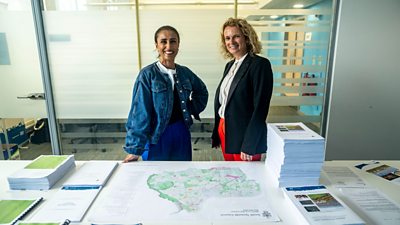
Importantly, we have reported on everyday services and issues impacting the daily lives of our audiences, including the ongoing Birmingham City Council bin strike. Our wider ‘Bin Day’ coverage, a day of news and content built around our original data journalism on waste collection targets received more than 2.4 million online page views. ‘Farmwatch’ included data journalism on rural crime with coverage running across all our 6.30pm news bulletins and achieving more than 500,000 page views online.
We continue to safeguard and strengthen outstanding local journalism through our Local News Partnership with the industry. This year, the Local Democracy Reporting Scheme (LDRS) (read about LDRS reporter Sarah’s experience, below) reached the milestone of delivering half a million stories since it launched, ensuring consistent, transparent reporting on council decisions, planning applications and the local issues that support our democracy and society.
A BBC For All - Local Democracy Reporting Service
There are 165 reporters employed by regional news organisations funded by the BBC through the Local Democracy Reporting Service (LDRS), each informing the public about local government decision-making while holding councils to account. In August, the LDRS reached the milestone of publishing 500,000 stories since its launch in 2018.

Winning the Local Democracy Reporter of the Year award for 2025 came as a great surprise. My reporting on bedbug infestations in council tower blocks, the council’s contractors spraying weedkiller on streets that had opted out and a council employee being threatened with eviction clinched the prize. These stories came from trust built up with communities who know me from housing meetings no one attended before the LDRS came along.
Since May 2018, I have covered Brighton and Hove City Council for my employer Brighton and Hove News, had front page stories in the Newsquest-owned city daily The Argus, and appeared on the BBC website, even featuring on the Newsround website. During the last eight years I have become a fixture on the press desk at Hove Town Hall. At first councillors were surprised I turned up to licensing. Now they know I go to everything. This is the best job I have ever had."
In a landscape dominated by social media and misinformation, Newsround and BBC News have continued to provide essential, child appropriate journalism for the younger generation.Newsround reaches 3.5 million children on average per week in term time, is the most trusted news source for 7-12s, and strengthens children’s understanding of the world – supporting civic engagement and social cohesion.
The BBC’s investigative journalism has also thrived this year with hard-hitting exposés. This includes award-winning investigation into a criminal network behind UK mini-marts enabling migrants to work illegally (read Patrick’s description of the investigation, below), to Panorama: Undercover in the Police, a landmark investigation revealing evidence of racism, misogyny and officers revelling in the use of force at one of London’s busiest police stations. Several officers were dismissed as a result of our work.
In international investigations, BBC Eye – the World Service’s critically acclaimed investigative unit – won twice at the prestigious Royal Television Society (RTS) Television Journalism Awards. Death in Dubai exposed how viral rumours around a Ugandan woman’s death masked a dark wider reality in the UAE, and Blood Parliament forensically examined a protest at Kenya’s legislature which ended in gunfire and bloodshed.
A BBC For All - Investigative Reporting
Patrick is an Investigative Producer who worked in the team that revealed a crime network enabling migrants to work illegally in mini-marts the length of Britain.

It took us a year of relentless reporting to expose the crime gangs taking over UK high streets and re-shaping the places we call home.
We found secret underground tunnels hiding sacks of illegal cigarettes, we were attacked for filming brazen criminality, and we went undercover to reveal criminal kingpins erasing £60k illegal working fines.
It was a privilege working in such a talented team, including fearless Kurdish undercover journalists who risked their lives to infiltrate crime gangs.
Our reporting led to the Home Office launching a nationwide investigation and the work has been recognised by the Royal Television Society (RTS), with judges describing the investigation as the "BBC at its best". But most importantly it was BBC journalism that made a real difference to people's lives, with illegal shops closed and safer high streets in some of the most deprived communities."
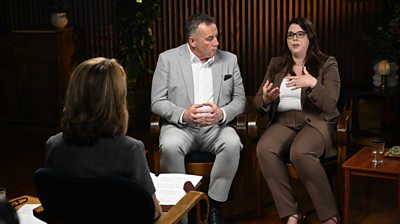
It was also a year of standout interviews – such as Newsnight’s Victoria Derbyshire speaking to John Hunt and his daughter, Amy, about the murder of his wife and two daughters in Standing Strong: The John and Amy Hunt Interview, which won RTS ‘Network Interview of the Year’.
Our Man in Moscow gave a glimpse into BBC Russia Editor Steve Rosenberg’s working life and that of his team in Russia today. Steve was also the recipient of the RTS Special Award 2026, with the citation calling out his "devotion to his patch and a depth of expertise that is unrivalled… he is, in fact, one of the finest journalists of his generation”.
In the words of the RTS, the BBC “led the way” at the awards ceremony, picking up seven accolades in total as well as best current affairs documentary at the Grierson Awards for Life and Death in Gaza from BBC Eye and Storyville. Recognition from peers for an outstanding year of journalism and filmmaking from the BBC.
The BBC also continues to break the biggest stories, bringing audiences the latest UK and international news – such as in February when we broke the news that Andrew Mountbatten-Windsor had been arrested at his home on the Sandringham Estate.
More broadly, our focus on putting audiences first means responding to changing news consumption habits (see case study). On YouTube, subscribers to our BBC News channel have increased by 1.9m in the last year, with 21% of views coming from the UK, and millions kept up with the latest breaking stories via our online live pages, such as the death of Charlie Kirk, the Election of Pope Leo XIV, or the choices made by the Chancellor in the Autumn Budget. We’ve also seen an increase in News content viewed on iPlayer after investing in better curation and formats tailored to the platform, such as streaming single-story videos.
We’ve always been committed to using technology to support our public mission, which is why we’re piloting new Generative AI tools to explore how we can add audience value whilst also making sure we’re acting in the best interest of the public.
One such pilot is the launch of Style Assist, designed to support our news journalists to adapt and reformat stories, like those from the Local Democracy Reporting Service, so that they match our BBC ‘house-style’ for online news.
- On YouTube, subscribers to our BBC News channel increased by around 1.9 million in the last year
- No. 1: the BBC took home more awards than any other media provider at the RTS Television Journalism Awards 2026, winning seven awards out of 20 categories
We’ve always been committed to using technology to support our public mission, which is why we’re piloting new Generative AI tools to explore how we can add audience value while also making sure we’re acting in the best interest of the public.
Case study: Pilot Polish-language news website harnessing AI translation technology
In June, the World Service launched BBC News Polska, our first new language offer to embed AI translation technology into its journalism. Funded from existing budgets amidst a difficult financial situation, the pilot service works in a new way to help to counter a wave of disinformation in the region. The small, efficient team is utilising AI technology by delivering AI‑assisted translation of curated BBC reporting alongside original journalism. The journalism always has human oversight.
The BBC News Polska website and social channels form part of the World Service’s ambitious plans to bring independent and impartial news to more people around the world and in more languages. Following the success of BBC News Polska, the World Service has plans to launch similar pilots in more languages.

Elsewhere, the BBC announced a groundbreaking new partnership with the Met Office. This marked two of the nation’s most iconic institutions reuniting to provide a better public weather service and to help more people stay safe, thrive and understand the wonder of weather.
And finally, Politics Live – BBC Two’s lunchtime discussion of UK politics – unveiled a revamped and refreshed format that takes the political discussion beyond Westminster. Across our UK politics output, BBC News has been reporting on the emergence of a new era of multi-party politics in the run-up to the set of elections in May 2026. It is the BBC performing a vital function: giving audiences the information they need before they make their choice in the polling booth, holding aspiring political leaders to account, fact-checking claims, and in doing so, supporting our democracy.

Providing independent, accurate and duly impartial news remains the BBC’s north star - a commitment we’ve upheld throughout 2025/26 with award‑winning, industry‑leading journalism.
In a period of rapid change and reduced press freedom globally, the need for strong, courageous public service news is needed more – not less. That will continue to guide us as we act as a ‘light on the hill’ for audiences up and down the UK and around the world.

Case study: Growing our trusted news brand on social and video platforms
As more people turn to social media and AI‑driven platforms for news – Ofcom research shows that three‑quarters of 16–24‑year olds now use social media to access news – it is crucial that the BBC is meeting audiences where they are.
That’s why we’re building BBC News’ presence across social and video platforms, enabling us to extend our reach, counter disinformation, and deepen engagement, particularly with under‑35s. One area of significant global growth has been on BBC News’ TikTok, where our strategy of fit‑for‑platform storytelling has driven a 141% increase in monthly views – from 367 million in 2024/25 to 883 million this year.
Engagement has also strengthened, with monthly video view time more than doubling from 1.3 million hours to 3.2 million hours over the same period. During a busy news month in March alone, we recorded just over 2 billion views, underlining the continued appeal of the BBC’s trusted brand wherever audiences choose to get their news.
Sustainability: Bringing environmental facts to life
The BBC remains the UK’s first choice, on any platform, for media content about the environment. In a media ecosystem rife with misinformation, 43% of UK adults claim that the BBC has improved their understanding of environmental topics or issues (Source: BBC Sustainability Tracker, Ipsos).
From BBC Verify’s mythbusting and File on 4’s in-depth investigations; to Newsround’s weekly Your Planet feature and BBC Weather helping audiences make sense of an extraordinary 12 months of heat and floods; the BBC is a vital source of impartial information.
Interrogating solutions, as well as challenges, BBC Bitesize launched Planet Planners on Roblox, with gamers on a mission to balance the environment, economy and public health; whilst the podcast Radical with Amol Rajan brought fresh thinking to grownups.
Key stats
- 93% of Our BBC, Our Future respondents think it is important that the BBC seeks to pursue truth with no agenda (unimportant: 3%)
- 72% of UK adults use BBC News services on average per week (2024/25: 74%, Source: Compass by Ipsos UK 16+)
Most trusted media provider
| Dataset | BBC | Sky | ITV | GB News | Channel 4 | Other | Info |
|---|---|---|---|---|---|---|---|
| Of all the media providers in the UK, which ONE provider does most to offer fact-checked, accurate reporting and content that people can trust? | 41% | 8% | 7% | 6% | 6% | 32% | Source: Yonder, 2,085 UK adults 18+. BBC 24/25: 45%. |
Longer-term market trend on trust in news providers: 2019 vs. 2026
How trustworthy would you say news from the following brands is?
| Dataset | 2019 | 2026 |
|---|---|---|
| BBC | 73% | 59% |
| ITV News | 69% | 57% |
| Channel 4 News | 72% | 57% |
| Financial Times | 67% | 56% |
| Regional/local newspapers | 65% | 52% |
Source: Reuters Institute Digital News Report. Base: those aware of brand. Base size varies by provider. The chart shows the percentage of people who are aware of the brand scoring it 6 or more out of 10 (scale: 0 = not at all trustworthy; 10 = completely trustworthy). The top five most trusted news providers in 2026 are shown versus their score for 2019, the earliest year in which all five were measured.
The percentage of UK adults who think that BBC News is effective at providing news and current affairs that is accurate, impartial and trustworthy
| Year | Accurate | Trustworthy | Impartial |
|---|---|---|---|
2021/22 | 63% | 63% | 51% |
2022/23 | 62% | 61% | 50% |
2023/24 | 59% | 57% | 45% |
2024/25 | 63% | 62% | 50% |
2025/26 | 56% | 55% | 45% |
(ineffective: Accurate 21%; trustworthy 23%; impartial 29%)
Source: Ipsos UK 16+. 2025/26
- 502 million - Global weekly reach including BBC News and BBC Studios (Source: BBC Global Audience Measure) 24/25: 453 million
- 467 million - BBC News international weekly reach (Source: BBC Global Audience Measure) 24/25 418 million
- 355 million - BBC World Service weekly reach (Source: BBC Global Audience Measure) 24/25 313 million
- Ranked number 1 for trust, reliability and independence amongst international news providers (Source: BBC Brand Tracker, excluding UK)
- No 1: The BBC is the most-followed English language news publisher on YouTube with 19.7 million subscribers (Source: Press Gazette)
BBC World Service weekly reach across all platforms, by service
| Service | 2025/26 millions | Year-on-year change |
|---|---|---|
World Service | 355.0 | +13.5% |
World Service English | 83.1 | +2.9% |
Afaan Oromoo | 1.7 | +0.7% |
African English | 18.8 | +1.4% |
Afrique | 15.2 | -1.6% |
Amharic | 1.9 | -0.3% |
Arabic | 37.5 | -5.1% |
Azeri | 1.3 | +15.3% |
Bengali | 10.8 | +5.8% |
Brasil | 11.7 | +58.7% |
Burmese | 3.4 | +6.7% |
Chinese | 2.8 | +35.3% |
Dari | 2.7 | +88.1% |
Great Lakes | 0.8 | +2.3% |
Gujarati | 5.5 | +65.9% |
Hausa | 16.0 | -19.6% |
Hindi | 27.3 | +8.9% |
Igbo | 1.8 | New distribution |
Indonesian | 6.3 | +172.9% |
Korean | 1.1 | -0.0% |
Kyrgyz | 0.8 | -75.1% |
Learning English | 2.7 | +10.6% |
Marathi | 8.2 | +57.0% |
Mundo | 12.4 | +40.0% |
Nepali | 2.1 | -57.9% |
Pashto | 3.7 | -7.1% |
Persian | 24.7 | +4.5% |
Pidgin | 5.9 | New distribution |
Polish | 0.4 | New language |
Punjabi | 2.2 | +75.6% |
Russian | 6.5 | +45.3% |
Serbian | 0.9 | +53.9% |
Sinhala | 0.8 | +163.2% |
Somali | 3.6 | +4.7% |
Swahili | 28.5 | +2.1% |
Tamil | 13.7 | +21.1% |
Telugu | 7.5 | +21.8% |
Thai | 1.6 | +26.7% |
Tigrinya | 0.3 | +4.2% |
Turkish | 3.2 | +25.8% |
Ukrainian | 10.1 | +237.1% |
Urdu | 7.0 | +132.9% |
Uzbek | 1.7 | +39.9% |
Vietnamese | 2.4 | -0.1% |
Yoruba | 8.8 | New distribution |
(The Global Audience Measure is a measure of how many people are consuming the BBC weekly for all services in all countries across all platforms (television, radio, website and social media). Key to this is de-duplication i.e. ensuring that a person who consumes multiple BBC services or platforms or on multiple devices is not counted many times in the top level totals.
For example, BBC World Service television, radio and online audience is less than the sum of its parts to ensure we do not count people more than once when looking at the total World Service audience.)