|
 |
 | | | | | | ||||||||||||||||||||||||||||||||||||||||||||||||||||||||||||||||||||||||||||||||||||||||||||||||
| | | You are in: UK: Education: Mike Baker | ||||||||||||||||||||||||||||||||||||||||||||||||||||||||||||||||||||||||||||||||||||||||||||||||||
|
| | Friday, 23 August, 2002, 23:11 GMT 00:11 UK An obsession with Oxford 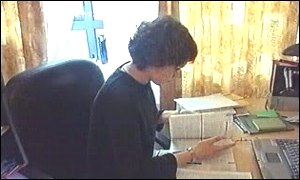 Anastasia Fedotova was turned down by Brasenose
At my old school, a state grammar, there used to be oak honour-boards on the walls of the hall. Each morning, at school assembly, you would look up from your hymn book to scan the names of those illustrious former pupils who had won places at Oxford and Cambridge. No other universities were listed there. Nor were any other post-school achievements so honoured. Then, suddenly, they stopped writing up new names in gold-leaf paint. The 1970's age of egalitarianism had arrived. Someone decided, I suppose, that the boards gave the impression that the only achievement worth honouring was admission to Oxford or Cambridge.
For the top independent schools it is still the numbers game that really counts. A very large proportion of parents who fork out hefty fees at the top independent schools do so, I suspect, in the hope that this will increase their children's chances of getting into Oxford or Cambridge. Local newspapers still run photographs of the latest batch of Oxbridge successes from their local schools. They don't appear to do the same with those who've achieved success at Imperial College, Manchester or Edinburgh. A nation obsessed So, what is my point? Well, just to be clear, it is not to denigrate the achievement of an Oxbridge place. That achievement is, I suspect, far greater today than it has ever been. It is certainly greater than in the day of closed scholarships and close links between colleges and a few top independent and grammar schools. Rather my point is that, as a nation, we remain obsessed with Oxbridge entrance and Oxbridge influence.
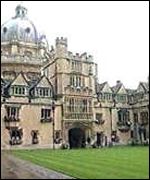
And, as we saw last week, any dispute over entrance to Oxford or Cambridge colleges is big news. The case of Anastasia Fedotova, a deaf student with six grade As at A-level, who was rejected by Brasenose College, Oxford rumbled on for days. Although there was no suggestion that Anastasia was discriminated against because she attended a state school, there were inevitable reminders of the case of Laura Spence, another bright state-educated pupil who was rejected by Oxford but won a scholarship at Harvard. Personal prejudice It is not only Chancellors of the Exchequer who get very excited about such cases. You only have to look at the "Letters To The Editor" columns of the broad-sheet newspapers to see just how much ideological and personal prejudice they engender. The cartoonist in The Independent had great fun at Brasenose's expense. Under the caption "Welcome to Brasenose College, with signing for the deaf", the cartoon showed a grumpy old don giving the obscene two-fingered gesture as he stood in front of champagne-swilling, blazer-clad hearties. I don't deny it was funny. But it was unfair. Yet many agreed with the sentiments. To give just a flavour, one correspondent wrote that the case showed that Oxford "doesn't want deaf foreigners from the north of England", only "hooray Henries with posh accents". Exceptionally bright One gain from the cartoon was that it finally goaded someone from Brasenose into making a response. Until then the college appeared to have left its defence to the university. It was a shame they had not spoken out earlier. The defence was convincing: that candidates sat a written test, had two interviews at Brasenose and a further interview at a neutral college. Brasenose had also asked Anastasia's school for advice on how the interviews should be conducted in view of her deafness. Anastasia is clearly a very remarkable and exceptionally bright young lady. No doubt the other candidates were exceptional too. Only the college is in a position to know for sure they chose the right person. Despite what some thought, Anastasia's family and school were not jumping up and down with indignation.
The truth is everyone got very excited about this case because it was Oxford. There are, I suspect, some media editors around who liked the story because they had themselves been rejected by Oxbridge. There is a real debate to be had about Oxbridge admissions. When all candidates are expected to get straight A grades it is hard to find a fair selection method. Should colleges be looking only at achievement so far, or should they be looking to assess potential? Should colleges take into account the sort of help from school or family that will have made some applicants' achievements quite different, even though their grades are the same? These are difficult issues and Oxbridge can expect to get a lot more flak. The best policy is for the colleges to be as open as possible about their practices. For the rest of us, we need to remember that Oxford and Cambridge are not the only universities in the country. If Anastasia had been rejected by Manchester, Glasgow or Nottingham would the story have hit the headlines? Mike Baker and the education team welcome your comments at educationnews@bbc.co.uk although cannot always answer individual e-mails. | | See also:  23 Aug 02 | Education 25 Apr 01 | Education 29 Jan 01 | Education 11 May 01 | Education Internet links: The BBC is not responsible for the content of external internet sites | ||||||||||||||||||||||||||||||||||||||||||||||||||||||||||||||||||||||||||||||||||||||||||||||||
| |
|  E-mail this story to a friend E-mail this story to a friend |
| | | ||
 | ||||
 | | Back to top
| ||
| ---------------------------------------------------------------------------------- To BBC Sport>> | To BBC Weather>> | To BBC World Service>> ---------------------------------------------------------------------------------- © MMIII | News Sources | Privacy |